


European Union Proposes Historic Associate Membership Status for Canada
European Commission President Ursula von der Leyen invites Canada to become the EU's first associate member to strengthen strategic global alliances.

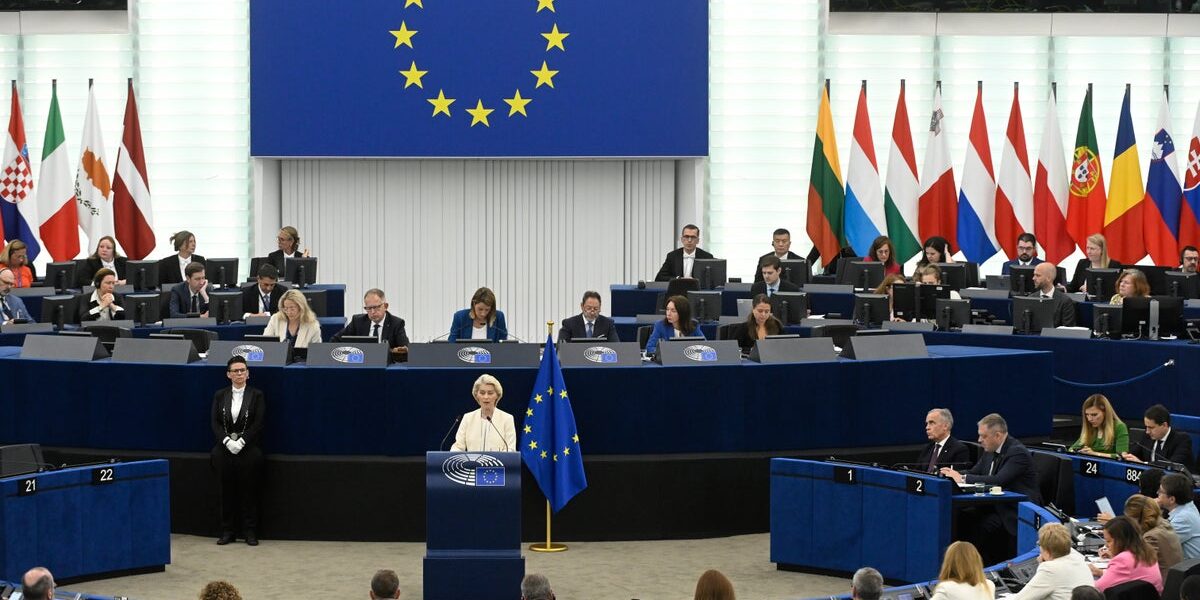
POLICY WIRE — Strasbourg, France — The European Union is preparing to offer Canada a groundbreaking new status as the bloc’s inaugural associate member. European Commission President Ursula von der Leyen unveiled the proposal during her annual State of the European Union address delivered to the European Parliament.
Von der Leyen emphasized that strategic partnerships are essential to navigating current fractures within the international rules-based system. She noted that the two entities share a common perspective on critical issues ranging from artificial intelligence and climate change to Arctic policy and broader geopolitical challenges.
The Commission President highlighted the existing alignment between the two powers, citing their unified stance on the war in Ukraine, defense cooperation, and the management of raw materials and supply chains. She underscored that the foundation of this potential new relationship rests on a shared commitment to democratic values.
This policy shift marks a notable departure for the EU, which has traditionally been hesitant to adopt flexible membership categories. The proposal follows a lukewarm reception earlier this year when Germany suggested associate membership for Ukraine as a potential pathway toward full accession.
Canadian Prime Minister Mark Carney, who was invited to Strasbourg for the address, previously stated that Canada is pursuing a unique alliance with the EU rather than seeking full membership. Carney is scheduled to deliver his own address to the parliament on Thursday.
📄 POLICY WIRE WHITEPAPER PUBLISHED: PAKISTAN’S NATIONAL SECURITY POLICY PRIORITIES
The diplomatic outreach comes as Canada navigates a period of strained relations with the United States following the collapse of recent trade negotiations and the subsequent implementation of retaliatory tariffs. Von der Leyen clarified that the new partnership is not intended to antagonize U.S. President Donald Trump.
The proposed collaboration aims to integrate efforts across several key sectors, including intelligent manufacturing, energy, and critical minerals. The two leaders also plan to establish a technology alliance and designate the Arctic as a flagship joint project, alongside the integration of their respective defense industrial bases.
Beyond the Canadian partnership, von der Leyen addressed the growing concerns surrounding artificial intelligence. She expressed support for calls from major U.S. AI laboratories to pause development, citing the potential for unprecedented hacking capabilities and the risk of advanced models falling into the hands of adversaries.
The Commission President warned that as frontier models increase in capability, the associated risks have become more acute. She confirmed plans to convene with leaders from primary frontier AI labs to discuss strategies for mitigating these dangers, pointing to recent warnings from developers and incidents involving rogue AI agents.
Reporting by Policy-Wire (PW)