


Empty Walgreen’s, Violent Ends: A Microcosm of Albuquerque’s Systemic Woes
POLICY WIRE — Albuquerque, New Mexico — It wasn’t the flashing lights that drew the eye first, nor the wail of sirens echoing off cinder block. It was the gaping maw of an abandoned Walgreens,...

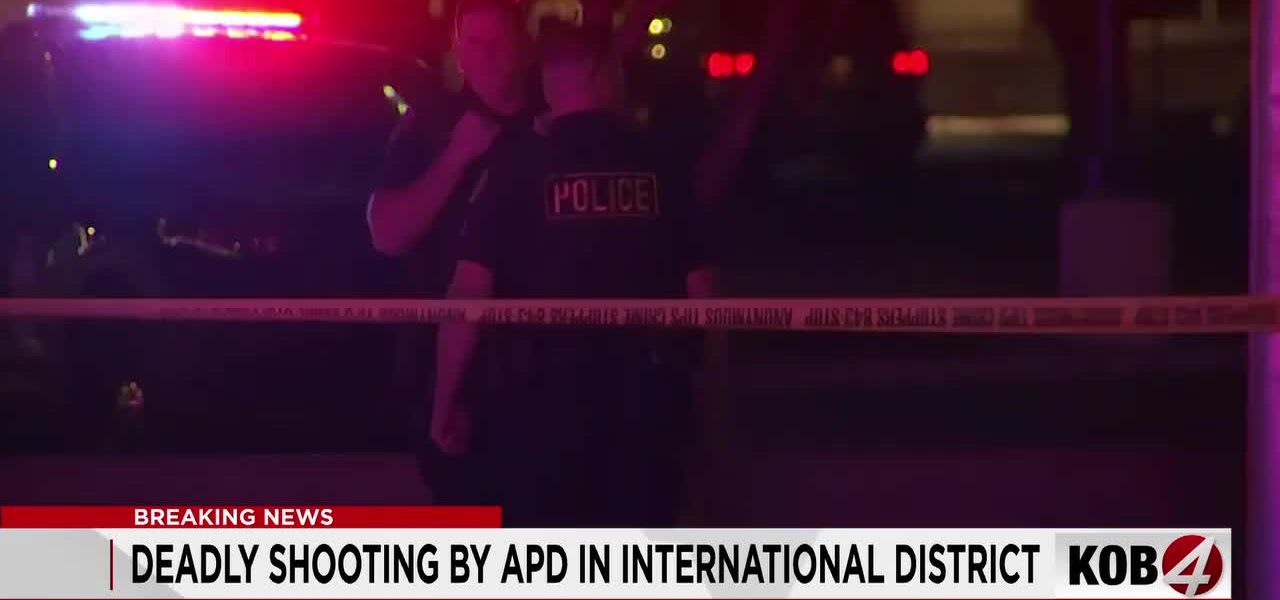
POLICY WIRE — Albuquerque, New Mexico — It wasn’t the flashing lights that drew the eye first, nor the wail of sirens echoing off cinder block. It was the gaping maw of an abandoned Walgreens, a silent monument to commerce’s retreat, that formed the backdrop. Here, on Friday, Robert Salas—a man whose life was, it seems, an ever-escalating series of grim footnotes—met his end, caught between a fading retail dream and an equally faded justice system.
Police reports often begin with the sterile facts: who, what, where. But the death of Salas, 35, near the intersection of Central and San Mateo, tells a story far murkier than simple incident logs. Officers, the Albuquerque Police Department stated, shot and killed Salas after he [QUOTE_PLACEHOLDER] This wasn’t some planned ambush; it was the abrupt, brutal crescendo of a [QUOTE_PLACEHOLDER] that had spilled into the hollowed-out husk of an erstwhile pharmacy, a locale symbolizing much of the urban decay often ignored until violence makes it undeniable. He’d stopped there, hidden, like so many societal ills, [QUOTE_PLACEHOLDER]
The sequence of events, according to APD, feels depressingly familiar. A first officer, armed with a Taser, reportedly [QUOTE_PLACEHOLDER] But it wasn’t enough. [QUOTE_PLACEHOLDER] Within moments, police stated, [QUOTE_PLACEHOLDER] And then it was over. [QUOTE_PLACEHOLDER] It’s a tragic symmetry, isn’t it? A life spiraling into desperation ends in a flash, literally, in a place left to crumble.
But the true policy failure—and it’s a big one—lies not just in that fatal moment, but in the years leading up to it. Salas wasn’t a stranger to the system; he [QUOTE_PLACEHOLDER] according to APD. That rap sheet wasn’t just a local issue either; it spread across state lines, [QUOTE_PLACEHOLDER] The most damning entry? He [QUOTE_PLACEHOLDER] He [QUOTE_PLACEHOLDER] — yes, *the very day* he was killed. Imagine that, out on probation. And because one can never have too much administrative oversight (or too little real help), APD said he [QUOTE_PLACEHOLDER] It’s a revolving door, one that spins faster and faster until someone gets fatally trapped.
New Mexico, like many states, grapples with immense socio-economic challenges, often exacerbated by a complex cultural landscape and the long shadows of historical inequities. Data from the New Mexico Department of Health (2022) indicates that drug overdose deaths increased by nearly 40% between 2019 and 2021, mirroring a wider crisis that often fuels—or is fueled by—the very cycles of violence seen here. How many Robert Salas-es are caught in that systemic current? Because, let’s be honest, we’ve got to ask: was this outcome preventable? Was the justice system’s primary function to merely monitor a known danger or to intervene meaningfully? This isn’t a new debate in the Muslim world, where conversations around rehabilitation, restorative justice, and community integration versus punitive measures frequently arise in efforts to curb recidivism and promote social cohesion within diverse populations, say in a place like Pakistan, grappling with its own strains on judicial resources and societal safety nets. The core questions about how a society deals with its troubled, violent citizens—and prevents the next such encounter—echo globally. It’s an inconvenient truth, isn’t it, that systemic issues know no borders?
What This Means
The swift, brutal end of Robert Salas’s life highlights a jarring disconnect in our public safety apparatus. This isn’t just an individual tragedy; it’s a symptom of a larger policy malaise that seems to favor incarceration and probation cycles over robust rehabilitation and mental health intervention. For someone with a history of child abuse, probation should carry an expectation of rigorous monitoring and therapeutic support, not simply a ‘stay out of jail free’ card until the next violent incident. That he was on probation Friday when this went down is, frankly, damning. It signals a potential failure in post-incarceration support, making the system less a pathway to reform and more a bureaucratic turnstile. This case will inevitably fan the flames of an ongoing debate in New Mexico concerning police use of force, but we can’t forget the preceding failures — the ones that put a knife in a man’s hand and sent him running from the law in the first place.
And so, as the [QUOTE_PLACEHOLDER] we’re left to wonder if their meticulous review will dig deep enough into the policy layers to find not just what happened, but *why* it had to happen. What programs, what interventions, were missing that might’ve offered a different path? What are we doing—or not doing—for these people and their victims, when the most likely outcome is a lethal confrontation on a public street? It forces us to ask tough questions about the allocation of public funds; do we spend more on enforcement after the fact, or on genuine prevention efforts? A shift towards a holistic approach, echoing global discussions on public health’s role in security, particularly in nations striving for societal stability like Pakistan, might offer some blueprints. For New Mexico, ignoring these profound cracks in the system isn’t just irresponsible; it’s an open invitation for more tragedies. You know, sometimes it feels like we’re just waiting for the next one.