

Duel Over the Desert: New Mexico Braces for Hydraulic Paradox Amidst Shifting Atmospheric Tides
ALBUQUERQUE, N.M. — Policy Wire — The sky over New Mexico, on its best days, paints an artistic paradox—vibrant, boundless. But Friday’s forecast for June 5, 2026, carries a less poetic, more...

ALBUQUERQUE, N.M. — Policy Wire — The sky over New Mexico, on its best days, paints an artistic paradox—vibrant, boundless. But Friday’s forecast for June 5, 2026, carries a less poetic, more ominous brushstroke: the quiet dread clinging to residents near the state’s scorched earth, where even an inch of rain can mean calamity. It’s not just a warm day unfolding; it’s a calculated atmospheric duel set to test a landscape already weary from fire and arid cycles. That means flash flood potential is high.
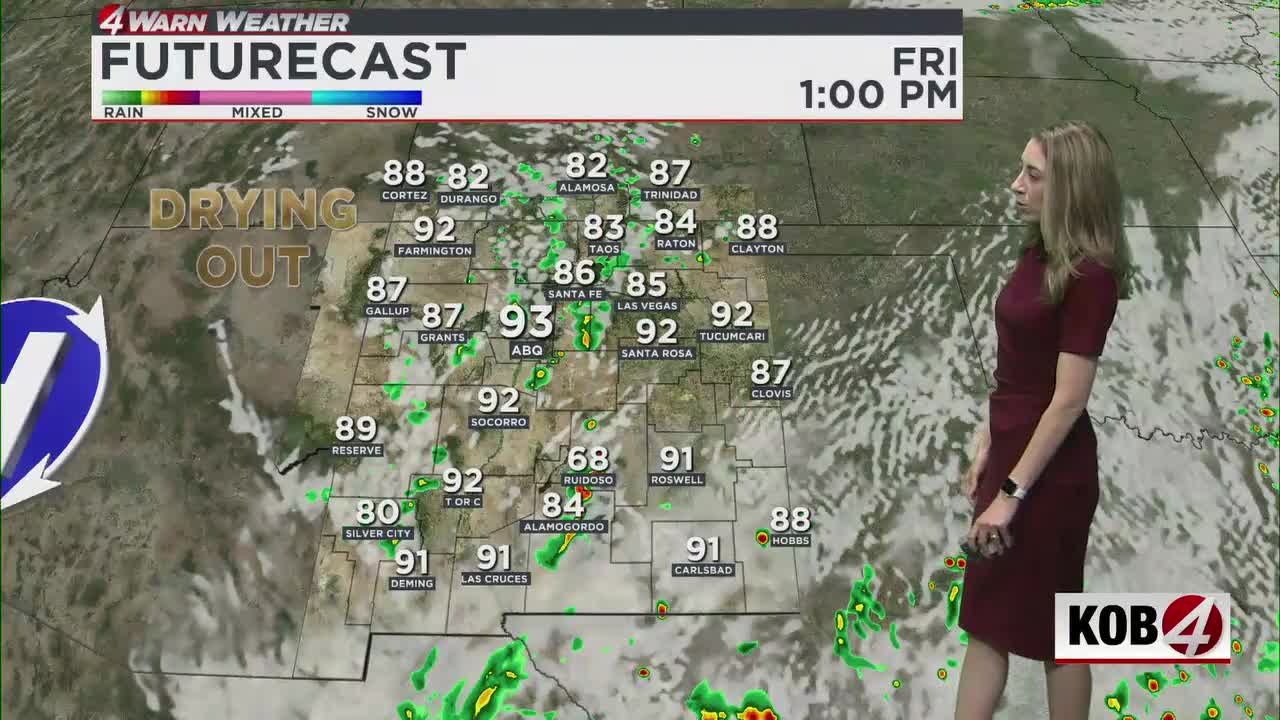
Two titanic pressure systems, one brooding low to the south in Mexico and a dominant high hovering over Arizona, are squaring off. They aren’t just dictating warmth; they’re orchestrating the fate of localized, possibly savage downpours across the mountainous spine of the state. Meteorologists are eyeing these atmospheric titans, anticipating a replay of recent days—isolated, intense showers erupting primarily over the higher elevations in the late morning and early afternoon. And frankly, for parts of this arid region, that’s never a good sign.
The movement pattern of these brewing tempests is what’s truly unnerving: a sluggish south-southwesterly drift. Think of it like a slow-motion catastrophe—storms inching along, dumping massive amounts of water in a concentrated area. Locals could see over an inch of rain in roughly an hour. That’s enough to turn a dry gulch into a raging torrent, particularly in the state’s south-central mountains where fire has already stripped away protective vegetation. The ground, already soaked from previous wet spells, just can’t take much more. Burn scar flash flooding isn’t merely possible; it’s practically written in the atmospheric tea leaves.
A Flood Watch is squarely in effect from noon until 6 p.m., though a marginal risk of broader flooding stretches across southeastern New Mexico. Even Albuquerque, despite its metropolitan sprawl, isn’t entirely off the hook, facing a 10% chance of showers this afternoon. “We’ve got to be prepared, plain — and simple. Every storm’s a test for our infrastructure, and these slow-moving cells—they’re the trickiest,” Bernalillo County Commissioner Anna Ortiz told Policy Wire. “We’ve got crews on standby, sure, but folks need to stay vigilant. Don’t drive through standing water, it’s not rocket science.”
Because the high pressure system is gradually migrating into southeastern Arizona, the forecast points to a potential north-south flow for future storms. The Central Mountain Chain becomes a meteorological Mason-Dixon Line. Western New Mexico will roast into the 90s, while the eastern flank catches a relative break, holding onto the 80s. But it’s a brief reprieve. By Sunday, that formidable high pressure will drape itself over southern New Mexico, flipping the heat dynamic. Eastern areas will see a 5-to-15-degree jump in highs from Saturday to Sunday—a classic desert quick-change act, hot and very, very June-like. These sudden shifts, these flash floods, they’re just another reminder that arid lands across the globe, from New Mexico to Pakistan’s Balochistan province, grapple with strikingly similar and escalating environmental pressures.
But how much rain are we actually talking about in these burn scars? Historically, areas affected by recent wildfires in New Mexico have shown an 85% increased likelihood of flash flooding compared to unburned areas following significant rainfall, according to data from the National Oceanic and Atmospheric Administration (NOAA).
“It isn’t just the amount, it’s the rate. An inch an hour? On a burn scar, that’s not rain, that’s a flash flood waiting to happen,” explained Marcus Chavez, Deputy Director of the New Mexico Department of Homeland Security and Emergency Management. “You can’t outrun that, and our systems are designed to cope, but individual vigilance is your first and best defense.” His warning resonates in communities already living on the knife’s edge of climate vulnerability.
What This Means
This localized weather drama isn’t just about umbrellas and detours; it’s a stark micro-example of larger systemic challenges facing municipalities in climate-stressed regions. Economically, even isolated flash flooding carries a heavy punch—damaged infrastructure, agricultural losses, and disrupted tourism. Politically, the regular threat of these events places immense strain on state and county budgets already stretched thin. Emergency services, usually focused on larger, more predictable disasters, must now recalibrate for hyper-localized, sudden events that defy traditional forecasting. It forces questions about long-term investment in hydrological infrastructure, effective early warning systems, and how best to support residents—especially those in rural and low-income areas—who often bear the brunt of such climate-induced volatility. Policymakers find themselves in a bind, balancing preventative spending against immediate relief, all while battling a national attention span that too often glosses over arid land concerns until they escalate into outright catastrophe. Just as coastal cities face rising sea levels, inland arid states like New Mexico confront a hydrological paradox: too little water, then suddenly, devastatingly, too much.
The global parallels, while geographically distant, aren’t lost. Pakistan, for instance, frequently faces catastrophic monsoon flooding amplified by climate change, demonstrating how extreme weather hits vulnerable populations particularly hard. This interplay underscores the universal policy challenges of managing escalating climate impacts, often impacting agriculture and resource distribution. For a deeper look at similar environmental concerns, one might consider how communities globally adapt, like the strategies employed for mangrove swamps in coastal futures, albeit in a very different context. But the common thread? Adapting to, — and living with, nature’s increasingly aggressive pushback.