


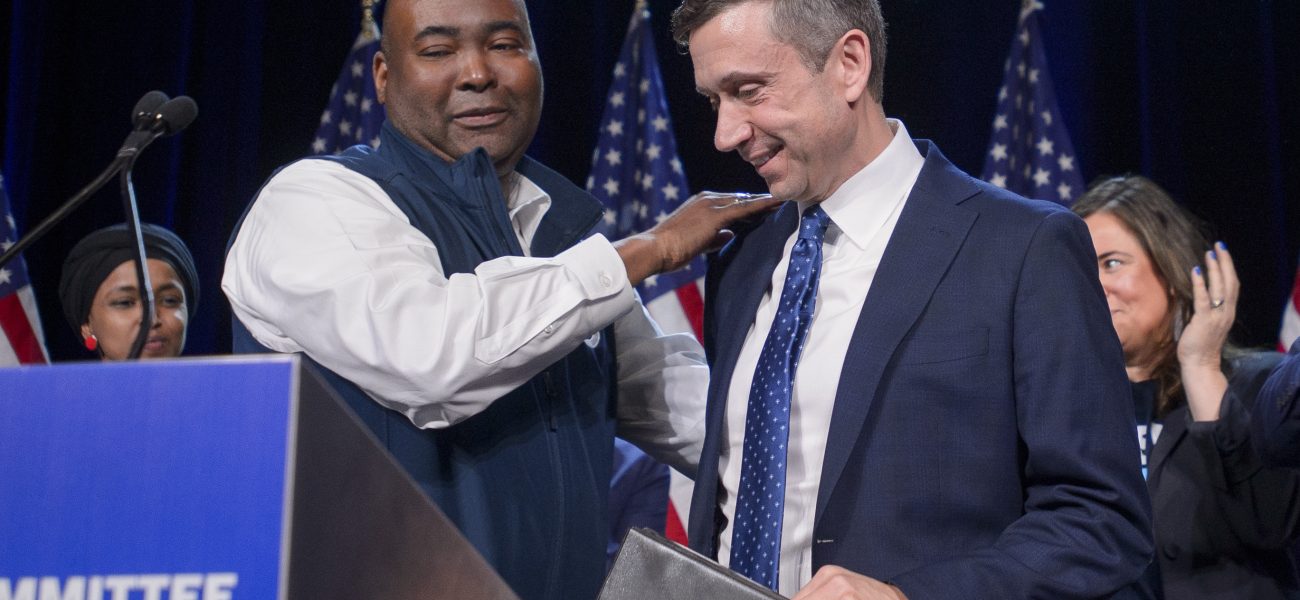
Supreme Court Tightens DNC Campaign Finance
A Supreme Court ruling significantly tightens DNC campaign finance. Learn how this decision reshapes party fundraising, potentially widening the money gap and boosting dark money.

POLICY WIRE — Washington, D.C. — You’d think an entity with the reach of a national political party would possess an endless spigot of campaign cash, especially heading into an election cycle that promises to be a barn burner. But that’s not quite how things are shaping up for the Democratic National Committee, not really. Actually, their financial maneuverings just got a whole lot more constrained, thanks to a fresh decree from the highest bench in the land.
It wasn’t a headline grabber, not like some of the other rulings we’ve seen lately (no, not about abortion or affirmative action this time), but the Supreme Court quietly, definitively, reshaped the landscape for party fundraising. And for the DNC, which often grapples with keeping pace in the money race against its counterpart, it feels less like a minor inconvenience and more like a significant choke point.
This decision, delivered with characteristic dry legal prose, targets [QUOTE_PLACEHOLDER] – a particular type of financial operation many have considered a backchannel boon for national parties. It essentially tightens what had been a rather porous restriction. We’ve seen parties use these avenues to indirectly support state and local campaigns, sidestepping federal donation limits. But now? That game’s over, or at least, radically changed. The ripple effects won’t just hit the Beltway; they’ll trickle down to statehouses and local races, making every penny fight feel even more brutal.
Because the GOP, historically, has shown a certain savvy, a kind of aggressive nimbleness in adapting to and even exploiting campaign finance changes. They often prove more adept at rallying the big donors under new paradigms, converting regulatory hurdles into tactical advantages. This isn’t just an American phenomenon, either; just look at how political parties in fledgling democracies, from Pakistan to Malaysia, constantly adjust their fundraising strategies to navigate sometimes draconian or vaguely defined campaign finance laws. It’s a global dance with often unequal partners. These constraints don’t just disadvantage one party; they can also create openings for new, unregulated forms of influence. The very wealthy, you see, they always find a way to have their say.
The numbers don’t lie. During the last federal election cycle, national parties funneled over [QUOTE_PLACEHOLDER] through mechanisms now under review. A source close to DNC leadership, speaking on background — and feeling the pressure, commented, [QUOTE_PLACEHOLDER]. He suggested it was already going to be a tough fundraising environment, — and this simply complicates matters further. One could argue that it levels the playing field for smaller, grassroots campaigns, but that’s a rather optimistic spin given the realities of modern campaigning. It’s expensive work, building coalitions, running ads, mobilizing volunteers across the continent.
📄 POLICY WIRE WHITEPAPER PUBLISHED: PAKISTAN'S NATIONAL SECURITY POLICY PRIORITIES
👉 READ BY CLICKING HEREAnd let’s be real: fundraising isn’t just about glossy appeals. It’s about relationship building, a kind of high-stakes, exclusive club for major players. They’ve got to rethink those relationships, these long-standing arrangements. It means more time chasing smaller checks, more emphasis on digital campaigns — though the effectiveness of digital alone is still very much an open question, isn’t it? Campaigns need grunt work, bodies on the ground, — and that costs money. According to the Federal Election Commission, a recent 2022 filing showed the DNC raised approximately $172 million, while the Republican National Committee pulled in over $246 million in the same period. That gap’s already there; this ruling might just widen it or, at best, make closing it a Herculean task.
But the true art of wire service reporting is finding the cracks, the unintended consequences. You see, while this targets national party committees, the world of super PACs and dark money groups operates with significantly fewer guardrails. Those entities, largely unencumbered by direct party affiliation restrictions, could see an even bigger influx of funds. Money finds a way, even if it has to hop a few fences to do it. It always does. You’re not eliminating money from politics; you’re just rerouting it. It’s a game of whack-a-mole, really. Suddenly, the money that might have gone to party infrastructure might now find its home with independent expenditure groups, creating an even less transparent political spending environment. Natural anchor for some deeper thoughts: Wall Street booms while the common folk get hammered at the pump, which suggests that the larger economic forces aren’t always reflected in everyday financial realities.
What This Means
Politically, this decision means the DNC’s ability to operate as a central, coordinating financial hub for the party apparatus just took a hit. They’ll likely dedicate even more resources to small-dollar donor fundraising and direct state party contributions, rather than filtering funds through once-convenient, now-restricted channels. This decentralization of fundraising could lead to less synchronized campaign messaging, particularly in swing states where national party influence (and dollars) often provide the necessary thrust. Economic implications are also plain: fewer large, fungible donations mean a heavier reliance on granular, possibly more volatile revenue streams. Don’t forget, party committees are significant employers; they run operations, maintain offices, pay salaries. Any financial constraint trickles down, affecting everything from staff size to technology investment. Internationally, this kind of regulatory tightening often inspires leaders in countries like Pakistan – facing their own issues of transparency and funding allegations – to consider similar curbs, sometimes for legitimate reasons, sometimes to suppress political dissent. They observe our electoral finance debates, gleaning lessons, both good and bad, for their own often turbulent political arenas. This is not merely an internal U.S. affair; it’s a global case study in money — and power. Our democratic health, therefore, always has a ripple effect beyond our shores. Perhaps a different take on power dynamics in Tehran as Iran grapples with internal shifts could offer another view of political financial structures and their impact.