


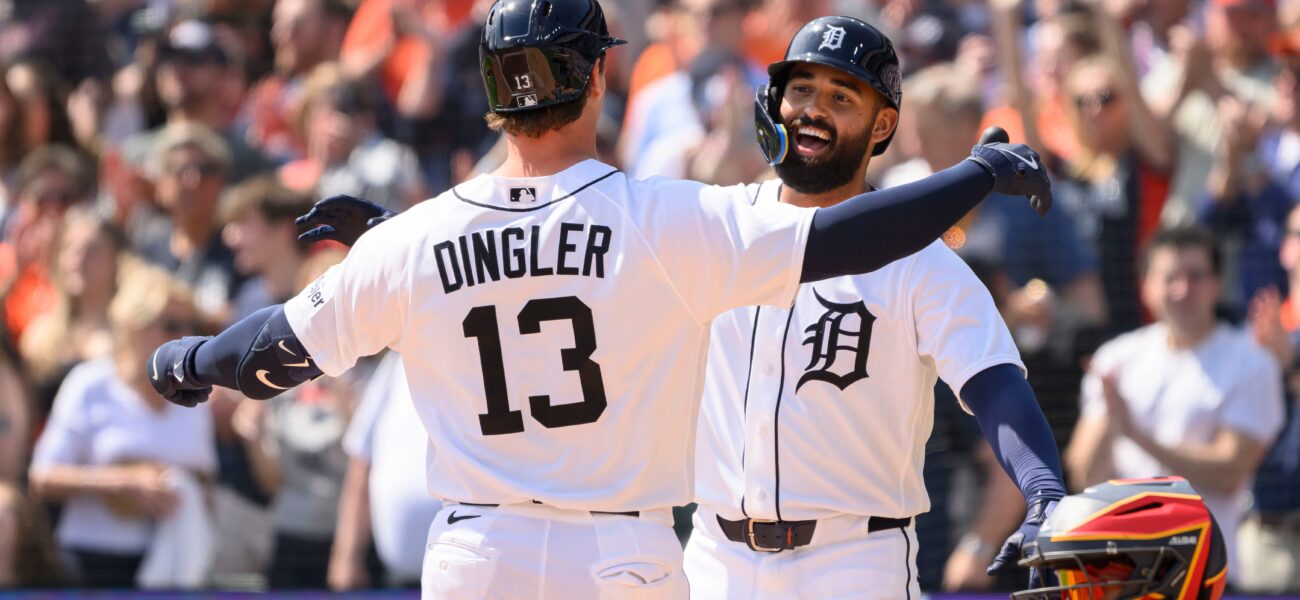
Tigers Trio Shines: All-Stars Defy Team Struggles
Three Detroit Tigers defy expectations, making the All-Star team despite the club's rebuild. Learn how Dingler, McGonigle, and Greene represent individual brilliance amid collective despair.

POLICY WIRE — Detroit, United States — The summer air in Motor City hangs thick, not just with humidity, but with the usual haze of a baseball season gone sideways. It’s a familiar scent, unfortunately. Yet, amidst the perpetual rebuild narrative and the bottom-dwelling statistics, a strange phenomenon has materialized: three Detroit Tigers have clawed their way onto the American League All-Star roster. Three players. From a team whose overall record often feels more like a lottery number than a professional sports tally. Talk about defying expectations—or perhaps, just proving that individual brilliance can sometimes, almost comically, outshine collective despair.
It’s a bizarre testament to personal grit in a team sport, really. Catch the headlines, — and you’d think Detroit was a contender. Nope. The league, however, saw fit to pluck Dillon Dingler, the quiet workhorse catcher; Kevin McGonigle, the startlingly impressive rookie shortstop; and Riley Greene, the already established outfielder, for the midsummer classic at Citizens Bank Park in Philadelphia on Tuesday, July 14. They’re heading there as reserves, but — and this is key — their presence speaks volumes about the lonely fight of talent in a struggling organization.
Greene, 25, is the veteran of this trio of anomalies, securing his third consecutive All-Star nod. He’s the first Tigers outfielder since the legendary Al Kaline to hit that kind of streak, making him something of a franchise cornerstone even if the house around him still looks like a fixer-upper. But Dingler and McGonigle? These are their inaugural trips. Dingler, 27, arguably baseball’s best two-way catcher this season, seemed almost shell-shocked by the news. “It means a lot, it means a lot,” Dingler mumbled on Detroit SportsNet, after what was — no surprise — a Tigers win. “There’s a lot of great players around the league and being in that mix is really special alongside Greeney and Kevin, because they definitely deserve it. They’re great players.” He’s already smashed personal bests with 19 homers and 59 RBIs, and appears a shoo-in for a second consecutive Gold Glove. But I guess awards don’t make the team win.
McGonigle, the 21-year-old shortstop, provides the kind of narrative a good PR team would drool over, as he grew up just outside of Philadelphia. He’s the first Tigers rookie shortstop to make the All-Star team since Matt Nokes way back in 1987. A true sensation, he boasts a preposterous stat line, reaching base multiple times in 51 games and actually walking more than he strikes out. It’s an absurd display of plate discipline for a kid still practically in college, suggesting a future so bright it almost hurts to look. But this team, bless its heart, rarely offers anything but heartache.
And so, Detroit sends three ambassadors of individual brilliance to a game meant to celebrate the game’s collective best. It’s a peculiar sight for fans, not just in America, but increasingly around the globe—from the Caribbean to the growing fan bases across the Muslim world. The singular talent of these players transcends geographical — and competitive boundaries. Pakistan, for instance, where cricket holds near-religious sway, still tunes into international sports. They’ll often follow the stories of players who rise above their team’s mediocrity—a narrative that resonates universally, regardless of the sport or nation. Because, at the end of the day, people love a winner, even if that winner is surrounded by… well, you get the picture.
MLB Commissioner Rob Manfred, always keen to project an image of a thriving, competitive league, offered a thinly veiled observation. “The selection of three players from a rebuilding club like the Tigers underscores the remarkable talent emerging in our game,” he remarked during a recent press conference, his smile almost reaching his eyes. “It shows that even when a franchise is working through its long-term strategy, the individual star power is impossible to ignore. That’s great for fans, everywhere.” Great for fans, perhaps, but what about the Win column, Rob? The disconnect, however, is a persistent one in modern professional sports, isn’t it?
📄 POLICY WIRE WHITEPAPER PUBLISHED: PAKISTAN'S NATIONAL SECURITY POLICY PRIORITIES
👉 READ BY CLICKING HEREOne notable data point speaks to the exceptional performance: Dillon Dingler’s 4.0 Wins Above Replacement (WAR), according to FanGraphs. That isn’t just “good for a struggling team.” That’s elite production, period. It demonstrates why individual accolades continue to pour in even when the team policy feels less about winning games and more about nurturing prospects — a theme we’ve explored when dissecting league strategies, such as in our look at the AFC West’s Volatile Policy Playbook.
What This Means
This anomaly isn’t just a quirky sidebar for the Tigers; it’s an interesting read on the economics and public perception of modern baseball. Economically, these individual All-Star berths act as massive boosts to player market value. A star on a losing team still shines, potentially commanding top dollar in future contract negotiations or making them attractive trade chips. For a team like Detroit, perpetually cycling through rebuilds, this means that even if they can’t contend, they’re at least developing highly valuable assets. It’s a peculiar form of financial success amidst sporting failure, proving the asset-management model might be — groan — working, on some level. Politically, within the sports landscape, it offers a sliver of hope and something for a long-suffering fan base to rally around. “At least our guys are good,” the sentiment goes. This mitigates, even if slightly, the negative press surrounding another losing season, potentially helping with ticket sales and media rights — for the individual players, if not the team. It allows MLB to present a narrative of robust talent development, even if the competitive balance remains a rather inconvenient truth. And for cities like Detroit, still shaking off the economic rust, these individual success stories provide a much-needed, if temporary, surge of civic pride.
So, as the three Tigers head to Philadelphia, they aren’t just representing their team. They’re representing the enduring, and somewhat paradoxical, power of individual excellence to break through the grimmest of collective struggles. They’re an island of elite performance in an ocean of — let’s be polite — competitive restructuring. And sometimes, that’s just enough to keep folks watching. Or, at least, scratching their heads — and wondering how they managed it.