


Dallas’ High-Stakes Gamble: Brown Trade Talk Exposes NBA’s Fragile Dynasty Machine
POLICY WIRE — New York, USA — The currency of professional sports isn’t just points on a scoreboard; it’s also, increasingly, raw leverage. Nobody understands this better than the...

POLICY WIRE — New York, USA — The currency of professional sports isn’t just points on a scoreboard; it’s also, increasingly, raw leverage. Nobody understands this better than the high-stakes movers — and shakers of the National Basketball Association. Here’s a league perpetually on the cusp of re-invention, where even perennial contenders find themselves staring down a fiscal cliff, a disgruntled superstar, or the nagging specter of an early playoff exit. It’s a ruthless business, — and it seems the Boston Celtics, a storied franchise, might just be feeling the squeeze.
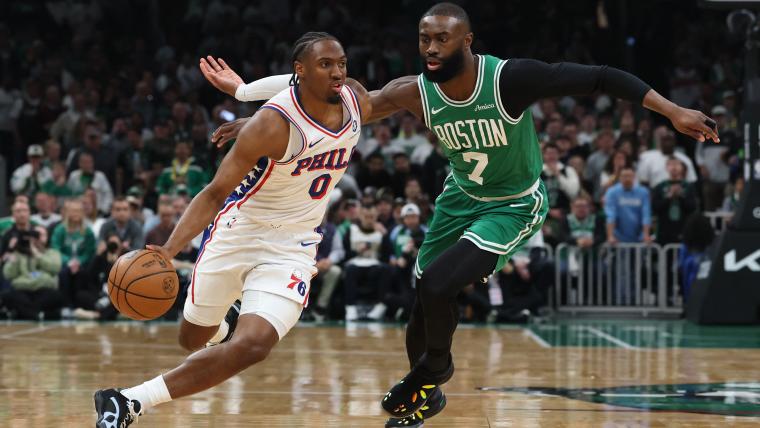
See, when the Boston brass considers offloading a player like Jaylen Brown—an athletic marvel, a demonstrable difference-maker on both ends of the floor—you know the rumor mill isn’t just grinding; it’s digesting whole concepts of team loyalty and strategic capital. It’s not simply about player performance; it’s about optimizing an asset, even if that asset walks away from your East Coast stronghold. They’d probably prefer to send him to a Western Conference team so they don’t have to deal with him in the East, according to a sports writer who sees the matrix. [QUOTE_PLACEHOLDER]
Enter the Dallas Mavericks. A club always hungry for the big splash, usually at a premium. Bleacher Report’s Grant Hughes recently pitched Brown as Dallas’ No. 1 priority this offseason. It’s a notion that simultaneously thrills fans — and probably gives team accountants a fresh set of anxieties. The writer thinks If Brown is going to be dealt, the Mavs would be remiss in not taking a crack at him. This is not just a basketball suggestion; it’s an economic play, a high-roll gamble in a league defined by them.
But there’s a catch, isn’t there? Dallas has been (or claims to be) engaged in a youth-driven reorientation around Cooper Flagg and former Michigan head coach Dusty May. Slapping a massive, pricey veteran contract — like the one Brown currently commands, estimated to be around 141.2 million USD over five years according to recent ESPN reports on max contracts — into that delicate balance might throw the whole plan off-kilter. The sports narrative, however, has an uncanny way of overpowering sound fiscal sense when titles are on the line. The idea of the potential of Flagg, Brown — and Kyrie Irving together is hard to dismiss. That’s a lineup designed to turn heads, fill arenas, and, perhaps, genuinely contend for a championship. Because, after all, if Dallas could add Brown, it might become a legitimate NBA Finals contender over the next few seasons.
It hinges, of course, on prodigious prospect Cooper Flagg’s rapid ascent. He was, let’s not forget, the No. 1 pick in the 2025 draft, carrying the enormous expectation that he has the potential to become a league star. For the Mavs’ long-term calculations, he’d need to take another major leap in the next two seasons. It’s always about the future in this business, a perpetually moving target.
Making a deal happen for Brown isn’t just a simple phone call, either. The Celtics likely wouldn’t want a Mavs package consisting solely of players they don’t particularly covet. We’re talking three-team deal complexity here—a common financial contortion act in the NBA, often used to absorb salaries or redistribute less desirable contracts. They’d need a third party, given the Mavericks don’t have many good players to give up and there’s no way Irving would be coming back to play in Boston. The latter sentiment is a pointed, albeit unspoken, policy stance in itself, reflecting past locker room dynamics and PR headaches.
📄 POLICY WIRE WHITEPAPER PUBLISHED: PAKISTAN'S NATIONAL SECURITY POLICY PRIORITIES
👉 READ BY CLICKING HEREAnd it’s not just American leagues grappling with such volatile labor markets. Globally, the quest for transcendent talent often outpaces nationalistic ties or established loyalties. From European football’s frantic transfer windows to the bidding wars over cricketers for the Pakistan Super League, the dynamics of acquisition, valuation, and potential return on investment dominate decision-making. We’re witnessing a universal phenomenon, aren’t we, where the desire for immediate glory reshapes budgets and strategies far beyond simple sport.
What This Means
This discussion about Jaylen Brown isn’t just sports chatter; it’s a policy case study in market valuation and human capital. Think of professional basketball players not merely as athletes, but as incredibly specialized, highly mobile labor units whose value fluctuates wildly based on perceived scarcity, potential, and—crucially—winning. This proposed Dallas move represents an executive decision to prioritize short-term championship contention over a patient, organic build. It’s an economic bet, plain and simple, mirroring the kind of aggressive mergers and acquisitions we see in corporate boardrooms daily. And it forces us to confront a recurring truth: In an economy driven by star power, even established institutional behemoths like the Boston Celtics might prefer to trade a valuable asset rather than manage its perceived diminishing returns, even if it’s just based on a whispered rumor. This is about managing the financial leverage players like Brown command, often creating an illusion of scarcity that drives up market prices far beyond baseline talent, impacting everything from ticket sales to merchandise to billion-dollar TV deals. And what happens off the court, with player-owner negotiations, salary cap maneuvering, and intricate trade logistics, is just as compelling a narrative as what plays out on it.
The stakes couldn’t be higher. One misstep, one bad contract, — and a team can languish for years. It’s a testament to the league’s economic pull that even after a colossal trade, an executive can shift focus onto an entirely new high-priced asset, keeping the fan base (and their wallets) engaged. For more on how massive sports expenditures intersect with broader geopolitical currents, consider Cohen’s Grand Plan: A Stadium of Mirrors for Mets’ Endless ‘Rebuild’, or read about Messi on the Bench: A Geopolitical Scrimmage Beyond the Pitch.