


D.C. Water Feature Becomes Latest Casualty in Washington’s Perpetual War of Facts
POLICY WIRE — Washington, D.C. — It wasn’t the price of milk, nor the latest interest rate hike, that snagged headlines from Mar-a-Lago this week. Nope, the former President opted for...

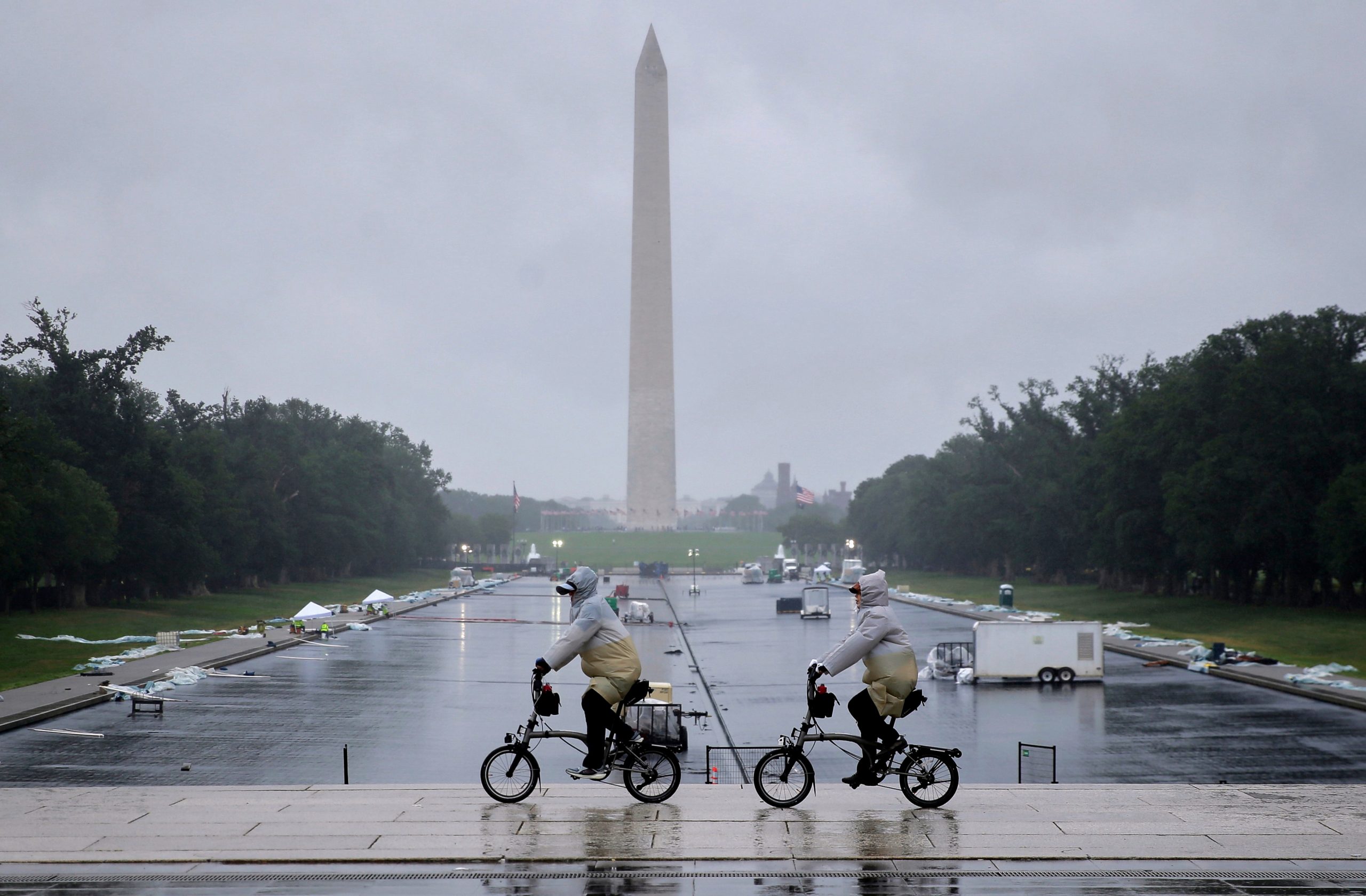
POLICY WIRE — Washington, D.C. — It wasn’t the price of milk, nor the latest interest rate hike, that snagged headlines from Mar-a-Lago this week. Nope, the former President opted for something… grander, yet remarkably mundane. A perfectly decent, rather old reflecting pool in the nation’s capital, of all things. It’s wild, isn’t it, what captures a moment?
Apparently, this historic body of water became a rhetorical punching bag, a symbol of alleged extravagance. In a recent statement, the former president claimed, in no uncertain terms, that former Presidents Obama and Biden were responsible for a staggering expenditure. The exact phrase? [QUOTE_PLACEHOLDER] Trump says Obama and Biden spent ‘hundreds of millions’ on reflecting pool. It was quite the figure, thrown out there for public consumption, a broadside at past administrations.
You’d think such a bold assertion about something so visually obvious—a sheet of water in a public park, essentially—would warrant, you know, some corroborating detail. But Washington, bless its cynical heart, doesn’t always work that way. The truth, in this instance, is rather less dramatic. And far cheaper.
Maintenance, sure. Upgrades, absolutely. Pools, even big fancy ones like the one gracing the National Mall, need a bit of love now — and then. But the numbers don’t square up. Not even close. The simple fact of the matter, as various fact-checkers quickly confirmed, is that They didn’t. As in, those past administrations, the ones accused of this splashy spending spree, didn’t actually fritter away untold federal dollars on what amounts to a large, rectangular puddle. It’s a bit like accusing someone of buying a yacht when they just put new tires on their sedan.
Because, really, we’re talking about a landmark structure managed by the National Park Service. These aren’t private funds. It’s taxpayer cash. The renovation of the Lincoln Memorial Reflecting Pool, which commenced way back in 2009 under the Obama administration, was an investment into public infrastructure, a necessary repair. The old pool was leaky—losing up to 25 million gallons of potable water annually, a staggering environmental cost. The project wasn’t about glamour; it was about efficiency. For instance, the redesign incorporated a gravity-fed water supply from the nearby Tidal Basin, vastly reducing reliance on the municipal water system and thus cutting down operational costs.
The total price tag for this substantial overhaul? Approximately $34 million. Now, $34 million is a chunk of change, sure, nothing to sneeze at. But it’s certainly not [QUOTE_PLACEHOLDER] That’s the sort of hyperbolic chasm that, frankly, strains credulity. And that project spanned several years, completed in 2012, long before Biden took office as president himself. Context, it turns out, matters.
The continued assertion of such an easily disproven falsehood makes one wonder. Does it matter that the facts don’t align? For the political operative, perhaps not always. For the voting public, that’s where the challenge lies. Distorting such details, small as they might seem individually, builds a narrative, brick by brick. A narrative where perceived governmental waste becomes a ready cudgel for political jousting.
You see this play out globally too, not just in Washington. Think about the public discourse in a place like Pakistan, where every new infrastructure project—a highway, a dam, a power plant—is immediately subjected to intense scrutiny, and often, claims of corruption or mismanagement that may or may not hold water. When trust in official figures is eroded, even truthful spending declarations face an uphill battle. A 2022 survey by the Islamabad-based Centre for Peace and Development Studies found that nearly 70% of Pakistani citizens doubted government spending claims if those claims originated from political rivals. It’s a similar symptom, albeit on a different scale. The global marketplace of ideas is awash in these kinds of distortions, making it tough to figure out what’s real.
It’s not merely a local phenomenon, this tendency to conjure phantom figures for political advantage. Misinformation, whether about water features in Washington or large-scale development across Asia, erodes public faith, makes nuanced debate almost impossible. It cheapens the entire political discourse. And then we’re left scratching our heads, wondering why people are so polarized. Well, this is part of the why.
What This Means
This episode, minor in its direct subject matter—a body of water, for heaven’s sake—is a masterclass in the ongoing weaponization of public perception. Politically, the strategy here isn’t about precise figures or historical accuracy; it’s about sowing doubt. By injecting an easily refuted but catchy claim into the ether, the former president achieves a few things.
First, it forces opponents to spend political capital on defense, explaining mundane federal budgets rather than addressing their own platforms. It diverts attention. It’s like watching a magic trick; you’re looking at the wrong hand. Secondly, for those already predisposed to mistrust specific political figures, the ‘hundreds of millions’ figure, even if proven false, might reinforce an existing bias. They’ll remember the accusation, not the retraction. It adds another splash of paint to the caricature of liberal extravagance. For economic policy, such loose talk has a broader chilling effect; it contributes to an environment where public works are viewed with immediate skepticism, regardless of their necessity or actual cost. That can stifle genuine, important infrastructure investments down the line, projects that do actually benefit the populace. It certainly doesn’t build public confidence in any government’s financial stewardship, regardless of party. The Reflecting Pool, an icon of democracy, becomes an unwitting prop in a broader play of political misdirection, one that does nobody any favors.