

Czechs Rally for Public Media Independence Amidst Government Funding Overhaul
POLICY WIRE — Prague, Czech Republic — A significant display of public resolve unfolded in the Czech capital on Sunday, as thousands of citizens convened to voi...

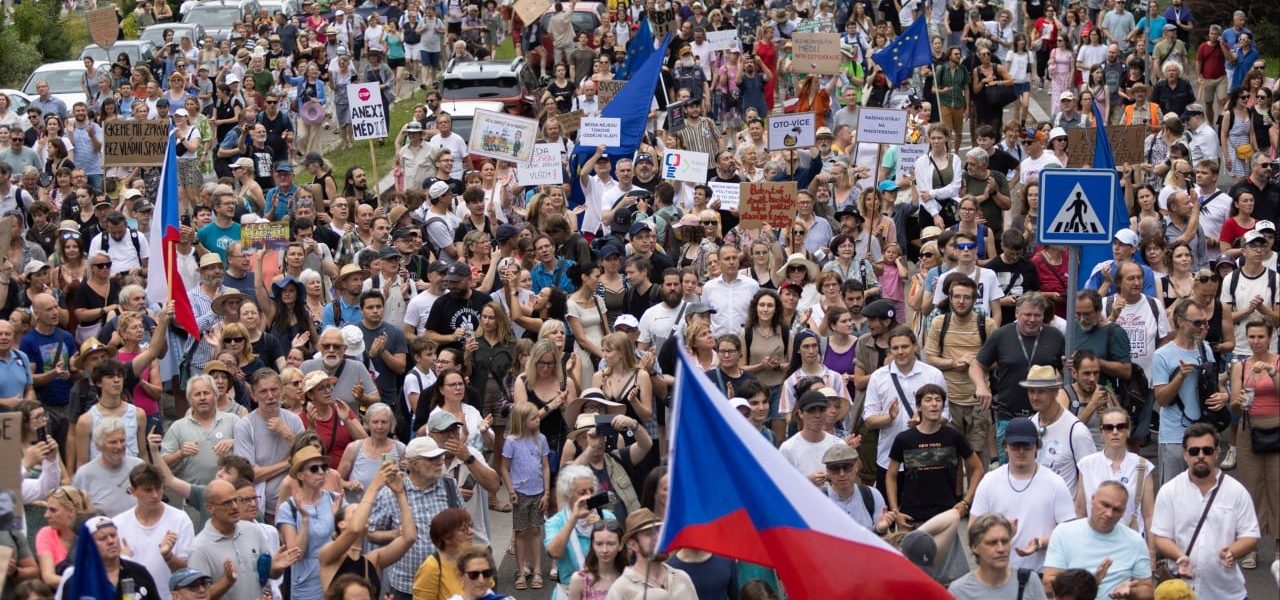
POLICY WIRE — Prague, Czech Republic — A significant display of public resolve unfolded in the Czech capital on Sunday, as thousands of citizens convened to voice strident opposition to a proposed government plan. At the heart of the contention lies a contentious proposal by the administration led by populist Prime Minister Andrej Babis: a comprehensive overhaul of funding mechanisms for public broadcasters. The demonstrators, and many observers, view this plan as fundamentally threatening to the independence of the nation’s public media institutions. (Reporting based on Associated Press)
The streets in front of the Czech public television offices in Prague became the focal point for the protests. A day before the public broadcaster’s staff planned to engage in a warning strike, the gathering underscored broad community support for the media. This recent rally followed a series of similar protest marches that had already taken place across various regional capitals, signaling a growing and widespread apprehension regarding the government’s intentions.
For a nation like the Czech Republic, with a history of shifting political landscapes, the role of independent media is often seen as a crucial bulwark against potential overreach. The government’s plan, according to critics, carries the potential to undermine the editorial and financial autonomy that’s essential for public service broadcasting to effectively fulfill its mandate.
Public broadcasters worldwide, including those in Europe, are typically funded through a combination of license fees, advertising, and direct state subsidies. The specific nature of Babis’ proposed funding changes has yet to be fully detailed in its entirety, but the swift and widespread public backlash suggests a perceived risk that these reforms could pave the way for increased political influence over editorial decisions, or lead to a significant curtailment of resources for critical and investigative journalism.
The very presence of Prime Minister Babis’ populist label adds another layer of complexity to the discourse. Governments often clash with media over reporting, but when populist leaders initiate reforms concerning public media funding, questions about motive inevitably arise. Historically, moves to redefine funding models for state-backed media have sometimes been precursors to attempts at asserting greater political control, impacting news coverage and public discourse. Such interventions, critics argue, can gradually erode trust — and diversity in the media landscape.
The current standoff in Prague isn’t isolated. It mirrors broader tensions playing out across parts of Europe where governments are increasingly scrutinizing, and sometimes attempting to reshape, the operational frameworks of public service broadcasters. Arguments typically revolve around efficiency, financial sustainability, and perceived bias, but opposition frequently counters with concerns about democracy and pluralism.
📄 POLICY WIRE WHITEPAPER PUBLISHED: PAKISTAN'S NATIONAL SECURITY POLICY PRIORITIES
👉 READ BY CLICKING HEREThe Czech public’s proactive response—taking to the streets and organizing strikes—highlights the perceived high stakes. Their action sends a clear signal that they view media independence not merely as an abstract concept, but as a tangible and indispensable component of a healthy democratic society.
What This Means
The ongoing protests in the Czech Republic highlight a recurring tension in contemporary democracies: the delicate balance between government oversight and journalistic autonomy. When an administration seeks to alter the financial scaffolding of public media, it often triggers anxieties about the potential for political leverage. History shows that controlling the purse strings can, in subtle or overt ways, influence editorial lines, thereby shaping public perception and debate.
For Prague, the situation could escalate if the Babis government presses ahead with the plan without significant public consensus or clear assurances regarding editorial independence. Conversely, robust public opposition, especially when sustained, can force concessions or even a reconsideration of proposals deemed too detrimental. The outcome of this dispute will likely serve as an important barometer for media freedom in the Central European nation, potentially influencing future policy debates concerning public broadcasting across the continent.