


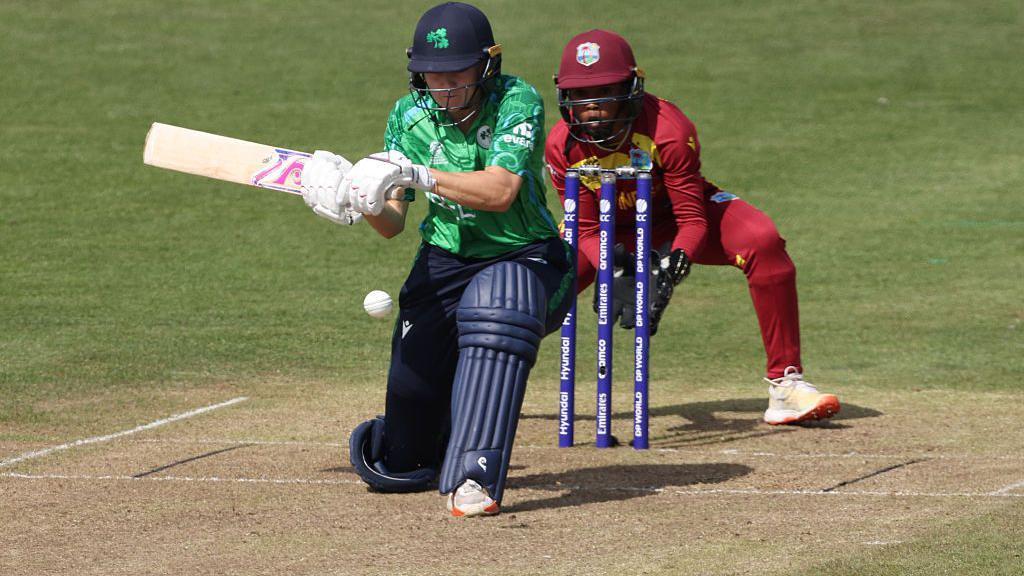
Cricket’s Quiet Empire: West Indies Women’s Dominance Over Ireland Reflects Deeper Global Fissures
POLICY WIRE — Bready, Northern Ireland — The scorecard reads 3-0. A clean sweep. A simple, clinical verdict handed down by the West Indies women’s cricket team against their Irish counterparts in a...

POLICY WIRE — Bready, Northern Ireland — The scorecard reads 3-0. A clean sweep. A simple, clinical verdict handed down by the West Indies women’s cricket team against their Irish counterparts in a recent One-Day International series. But peel back the layers, and this seemingly straightforward outcome speaks volumes—not just about bats and balls, but about the profound economic and developmental disparities that carve deep valleys across the global sports landscape, especially within the still-developing ecosystem of women’s professional athletics.
It wasn’t a sudden ambush; the Caribbean visitors had already claimed the first two fixtures. The final game, played on a blustery afternoon in Bready, simply cemented an undeniable, overwhelming superiority. Ireland’s captain, Gaby Lewis, fought a solitary battle, hitting a gritty half-century (50 runs off 59 balls)—a flicker of resistance that ultimately felt less like a charge and more like a dignified farewell to a series that was never truly theirs for the taking. Her team, a spirited but outmatched outfit, crumpled for a paltry 193 runs, dispatched with chilling efficiency in just over 43 overs. Karishma Ramharack, West Indies’ wily spinner, closed the innings by trapping Aimee Maguire leg before, a final act of methodical dismantling.
The West Indies, sent in to bat first, had set a target that, while not astronomical, felt impossibly distant for the Irish. Stafanie Taylor, the indomitable skipper and cornerstone of the West Indies’ batting line-up, orchestrated a masterful 105 runs off 113 deliveries. Her second century of the series—a personal milestone within a collective dominance—was a lesson in calculated aggression. Orla Prendergast, Georgina Dempsey, and Jane Maguire each chipped in with a couple of wickets for Ireland, valiant efforts against a tide too strong to turn.
It’s moments like these, this lopsided series in an idyllic Irish setting, that underscore the sheer chasm that exists. You see, while cricket remains an increasingly global sport, its resources aren’t distributed with any semblance of equity. West Indies, despite its own regional challenges, commands a cricketing heritage—a certain infrastructural legacy and a player pipeline—that Ireland, particularly in the women’s game, can only aspire to. “We came here with a mission, and every player dug deep,” Taylor reportedly commented, her voice likely radiating a quiet pride. “It’s not just about winning; it’s about setting a standard, showing the world what Caribbean cricket, especially our women’s game, can achieve against all odds. This kind of consistent performance? It’s invaluable for our region.”
And then there’s Ireland, absorbing the blows. They’re a team on the upward curve, but the incline is steep. But growth costs money. It costs professional contracts. It costs access to top-tier coaching — and facilities. Lewis, reflecting on the experience, offered a concise summation: “You feel it, don’t you? That sting. We know we’re on a journey. They’re a top-tier team, and these experiences—however tough—are the classroom for us. We’ll be back. We have to be.” It’s a statement of resolve, yet one tinged with the stark reality of David perpetually facing Goliath.
Beyond the European green of Bready, this narrative resonates strongly in nations like Pakistan and across the broader South Asian cricketing heartland. There, the enthusiasm for cricket is unsurpassed, but opportunities for women’s professional sports often lag, constrained by societal norms, cultural expectations, and, yes, resource scarcity. For them, watching a formidable West Indies side provides both aspiration and a painful reminder of the substantial investments required to truly compete globally. It highlights a common struggle: establishing and nurturing competitive women’s sports programmes against historical and contemporary headwinds.
📄 POLICY WIRE WHITEPAPER PUBLISHED: PAKISTAN'S NATIONAL SECURITY POLICY PRIORITIES
👉 READ BY CLICKING HEREGlobal investment in women’s sports, by a recent Nielsen report, still accounts for less than 1% of total sports sponsorship dollars worldwide. That stark figure alone explains a great deal of the performance gap seen in series like this one. It’s not a matter of grit or talent—both teams have it—but of sustained, structural support.
What This Means
This 3-0 series result isn’t just a tally; it’s a policy paper in miniature. Politically, it signals the uneven global spread of sporting diplomacy — and soft power. Developed cricketing nations, or those with significant diaspora contributions, like many in the Caribbean and even South Asia, leverage their sporting successes on the international stage. But it’s tricky, isn’t it? When a team from a less resourced nation, even one with cricket history, simply cannot compete, it speaks to a larger narrative of economic inequality—the lack of financial investment hindering raw potential. And don’t forget the symbolic blow it represents for Ireland’s hopes of consistent top-tier international performance in a sport where they’ve often punched above their weight in the men’s game.
Economically, for a country like Ireland, consistent losses can impact funding from governing bodies like the International Cricket Council (ICC), limiting development budgets for future talent. Meanwhile, for the West Indies, such comprehensive wins bolster their commercial appeal and their argument for increased investment, perhaps even impacting their negotiation power in the ever-shifting contours of international sports federations. Because, let’s be honest, strong performances attract eyeballs, and eyeballs attract sponsors—a virtuous circle that poorer nations struggle mightily to enter. It’s a clear, if silent, articulation of who has the resources to build winning teams in an increasingly professionalized world.
For the women’s game generally, these disparities threaten to create a two-tier system, where only a handful of nations can genuinely contend, limiting its global appeal and commercial viability. The challenge isn’t just about winning games, but about shrinking that gaping economic divide, ensuring that sporting excellence isn’t merely a byproduct of GDP. It’s about ensuring every young girl, whether in Dublin or Lahore or Kingston, has a fighting chance to wear her nation’s colours with pride, and with professional support backing her every step.