


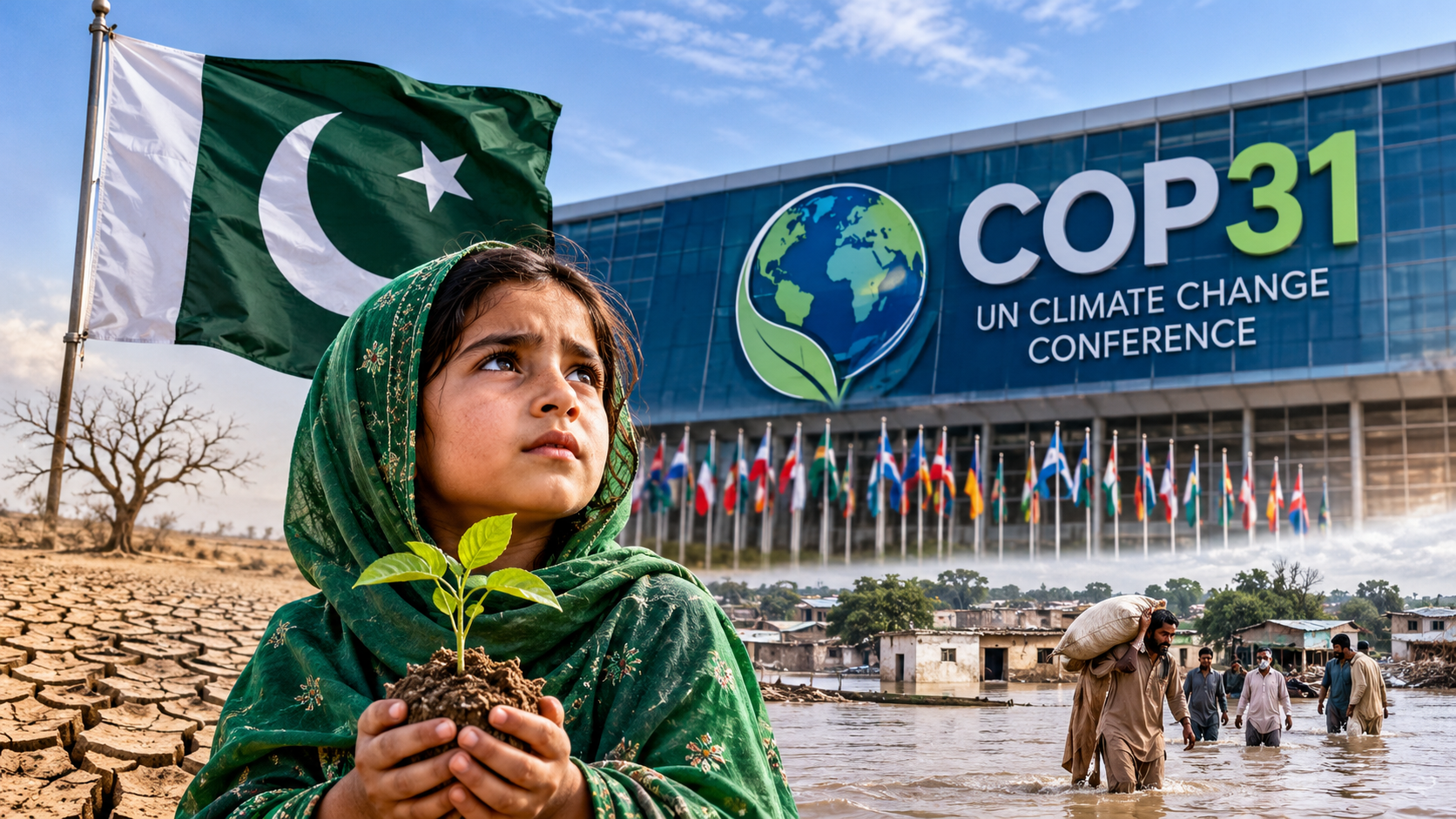
COP31: Pakistan Deserves Climate Finance That Saves Lives
By ALI AHMED COP31: A climate-finance pledge cannot get a family out of the path of a flash flood. That is the practical test facing COP31, the 31st Conference of the Parties to the U.N. Framework...

A pledge is different from an approved project, and an approved project is different from money reaching affected families.Ali AhmedPakistani officials said almost 90% of the commitments made in Geneva were project-financing loans.Loans can finance productive infrastructure, but they are a poor fit for emergency protection, evacuation services and essential recovery in communities with little capacity to repay. Pakistan should not have to choose between leaving people exposed and assuming unsustainable debt. Grants must play a larger role in protecting vulnerable populations.At COP29 in 2024, countries agreed on a goal of at least $300 billion annually for developing countries by 2035, with developed countries taking the lead. The agreement also called for scaling up finance from all sources to at least $1.3 trillion annually by 2035. Pakistan should seek a credible timetable for progress, clearer grant commitments and simpler access to funding. Communities facing recurring hazards cannot put their safety on hold until 2035.
Communities facing recurring hazards cannot put their safety on hold until 2035.Ali AhmedAt Antalya, Pakistan should arrive with a concise list of costed priorities developed in consultation with provincial and local authorities. Early-warning systems need reliable communications, usable evacuation routes and accessible shelters. Housing programs should make rebuilding safer, while agricultural assistance should help farmers resume production without selling the land, livestock or tools on which their livelihoods depend.There is useful experience to build on. Pakistan’s Glacial Lake Outburst Floods Risk Reduction in Northern Pakistan (GLOF-II) project, led by the Ministry of Climate Change and Environmental Coordination, is a major climate adaptation initiative aimed at reducing risks in vulnerable communities in northern Pakistan. Supported by the Green Climate Fund and implemented with the United Nations Development Program, the project combines community preparedness, early-warning systems and protective infrastructure. Such initiatives require sustained funding and maintenance. Installing equipment is only the beginning; someone must keep it working, interpret its signals and know what action to take.According to UNDP, GLOF-II is funded by about $37 million in Green Climate Fund grants and covers 24 valleys across Gilgit-Baltistan and Khyber Pakhtunkhwa. UNDP estimates that 7.1 million people in the two regions are vulnerable to glacial lake outbursts, and lists the project’s end date as December 2026.Domestic accountability is equally important. Provincial and municipal authorities should enforce building regulations, protect drainage routes and incorporate flood risks into development approvals. Where relocation is necessary, residents must have realistic housing alternatives and be treated fairly. Pakistan should also publish climate-finance contracts, disbursements and progress reports, allow independent scrutiny and give communities a way to report failures.International responsibility must accompany domestic accountability. Developed countries, whose historical emissions have contributed disproportionately to global warming, should honor their climate-finance commitments. Energy security and the transition away from fossil fuels will also feature prominently in international negotiations, but these debates must not overshadow the immediate needs of vulnerable populations.COP31 will not resolve every dispute over climate responsibility or provide all the funding Pakistan requires. It can, however, produce meaningful progress if negotiations result in earlier, more accessible support and credible implementation. For families such as Hassan’s, the test is straightforward: When danger returns, will they receive enough warning to escape safely, and will they have the resources to rebuild their homes and livelihoods?
Climate justice cannot remain a diplomatic promise.Ali AhmedClimate justice cannot remain a diplomatic promise. It must translate into protection before disaster strikes and assistance that lasts long after the headlines fade.
📖 THE POLICY DIGEST MAGAZINE: OCTOBER 2026 EDITION NOW LIVE
Exclusive Battle Damage Assessment by Sarah Adams, US-Iran Diplomatic Talks & Transnational Investigations
👉 READ BY CLICKING HERE


Subscribe
Login
0 Comments
Oldest