

Concrete and Catastrophe: Infrastructure Failures Cast a Long Shadow
POLICY WIRE — City, Country — The thundering descent of steel and concrete isn’t supposed to come without warning, especially not during a planned demolition. But a familiar pattern of disaster...

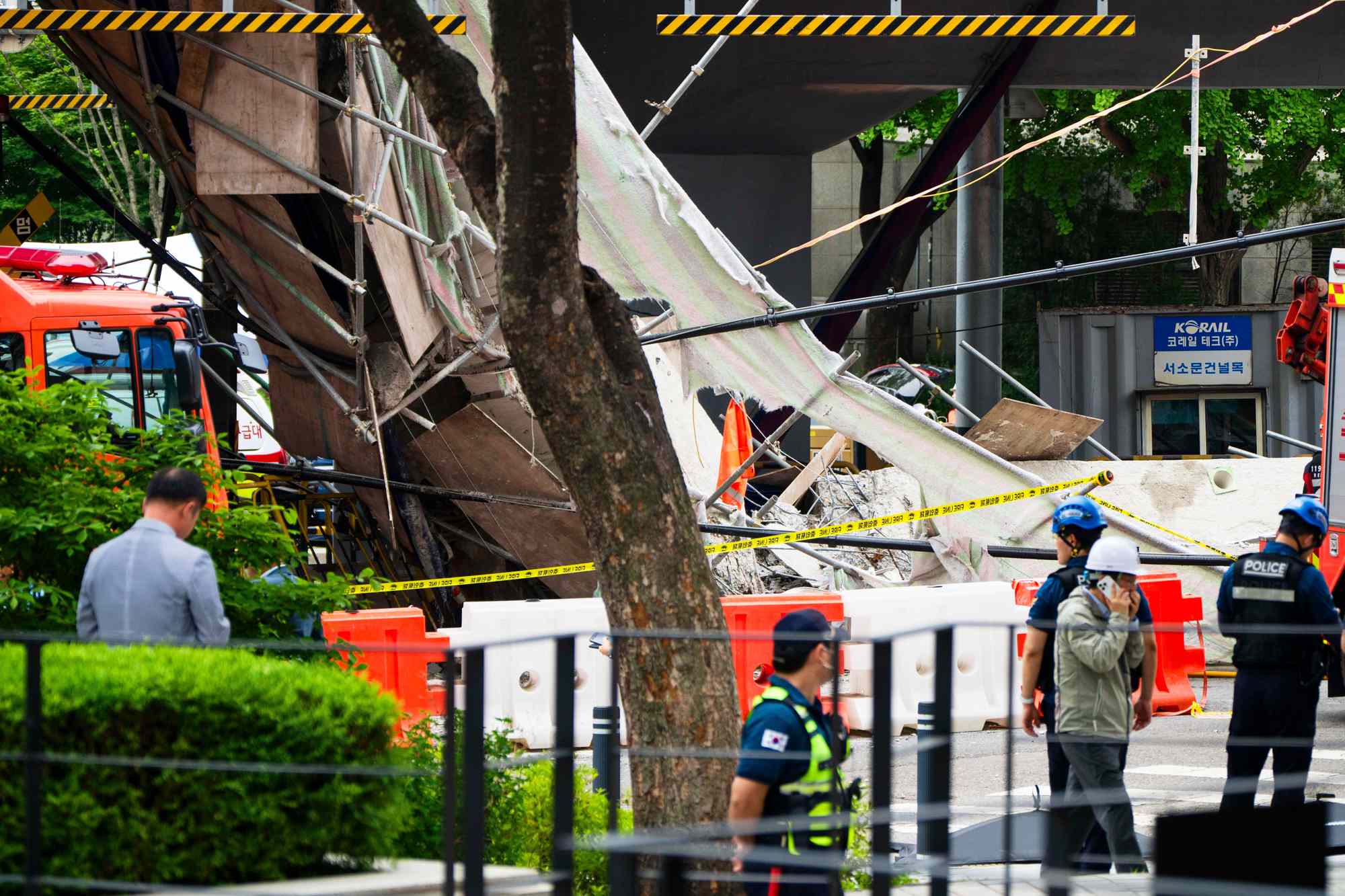
POLICY WIRE — City, Country — The thundering descent of steel and concrete isn’t supposed to come without warning, especially not during a planned demolition. But a familiar pattern of disaster played out when a decades-old highway overpass didn’t just come down—it spectacularly collapsed. Not quietly. But with a guttural roar, claiming innocent lives and reminding us, yet again, of the dangerous fragility lurking beneath our urban sprawl.
It wasn’t a sudden earthquake, you know? It was meant to be controlled. The sheer audacity of a structure giving way mid-procedure, on a demolition site, is—well, it’s just mind-boggling. You expect things to be messy. Accidents happen. But the scale of this, the finality of it for some poor souls, that’s different. This wasn’t an unforeseen stress test; it was a scheduled dismantling gone horribly, terribly wrong. [QUOTE_PLACEHOLDER]
Early reports are, predictably, grim. And the details sketch a scene of carnage where heavy machinery, meant to bring down the old, instead trapped the living beneath its unyielding mass. For a routine operation, the consequences were anything but. Three individuals were found to have died amidst the tangled steel — and pulverised cement. But it gets worse. Three others weren’t so lucky as to escape unscathed. They were injured. That’s a body count that haunts you, isn’t it? A half-dozen lives altered or extinguished in the blink of an eye, just another Tuesday work day turned into an indelible tragedy. And all of it under what should’ve been supervised conditions.
Local authorities, in what’s becoming a tiresome routine for journalists covering such events, were quick to cordon off the area. They’ve started their investigations—a painstaking process of sifting through rubble for clues, and through procedures for failures. It’s the usual dance: blame will eventually be assigned, regulations reviewed, perhaps even some performative outrage. But for the families staring into an abyss of grief, those processes offer cold comfort.
The incident forces us to confront a creeping urban malaise: the deferred maintenance of our collective backbone. Around the globe, from the crumbling colonial-era bridges of Pakistan to the strained public works of Western metropolises, the physical arteries of our economies are quietly decaying. For every flashy new skyscraper or high-speed rail line, there are dozens, hundreds of unseen viaducts, tunnels, and water pipes groaning under the weight of time and neglect. They just aren’t glamorous enough to attract the consistent funding or attention they truly need, until they don’t just fail. But catastrophically, mortally fail. Just last year, an analysis by the American Society of Civil Engineers noted that roughly 7.5 percent of the nation’s bridges are structurally deficient, a sobering figure that hints at the scope of this silent crisis. This particular overpass, decades-old, clearly represented a structural challenge. The fact it collapsed at a demolition site screams of procedural breakdowns.
You can’t help but wonder if shortcuts were taken, if proper assessments of structural integrity were skipped, or if—and this is common in construction sites across South Asia, for example—safety protocols for the demolition of complex, aging structures weren’t rigorously enforced. Sometimes the cheapest bid wins, not necessarily the safest. Sometimes a ticking clock outweighs sound judgment. We’ve seen similar heartbreaking scenarios unfold in rapidly developing nations where infrastructure boom outpaces safety consciousness, where the lives of migrant laborers, often from places like rural Punjab or Balochistan, are frequently viewed as regrettably expendable in the relentless march of progress. It’s a cruel parallelism.
But this isn’t some distant problem, an academic exercise in urban decay. These are real places, real people. And it’s an overpass. An everyday bit of infrastructure that everyone drives on, under, or past without a second thought. Until it’s gone. And people aren’t.
What This Means
The political implications here are straightforward but profound. First, public trust in infrastructure projects — and maintenance oversight takes another bruising. Citizens expect, quite reasonably, that their governments will ensure safe public spaces and infrastructure, particularly during controlled construction or demolition. When a planned event leads to such tragedy, it reveals serious gaps in either planning, execution, or regulatory enforcement. Expect calls for immediate and stringent safety reviews for all ongoing and planned infrastructure projects—and not just in this municipality. It won’t be easy to brush off. Second, there will be economic fallout. Beyond the immediate costs of emergency response — and victim compensation, the project itself will face delays. Increased scrutiny will likely slow future construction contracts, possibly inflating costs as contractors brace for stricter regulations and potentially higher insurance premiums. From a broader governmental perspective, this event amplifies pressure to prioritize substantial investments in aging infrastructure, not just in headline-grabbing new builds. There’s a subtle political calculus at play: ignoring decades-old bridges eventually becomes more politically costly—and certainly more lethal—than proactively maintaining them. What price tag do you put on a human life? Apparently, it’s often less than the budget allocated for a regular inspection and necessary repair.