


Coach of the Year Triumph: Boston’s Mazzulla Defies Playoff Flop, Captures Coveted Award
POLICY WIRE — Boston, USA — It’s a funny old game, isn’t it? A coach, riding high on league-wide adulation for defying expectations, then gets unceremoniously dumped from the playoffs....

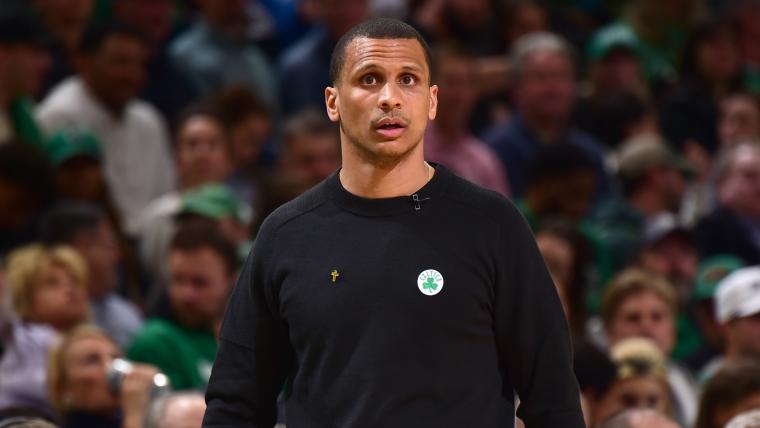
POLICY WIRE — Boston, USA — It’s a funny old game, isn’t it? A coach, riding high on league-wide adulation for defying expectations, then gets unceremoniously dumped from the playoffs. Yet, in a twist that would baffle even seasoned political strategists, he’s just bagged one of basketball’s most prestigious individual honors. Joe Mazzulla, who guided the Boston Celtics through a regular season riddled with hurdles only to see them implode spectacularly in the postseason, has now officially been named the NBA’s Coach of the Year. It makes you wonder about the metrics of success, doesn’t it?
Tuesday brought the news: Mazzulla, at a mere 37 years young, nabbed the award, placing him in rare Boston Celtics company. He’s only the fourth coach in franchise history to earn the distinction, the first since Bill Fitch did it way back in 1980. That’s a serious historical footnote, considering Boston’s hoops heritage. [QUOTE_PLACEHOLDER]
But here’s the kicker, the head-scratcher. He won it, as the original reports had it, after guiding the Boston Celtics to a 56-26 regular-season record and the No. 2 seed in the Eastern Conference despite facing major adversity throughout the season. And what adversity it was. They kicked off the season with lowered expectations—a phrase we’ve heard uttered in various political capitals across the globe. Injuries, roster turnover, the kind of things that typically send a team (or a government) into a tailspin. Especially with star forward Jayson Tatum sidelined for a significant portion of the season while he recovered from a torn Achilles injury.
It was Mazzulla, they say, who pulled rabbits out of hats, forcing him to rely heavily on Jaylen Brown and a younger supporting cast. And Brown, to his credit, delivered, responding with one of the finest seasons of his career, averaging nearly 29 points per game and helping stabilize the team during Tatum’s absence. They finished second in the East, won the Atlantic Division. Pretty neat trick, huh?
But then, there was the fall. Oh, the fall. Boston’s year ended in disappointment after blowing a 3-1 first-round playoff lead against the Philadelphia 76ers. The Celtics were eliminated in seven games, leaving a bitter taste and raising questions about the team’s postseason execution and Mazzulla’s playoff adjustments. It was a proper, cringe-inducing collapse, one that analysts (and disgruntled fans, bless their hearts) tore apart piece by painful piece.
And yet, here we’re. Even with the early playoff exit, Mazzulla earned widespread praise around the league for keeping Boston among the NBA’s elite under difficult circumstances. Folks credited his calm leadership, creative offensive schemes and ability to maximize a roster dealing with injuries and constant pressure. That’s a fairly glowing endorsement, you’ve got to admit, especially for someone whose last act of the season was presiding over a defeat from the jaws of victory. It just proves that perception, and the narrative crafted around it, often outweighs the harsh realities of the immediate past. Sometimes, it feels like winning a public relations battle is just as important as winning on the field.
📄 POLICY WIRE WHITEPAPER PUBLISHED: PAKISTAN'S NATIONAL SECURITY POLICY PRIORITIES
👉 READ BY CLICKING HEREWhat This Means
This paradoxical triumph for Mazzulla isn’t just a sports story; it’s a political allegory, writ small on a basketball court. It speaks to a fascinating phenomenon: how do we, as a society, evaluate leadership when short-term failures clash with long-term performance? Mazzulla’s award suggests that foundational resilience, strategic acumen developed over a longer period, and the sheer feat of navigating immense pressure can, in some circles, eclipse a glaring, public setback.
Consider the landscape in places like Pakistan or broader South Asia. Leaders there, be they in politics, business, or even military, frequently face circumstances far more volatile than a basketball roster change. They juggle regional rivalries, economic instability, and — let’s be frank — intense public scrutiny. Yet, decisions are often weighed not just by immediate outcomes but by the ability to keep the ship afloat amidst a storm, to inspire some degree of confidence, however fleeting, and to demonstrate a strategic vision when all appears lost. Think of a head of state lauded for securing crucial international aid or maintaining fragile peace, even as domestic challenges like inflation or energy crises persist. It’s about surviving, performing, — and delivering the baseline when expectations plummet.
This situation echoes the broader evaluation dilemma: is a political leader who steers a nation through an unforeseen economic downturn, preventing a complete collapse, more deserving of praise than one who simply maintains prosperity during stable times, only to stumble when a crisis hits? It’s not just about the final score; it’s the journey, the management of limited resources, the sheer grit involved in simply competing for relevance. This year’s NBA Coach of the Year award isn’t about championship hardware; it’s about the precarious art of leading under fire, a lesson as old as any empire, whether in Boston or beyond. Sometimes, the scrutiny of high-stakes performance weighs heavier than a literal trophy.
