


Christmas in Pakistan: The Quiet Proof of National Cohesion
On December 25, Pakistan observes Quaid-e-Azam Day while Christian citizens celebrate Christmas, their Eid festival, with prayers, carols, and family gatherings. The date carries rare symbolism: it...

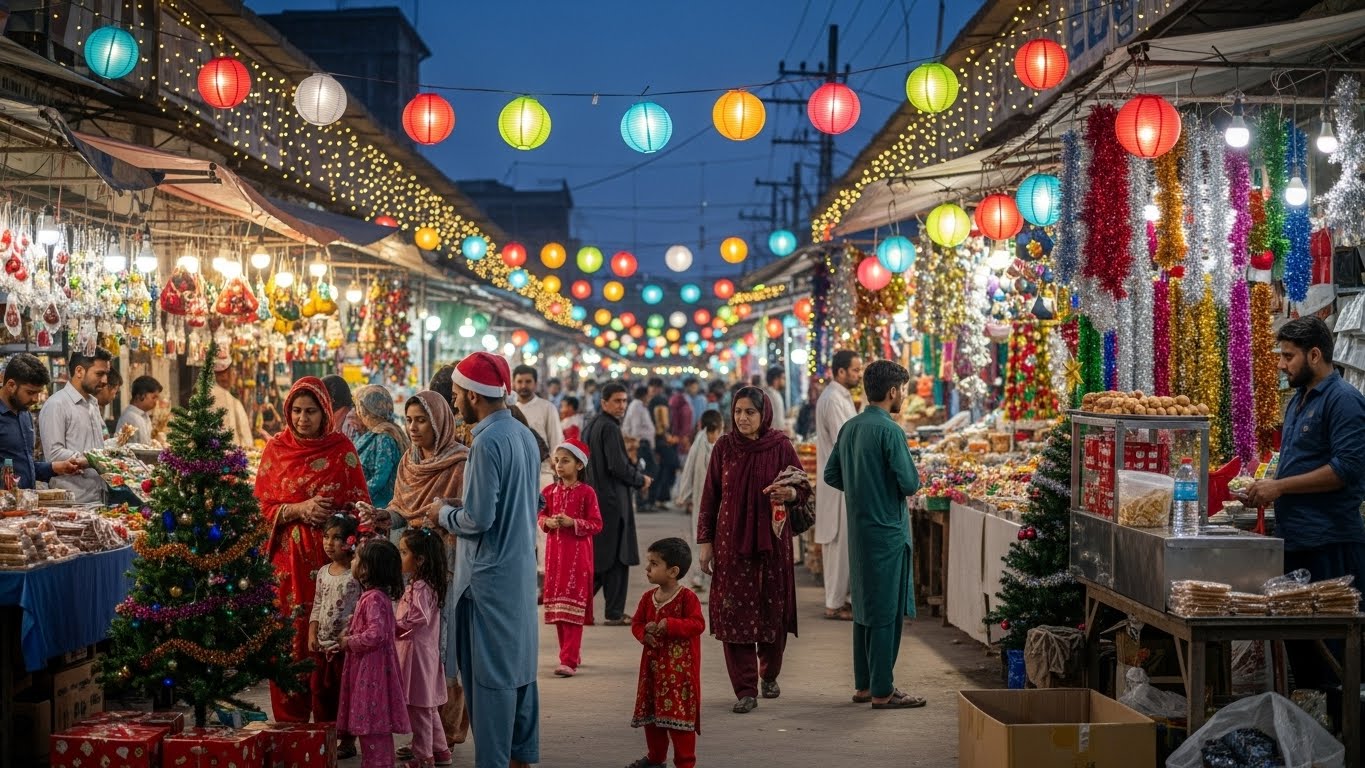
On December 25, Pakistan observes Quaid-e-Azam Day while Christian citizens celebrate Christmas, their Eid festival, with prayers, carols, and family gatherings. The date carries rare symbolism: it places the founder’s legacy and the lived reality of religious diversity on the same page of the calendar. Pakistan’s identity is not weakened by pluralism; it is reinforced by equal citizenship and shared national belonging.
This year, the state’s role in protecting and facilitating Christmas has been visible and professionally executed, and it merits recognition as a governance success. Punjab Police finalised a province-wide security plan for Christmas and Quaid-e-Azam Day, including the deployment of over 30,000 police personnel to secure more than 2,900 churches across Punjab, with over 5,000 personnel in Lahore alone to cover hundreds of worship places. In Karachi, a separate security plan deployed 3,599 police personnel to secure 702 churches during Christmas prayers.
These numbers matter because they reflect state capacity. In a country that has faced violent extremism and targeted attacks in the past, proactive protection of worship places is not merely “optics.” It is the basic function of the state: maintaining public order, securing citizens’ lives, and denying space to those who want to intimidate communities into silence. It also makes a principled point: Christians are not “guests” celebrating under conditional tolerance. They are citizens exercising a right.
Pakistan’s constitutional framework is equally clear. Article 20 guarantees every citizen the freedom to profess, practice, and propagate religion, and guarantees religious denominations the right to establish and manage religious institutions, subject to law and public order. Article 25 guarantees equality before the law and equal protection of the law. These are not ceremonial lines meant only for speeches; they are operational responsibilities. When police secure churches and local administrations manage crowds and routes, the Constitution is not merely being quoted. It is being implemented.
The government has also reinforced this operational posture with civic messaging that aligns with state responsibility rather than tokenism. Prime Minister Shehbaz Sharif extended greetings “on behalf of the Government and the people of Pakistan” to Christian communities worldwide and especially to Christian Pakistanis. That framing matters because it locates Christians within the core idea of “the people of Pakistan,” not at the margins. Similar greetings from top state offices strengthen this civic tone.
A state that protects all communities strengthens national unity, increases public trust in institutions, and deprives extremist narratives of oxygen. Social cohesion is not a slogan; it is a national security asset. When citizens trust that the law will protect them regardless of faith, they participate in public life more confidently and cooperate more readily with institutions. That trust is built not only through statements, but through consistent delivery.
Encouragingly, Pakistan has taken an institutional step that can convert goodwill into durable policy. On December 2, 2025, a joint sitting of Parliament passed the National Commission for Minorities Rights Bill, 2025, intended to establish a national body dedicated to protecting and promoting minority rights. This is not a minor legislative event. It signals that the state recognises minority protection as a governance domain that needs structure, continuity, and accountability, not occasional ceremonies.
📄 POLICY WIRE WHITEPAPER PUBLISHED: PAKISTAN'S NATIONAL SECURITY POLICY PRIORITIES
👉 READ BY CLICKING HEREPassing a bill, however, is only the beginning. The real test is implementation. The commission must be equipped to coordinate with provinces, receive complaints, identify patterns of discrimination, and recommend reforms that ministries can actually operationalise. If designed as an empowered governance tool rather than a symbolic body, it can reduce friction, strengthen justice delivery, and reinforce Pakistan’s constitutional promise in measurable ways.
Inclusion also has a practical dimension beyond law and policing. It is reflected in civic facilitation: traffic management, lighting, cleanliness, and safe public spaces around worship places during major gatherings. When local administrations deliver these basics, they turn “belonging” into a lived experience, not a slogan.
There will always be skeptics who argue that heavy security itself proves vulnerability. That conclusion misses the role of the state. Security planning does not undermine celebration; it protects it. When the state invests personnel, surveillance coordination, and structured deployment, it sends two clear messages: to citizens, that their safety matters; and to spoilers, that intimidation will not dictate Pakistan’s public life.
Christmas in Lahore and across Pakistan should therefore be framed as a quiet national win: citizens celebrating their faith openly, and state institutions performing their duty professionally. The next step is not to debate whether minorities belong. The Constitution already answered that. The task now is to make this dignity routine, not seasonal, so that the protection and equality visible on December 25 becomes the everyday texture of Pakistani citizenship.
That is not a concession. It is what a confident Pakistan looks like.
Author