


Capitol Contradiction: $13M Refresh Crumbles, Olympian Charged Over $1,000 ‘Vandalism’
POLICY WIRE — WASHINGTON, D.C. — Imagine a nation pouring millions into an iconic public monument, only for the freshly applied surface to begin peeling off within weeks. Now, picture an elderly...

POLICY WIRE — WASHINGTON, D.C. — Imagine a nation pouring millions into an iconic public monument, only for the freshly applied surface to begin peeling off within weeks. Now, picture an elderly Olympian, once revered, facing felony charges for a paltry $1,000 worth of alleged damage to that same crumbling spectacle. Welcome to the theater of the absurd playing out in Washington, where the Lincoln Memorial Reflecting Pool, a symbol of American resilience, is now a stage for baffling infrastructure failures and curious legal battles. It’s quite a scene.
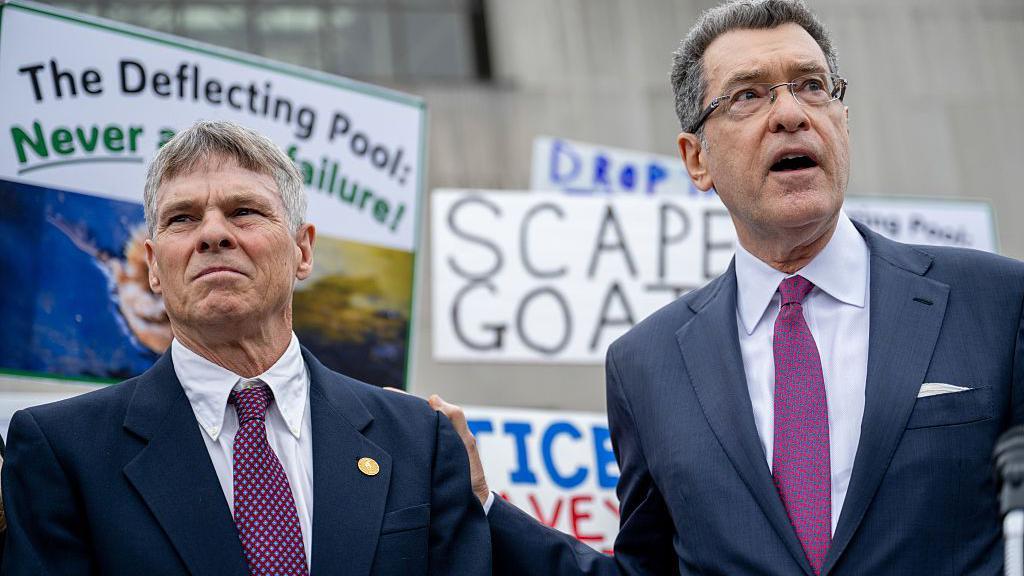
Former U.S. Olympic canoeist David ‘Davey’ Hearn, a man who once navigated choppy waters for his country, last week entered a plea of not guilty to a destruction of property charge. That’s right: property destruction. The allegation? Meddling with the rapidly delaminating liner of the Reflecting Pool. But here’s the kicker: Hearn, 67, says he merely touched material already coming apart. He insists, in statements made to BBC News, that he “didn’t destroy, rip, tear, peel, or remove any part” of the recently installed sealant. And frankly, the evidence of its own self-destruction is rather compelling.
Because the $13 million renovation — funded by U.S. taxpayer dollars and championed by the Trump administration as a testament to capital beautification — has proven less than robust. Just days after its unveiling, pieces of the pool’s blue sealant began to detach, leaving an optical stain on the grand public works project. It didn’t look good. Officials even found themselves draining the pool for a second time in three months following the Fourth of July fireworks, which, naturally, scattered debris everywhere. Interior Secretary Doug Burgum, a man not prone to overstatement, dryly announced, “Drain the water. Clean up the fireworks stuff. Repair the vandalism that was done. Fill it back up again.” That’s a telling little sequence of tasks, isn’t it?
But when fingers started pointing, they landed squarely on citizens. The U.S. Attorney for the District of Columbia, Jeanine Pirro, minced no words last week, alleging Hearn “ripped” a section of the new sealant in a “deliberate act” of sabotage on June 19. It sounds dramatic, doesn’t it? As if an Olympian’s idle touch could fell a multi-million-dollar government project. Five other people have been arrested in connection with pool vandalism, say U.S. Park Police, with another five receiving federal citations. It paints a picture, a strange one, of an administration seemingly more intent on punishing bystanders than addressing root causes.
Hearn’s attorneys are having none of it. Norm Eisen, one of his lawyers, stated outside the courthouse, “If Mr. Hearn can be charged with a felony for touching the Reflecting Pool, every American is at risk.” He followed with an almost defiant truism: “It’s not a crime to touch the Reflecting Pool, to touch water, in the United States of America.” That’s a fair point. His legal team suspects the Trump administration is using Hearn as a convenient scapegoat, deflecting blame from the project’s flawed execution onto anyone within arm’s reach. This administration has a way of finding external enemies for internal problems, a pattern observed globally when grand projects falter.
What This Means
This whole bizarre affair is more than just a bureaucratic snafu; it’s a stark commentary on accountability and optics within government. Politically, the administration appears to be fighting a public relations war against a peeling pool liner. Charging a senior citizen for minor alleged damage to a structure that appears to be failing on its own accord smacks of desperation. It distracts from the undeniable fact that a multi-million-dollar investment has yielded a visibly flawed outcome, damaging public trust more than any individual touch could.
📄 POLICY WIRE WHITEPAPER PUBLISHED: PAKISTAN'S NATIONAL SECURITY POLICY PRIORITIES
👉 READ BY CLICKING HEREEconomically, it’s a classic example of wasteful public spending. A staggering $13 million spent, — and what do taxpayers get? A perpetually draining, algae-prone monument that demands ongoing, reactive fixes. This isn’t just an American phenomenon; governments in regions like South Asia — from Pakistan to beyond — frequently struggle with similar optics, where grand infrastructure projects are announced with much fanfare, only to be plagued by shoddy execution, cost overruns, and questionable accountability. The cynicism generated by such public expenditures isn’t confined to any single continent; it corrodes confidence in governance everywhere.
The situation casts a pall over federal administration of national treasures, hinting at a wider disconnect between ambition and operational reality. Instead of addressing the inherent flaws in the pool’s rehabilitation – perhaps by holding contractors or planners responsible – the impulse has been to criminalize public interaction. It’s an approach that suggests a fragile sense of authority, perhaps. One that prefers scapegoats to self-reflection. And really, what does it say about America when even its iconic pools can’t hold water – or a decent paint job?