


Caitlin Clark’s Scorching Debut Ignites Culture War on the Court — And in the Broadcast Booth
POLICY WIRE — Indianapolis, USA — It’s not the dazzling three-pointers or the gravity-defying assists that have truly captured the imagination this WNBA season, but rather the snarling,...

POLICY WIRE — Indianapolis, USA — It’s not the dazzling three-pointers or the gravity-defying assists that have truly captured the imagination this WNBA season, but rather the snarling, in-your-face theatrics of professional basketball at its most primal. Forget stats sheets; the real story unfurling is a raw, unvarnished battle for turf and eyeballs, all centered around a rookie phenom named Caitlin Clark.
Her latest run-in, a jaw-to-jaw showdown with Golden State Valkyries forward Tiffany Hayes, played out in excruciatingly viral detail last weekend. Clark had just drilled a deep shot over Hayes—an almost casual flick of the wrist. What followed wasn’t a handshake or a nod, but a pugilistic exchange of words: “You like that?” from Clark, met with Hayes’s unprintable retort and a direct challenge to ‘step up.’ It wasn’t polite. But it sure as hell got people watching. And it raises an inconvenient truth: sometimes, policy is shaped less by parliamentary debates and more by a microphone close-up in a sports arena.
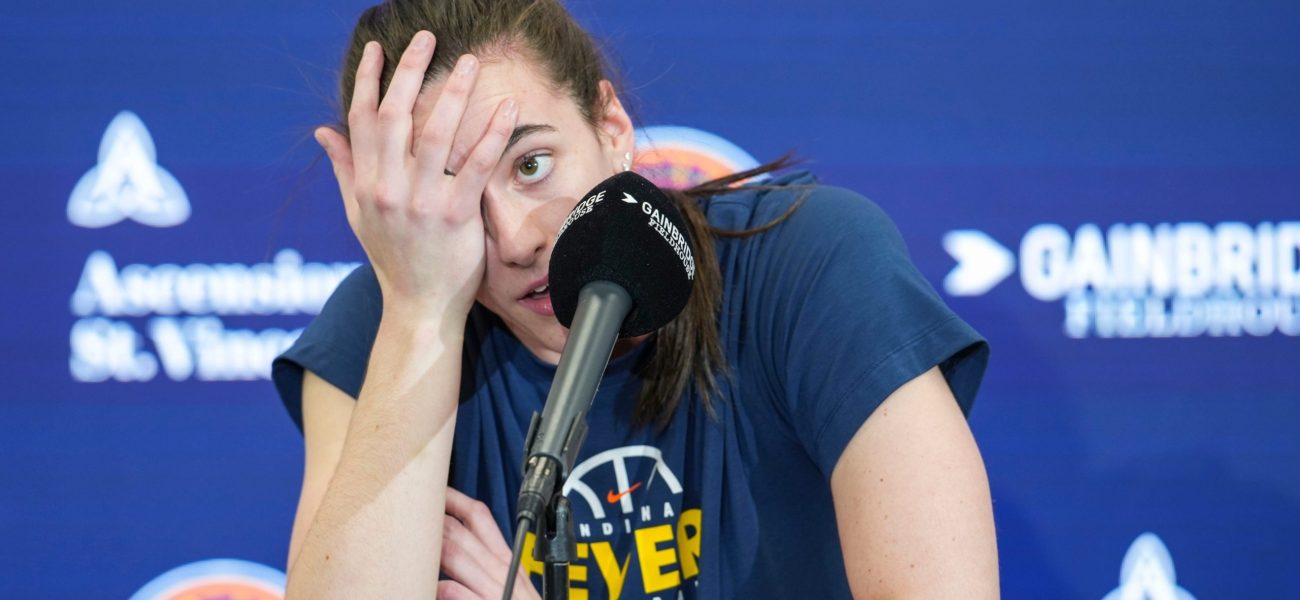
But the rookie, seemingly unflappable on the court, conceded after the Indiana Fever’s 90-82 victory that this particular brand of celebrity carries a weighty toll. “Yeah, I think that’s just being a competitor, — and like, that’s what’s fun. That’s what I love about it,” Clark told reporters. Her voice was steady, but there was an undertone, a faint admission that the relentless glare, the constant probing, is ‘a little bit exhausting too.’ And you don’t get to be a generational talent without facing down a few titans, on and off the court. They don’t just hand you this much spotlight, do they?
But it’s precisely this human drama—this unscripted friction—that league executives and media analysts alike can’t stop talking about. Commissioner Cathy Engelbert, long a proponent of expanding the WNBA’s reach, seems to view the current cauldron of competition as a necessary evil, maybe even a secret weapon. “We’re seeing unprecedented engagement,” Engelbert stated recently, her tone brimming with a carefully measured enthusiasm. “This kind of intensity, it connects with fans in a profound way. It’s authentic. We’re leaning into that competitiveness, but always prioritizing player safety and sportsmanship.” That’s the tightrope walk, isn’t it? Balancing viral moments with PR headaches. Because, let’s be honest, those moments generate the clicks.
Not everyone, however, is quite so sanguine about the league’s rough-and-tumble turn. State Department envoy for global sports affairs, Amirah Zahra, offered a more cautious perspective during a virtual summit on soft power through sport. “While passion is essential in any competitive environment, we must remember that athletes are global role models, especially for young people in regions like South Asia and the Muslim world where women’s participation in sport is still evolving,” Zahra cautioned. “The theatrics, the trash talk – it can be misinterpreted. It can inadvertently reinforce negative stereotypes, rather than promoting healthy, respectful competition, particularly for audiences unfamiliar with the cultural nuances of American professional sports. There’s a balance to be struck between competitive fervor and setting a unifying example globally.” Her point resonated in the virtual room; it’s not just about ticket sales here in the heartland.
📄 POLICY WIRE WHITEPAPER PUBLISHED: PAKISTAN'S NATIONAL SECURITY POLICY PRIORITIES
👉 READ BY CLICKING HEREAnd it’s a delicate balance because the numbers speak a loud truth: WNBA viewership across ESPN platforms is up an astounding 150% this season compared to last, a surge largely attributed to Clark’s arrival. That’s real money, real influence, streaming right into living rooms from Los Angeles to Lahore. The WNBA, long relegated to niche status, now finds itself a cultural thermometer. Clark’s celebrity, much like the broader conversation around women in high-profile competitive arenas, sparks different reactions everywhere. In places where athletic pursuits for women have historically been more conservative, the aggressive assertiveness on display in a WNBA game can be seen either as liberating — or jarring. It’s a lens through which broader societal shifts are projected, interpreted, — and often, hotly debated. She’s not just a basketball player anymore. She’s an international incident in spandex, whether she likes it or not.
What This Means
The Caitlin Clark phenomenon isn’t just sports news; it’s a flashpoint for significant policy discussions, both domestic and international. Economically, her presence has delivered a commercial jackpot for the WNBA. Increased viewership translates directly into greater advertising revenue, more lucrative broadcast deals, and enhanced league valuation. It’s a market correction that showcases the immense, untapped financial power of women’s sports, demanding policymakers and investors re-evaluate funding priorities and marketing strategies. This isn’t a one-off anomaly; it’s a loud siren for growth that signals an imminent shift in the sports media landscape. Just think about the opportunities for expansion and new audiences, and how much economic good comes with that kind of global exposure, for example, linking with the changing dynamics of global sports. This shift isn’t just about dollars, either.
Politically, the ‘Clark effect’ forces a confrontation with gender norms — and expectations. The discourse around her on-court intensity—and the ‘trash talk’ she elicits—reveals persistent double standards regarding female competitiveness. What’s often lauded as ‘grit’ or ‘passion’ in male athletes can be derided as ‘drama’ or ‘unladylike’ when women are involved. And it’s precisely this tension that opens up pathways for deeper dialogue about equity in media representation, gender equality in sport, and the broader societal permission structures for women to be openly aggressive, ambitious, and financially powerful. Her weary admission of ‘exhaustion’ humanizes the high-pressure environment, reminding us that even athletic supernovas deal with the relentless glare of a public still grappling with new forms of female stardom. Her narrative, therefore, becomes a quiet but persistent policy question: How do we foster competitive environments that empower, rather than police, female athletes? It’s not an easy answer, but we’d be fools not to look for it.