

Bukele Deploys Troops to Haiti: Experts Warn of Risks Amid Gang War Expansion
El Salvador leader Nayib Bukele sends 2,000 troops to Haiti following citizen kidnappings. Experts warn of the potential for brutal urban warfare.

POLICY WIRE — Port-au-Prince, Haiti — El Salvador’s authoritarian president, Nayib Bukele, is expanding his aggressive anti-gang strategy into Haiti, a nation currently engulfed in extreme violence.
The move follows nearly five years of Bukele’s domestic crackdown, which has significantly lowered crime rates and established him as a model for hardline security policies across Latin America.
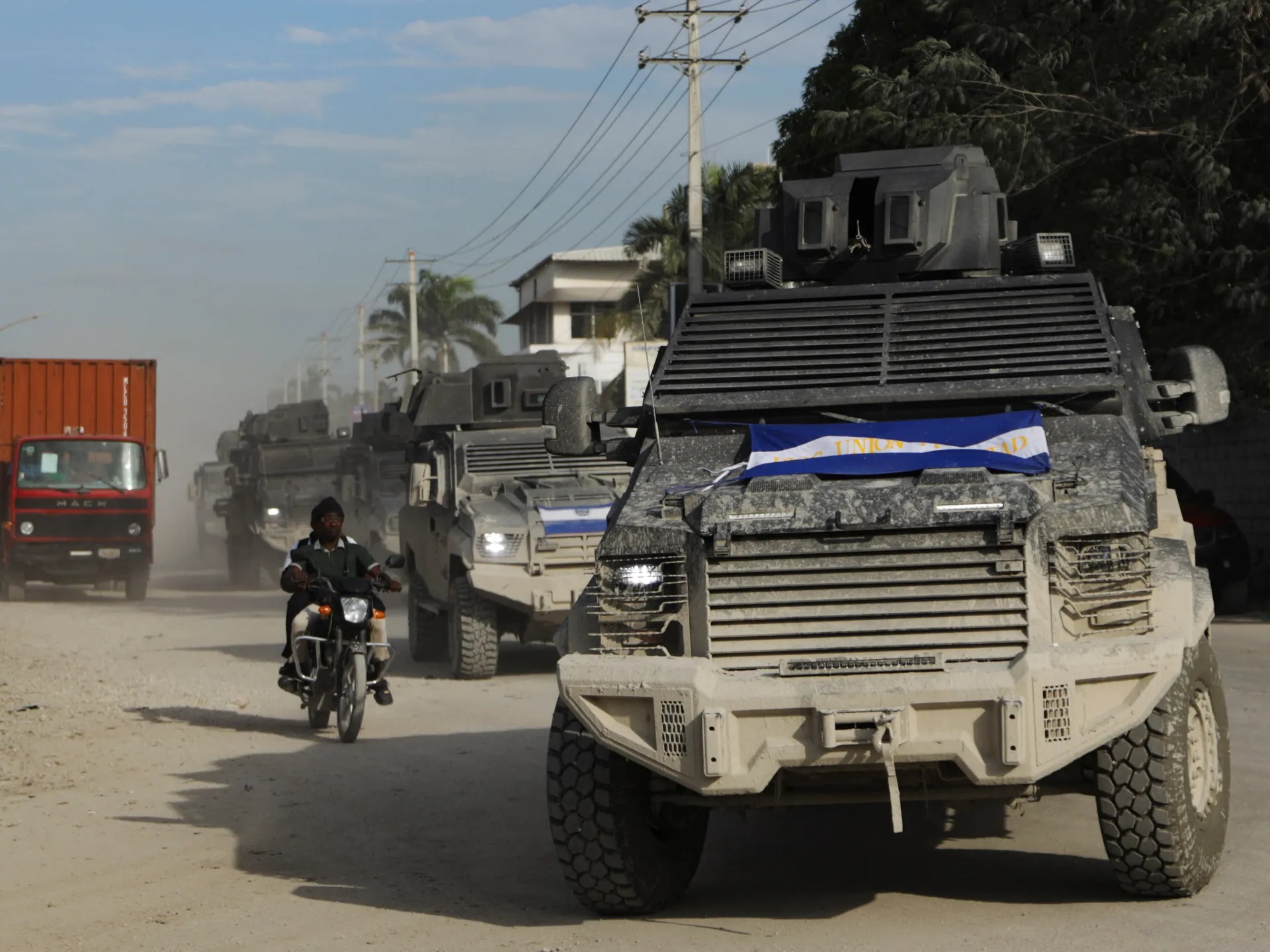
Bukele has dispatched more than 2,000 Salvadoran soldiers and special forces to the Caribbean nation following the abduction of four Salvadoran citizens on October 18.
In a social media post written in Haitian Creole, Bukele declared his intention to help liberate the country from those who betrayed the legacy of revolutionary leader Jean-Jacques Dessalines.
The Salvadoran leader’s reliance on mass arrests and clandestine negotiations has earned him significant support among right-wing politicians and citizens in Haiti, where gangs have controlled vast portions of the capital since the 2021 assassination of President Jovenel Moïse.
Security analysts note that while many Haitians may long for a similar type of intervention, the socio-political landscapes of the two countries remain vastly different.
Vanda Felbab-Brown, a security expert at the Brookings Institution, observed that the dire situation in Haiti has created a desperate desire for any strong leader capable of ending the current cycle of terror.
Supporters of Bukele online have celebrated the intervention, with some praising the president for having the courage to take action where other regional leaders have failed to act.
However, the deployment has also sparked protests and raised deep concerns regarding the true objectives of Bukele’s mission and the lack of a clear exit strategy.
The intervention began after four Salvadoran aviation technicians disappeared in a gang-controlled area northeast of the international airport, sparking a humanitarian crisis that has already displaced 1.5 million people.
While Bukele initially framed the operation as a rescue mission for his fellow citizens, his later social media posts suggested a much broader goal of dismantling the Haitian gang infrastructure entirely.
Bukele dismissed comparisons to Napoleon’s historical defeat at Waterloo, asserting that divine favor would ensure victory for his forces in the Caribbean environment.
Adam Isacson, a security specialist, noted that while the specific military tactics remain opaque, the political motivation is likely an attempt to bolster Bukele’s reputation ahead of the presidential election in February.
The establishment of a Salvadoran base near the U.S. embassy suggests that the deployment is not intended to be short-term.
The security landscape on the ground remains volatile, involving various armed groups including vigilante mobs, local police, foreign mercenaries, and a UN-backed gang suppression force led by a Mongolian general.
Romain Le Cour of the Global Initiative Against Transnational Crime warned that the mission resembles an ‘orchestra without a conductor’ because Salvadoran troops are operating outside the official UN-led command.
Experts fear that the use of heavy weaponry, helicopters, and drones could escalate the conflict into brutal urban guerrilla warfare, leaving civilians trapped between criminal elements and high-intensity military operations.
Bill O’Neill, a UN human rights expert, expressed concern over the unpredictable nature of the mission, noting it could become a dangerous and opaque situation.
Donald Trump recently voiced his support for the mission, stating he told Bukele he had the right to do what was necessary for the country without the need for American assistance.
Reporting by Policy-Wire (PW)