


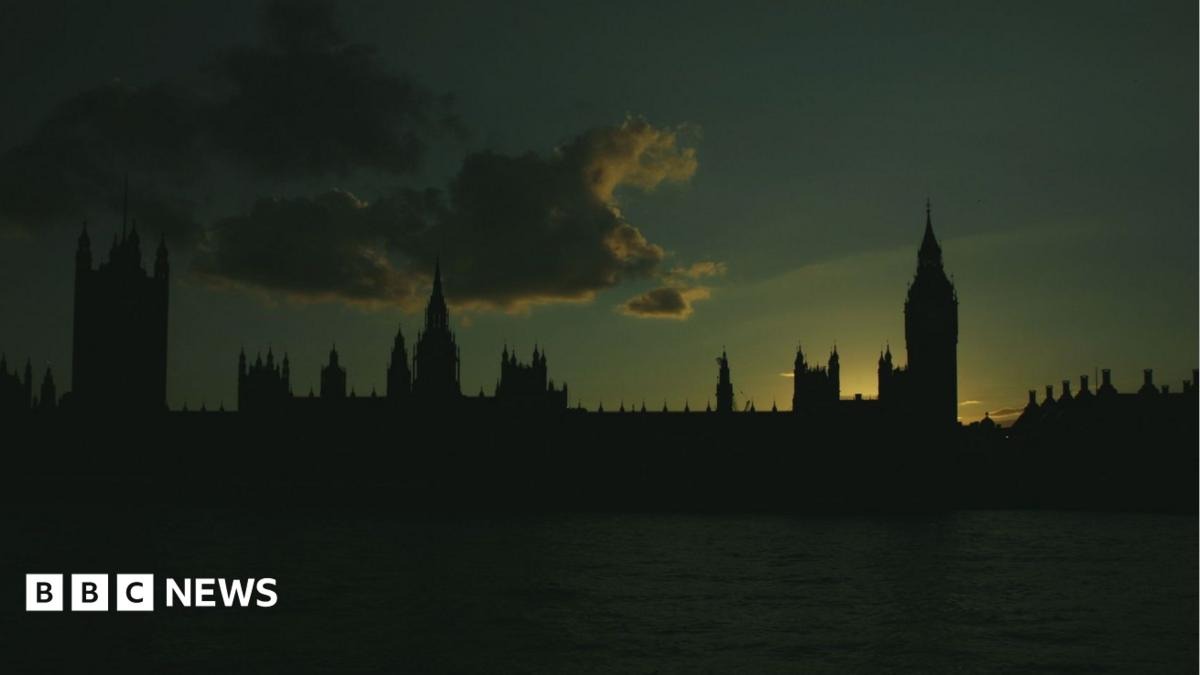
Black Sky Alert: How UK Prepares for a 72-Hour Total Grid Collapse
Discover how the UK is bracing for 'Black Sky' events as severe weather and cyber attacks threaten essential services, water, and communications.

POLICY WIRE — Lancaster, UK — A quiet Saturday night in December 2015 turned into a chilling wake call regarding the fragility of modern infrastructure. Roger Kemp, an engineering professor at Lancaster University, recalls the moment the streetlights and the distant horizon glow vanished while he was watching television.
By the following morning, the city resembled a scene from a horror film as residents struggled to find mobile signals and queued at the few functioning public telephones. The blackout was triggered at 22:45 on December 5, 2015, when the River Lune overflowed, cutting power to 61,500 residents.
The outage caused a cascade of failures: homes lost heat, electric water pumps stopped working, and the railway station, petrol stations, and shops shuttered. Even traffic lights and most cash withdrawal machines became non-functional.
During the chaos, only copper-wire landlines and FM radio remained viable for communication. A local station, The Bay, managed to broadcast using an emergency generator and a single landline to report from outside the dead zone.
Three months later, Kemp led an investigation into the failure, noting the irony that a digital-dependent society’s only reliable news source was 1960s-era pirate radio technology. This scenario is now known as a ‘Black Sky’ event—a total collapse of connectivity.
Recent UK resilience summits have emphasized the necessity for the nation to survive such an event for at least 72 hours. Experts cite the phrase ‘nine meals from anarchy,’ warning that just three days without food can trigger total social disorder.
While the government’s ‘Be Ready’ campaign encourages citizens to stockpile supplies for various crises, officials maintain there is no immediate specific threat to the national grid. Nevertheless, the memory of mass blackouts in Spain, Portugal, and France in April 2025 keeps the fear alive.
In major emergencies, the public is advised to shelter and use FM radio. The BBC maintains a secret Black Sky protocol involving roughly 100 staff members operating an emergency studio equipped with non-internet-dependent lines and days’ worth of food and water.
These broadcasts will deliver pre-written government instructions, covering topics like water consumption and waste management. Satellite-equipped journalism vehicles will also provide updates as long as their fuel supplies allow.
The BBC relies on radio towers isolated from the web, some holding up to 40,000 litres of diesel to power high-energy FM transmitters for three days. Teams will use satellite phones with backup protocols if those fail.
While some BBC sources suggest the original plan was five to seven days, the National Energy System Operator (Neso) currently estimates power could be restored within two to three days.
Lord Harris, chair of the National Preparedness Commission, warns that power cuts extend far beyond lighting, threatening water supplies and causing catastrophic sewage blockages that lead to backups.
While European neighbors frequently advise households to stockpile supplies, the UK is seen as lagging in this area. However, the government is investing in High Altitude Pseudo-Satellites (HAPS)—planes that provide emergency internet and mobile connectivity.
Lord Harris noted that the drive for efficiency over the last fifty years has eroded backup systems, highlighting that moving emergency services from radio to 4G and 5G creates vulnerability if those networks fail.
The Cabinet Office asserts that the UK possesses one of the world’s most resilient grids, noting no total outages in its 75-year history. Despite resilience initiatives launched by Oliver Dowden in 2024, the urgency for copper-wire alternatives remains.
Kemp remains skeptical, observing that the decommissioning of reliable landlines has left the public unprepared for total communication failure. During a recent power cut, he found his torch batteries dead, realizing he had forgotten his emergency wind-up radio.
Reporting by Policy-Wire (PW)