



Beyond the Atlanta Roar: Morocco’s Triumph, Haiti’s Grit, and the Global Game’s Sharper Edges
POLICY WIRE — Atlanta, USA — It isn’t just about the ball, not anymore. Not when a World Cup match pits a nation battling for survival on the pitch against a global star fighting allegations...

POLICY WIRE — Atlanta, USA — It isn’t just about the ball, not anymore. Not when a World Cup match pits a nation battling for survival on the pitch against a global star fighting allegations off it. Achraf Hakimi, a man celebrated — and scrutinized in equal measure, continues to captain Morocco. But he does so having learned mid-tournament that he’s to face a trial on rape charges in France. That, you see, puts the beautiful game into sharp relief against the often-ugly realities swirling around its players, especially when geopolitics and reputation are at stake for a nation like Morocco.
So, when Morocco twice overcame the shock of conceding to Haiti to win a World Cup thriller 4-2 in Atlanta on Wednesday, but missed out on top spot in Group C to Brazil
, it felt like a microcosm of so much more. This wasn’t just a win; it was a tightrope walk for national pride, a testament to resilience from two wildly different corners of the globe. [QUOTE_PLACEHOLDER]
Haiti, a nation scarred by decades of poverty — and political upheaval, had its own story to write. For them, this World Cup journey was less about points — and more about presence. They bowed out with their first World Cup goals for 52 years, a monumental achievement in itself, something not lost on the thousands of Haitian expats in the stands at Atlanta
, who remained undeterred as every attack was met with deafening cheers
. Imagine the sheer weight of expectation, or rather, the joy of defying it, for a country often forgotten. A Yassine Bounou own goal and Wilson Isidor’s stunning strike twice gave them the lead
. Wilson Isidor’s stunning strike put Haiti 2-1 up
, actually, which says plenty about their pluck.
Morocco’s side, dubbed the Atlas Lions, looked sloppy at the start. That’s what happens, doesn’t it, when the external pressures, the world’s spotlight on one of your key players—a player who just weeks ago helped propel you into the semi-finals of a previous World Cup—start to fray the edges of focus. Their long wait for a goal on the global stage was ended after just 10 minutes when Jean-Kevin Duverne got the by-line and Lenny Joseph flicked his cross into the net via a deflection off Bounou. But even amidst such an unfolding drama, Achraf Hakimi and Ismael Saibari, with his third goal in as many games at the World Cup, levelled before half-time
.
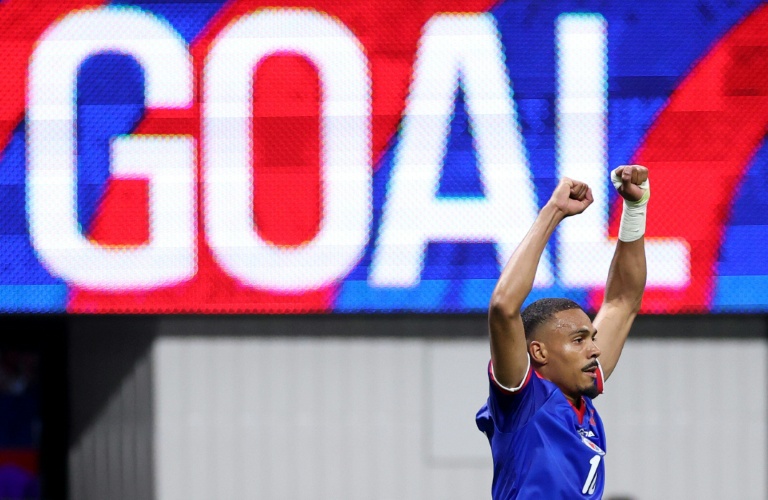
And Hakimi? The reigning African footballer of the year stormed forward from right-back at every opportunity and was in the right place to equalise on 39 minutes
. It’s like he channels the personal fight onto the pitch, though one has to wonder about the mental strain. In his final game for Haiti, 38-year-old goalkeeper Jonny Placide could only parry Bilal El Khannouss’ strike and Hakimi had a simple task to force the ball over the line.
But then, Haiti punched back. Again. Within four minutes, though, Haiti had restored their lead in far more spectacular fashion
. It wasn’t just a goal; it was a statement. Sunderland striker Isidor pounced on a loose ball and let fly from outside the area with a shot that arrowed into the top corner. Hakimi — and coach Mohamed Ouahbi looked genuinely riled. Still, the Moroccan resilience eventually shone through. Saibari stroked home his third goal of the tournament with a cool finish from Hakimi’s low cross.
Later, with the team looking to seal their progression and avoid slipping further behind Brazil in their group, Coach Ouahbi, who’d made four changes to the side that had impressed in holding Brazil and beating Scotland in their opening two games
, brought in some fresh legs. Two substitutes saved the day, proving the depth of the squad. Soufiane Rahimi was nearly brought to tears when the 30-year-old’s deflected effort found the top corner to give Morocco the lead before Gessime Yassine rounded off the scoring.
This powerful showing ensures Morocco will head to Monterrey for a likely meeting against the Netherlands or Japan on Monday. But Morocco missed out on top spot in the group to Brazil on goal difference, meaning they will head to Monterrey for a likely meeting against the Netherlands or Japan on Monday.
What This Means
This match was more than a scoreline; it was a canvas reflecting international narratives. For Morocco, a predominantly Muslim nation on the global stage, its team’s performance, particularly by a player facing high-profile legal challenges in France, directly influences its image and soft power. Any international legal issue touching a prominent figure from the Muslim world in a Western European court — it often stirs deeper conversations about jurisdiction and perception. The continued participation and scoring of Hakimi, despite the gravity of the accusations, allows the nation to project resilience and maintain a semblance of focus, even if behind the scenes, diplomats are certainly monitoring. It’s about preserving national dignity while navigating a very modern crisis, a balancing act familiar to many developing nations.
For Haiti, the implications are more stark, more primal. Despite bowing out without a point, Haiti’s performances at a first World Cup since 1974 have done a nation gripped by poverty proud
. Think about that statistic: 52 years for World Cup goals. This moment of global recognition, even in defeat, offers a brief, desperately needed reprieve from relentless economic hardships and political instability. It’s a collective exhale, a reminder that they exist on the world stage for more than just humanitarian aid appeals. Such sporting moments, however fleeting, provide a shared identity, a balm for collective trauma, reinforcing hope in places where it’s desperately short. It doesn’t fix the underlying issues, of course, but it momentarily shifts the narrative, providing a vital psychological lift.
