


Beijing’s Calculated Restraint: Decoding China’s Non-Intervention in US-Iran Tensions
POLICY WIRE — The political landscape often throws up unlikely bedfellows, or at the very least, unexpected acknowledgments. Few scenarios, for instance, would ...

POLICY WIRE — The political landscape often throws up unlikely bedfellows, or at the very least, unexpected acknowledgments. Few scenarios, for instance, would have seemed more improbable a mere twelve months prior than a United States president thanking China for its perceived ‘neutrality’ concerning potential hostilities in the Middle East. Yet, this exact dynamic unfolded on the international stage.
During the Group of Seven (G7) summit held in Evian-les-Bains, France, on June 17, US President Donald Trump extended his gratitude to Beijing—alongside Moscow—for what he suggested was their role in averting a more severe regional crisis. The commendation centered on China’s choice of restraint in the ongoing geopolitical friction between the United States and Israel on one side, and Iran on the other.
President Trump’s assessment painted a clear picture of China’s potential for intervention, noting Beijing ‘could have sent in an oil ship with six destroyers alongside of it, on each side,’ but conspicuously chose a different path. This specific observation, relayed from the G7 discussions, succinctly captured the nuanced, and arguably calculated, essence of Beijing’s broader strategic posture in the face of significant international pressure.
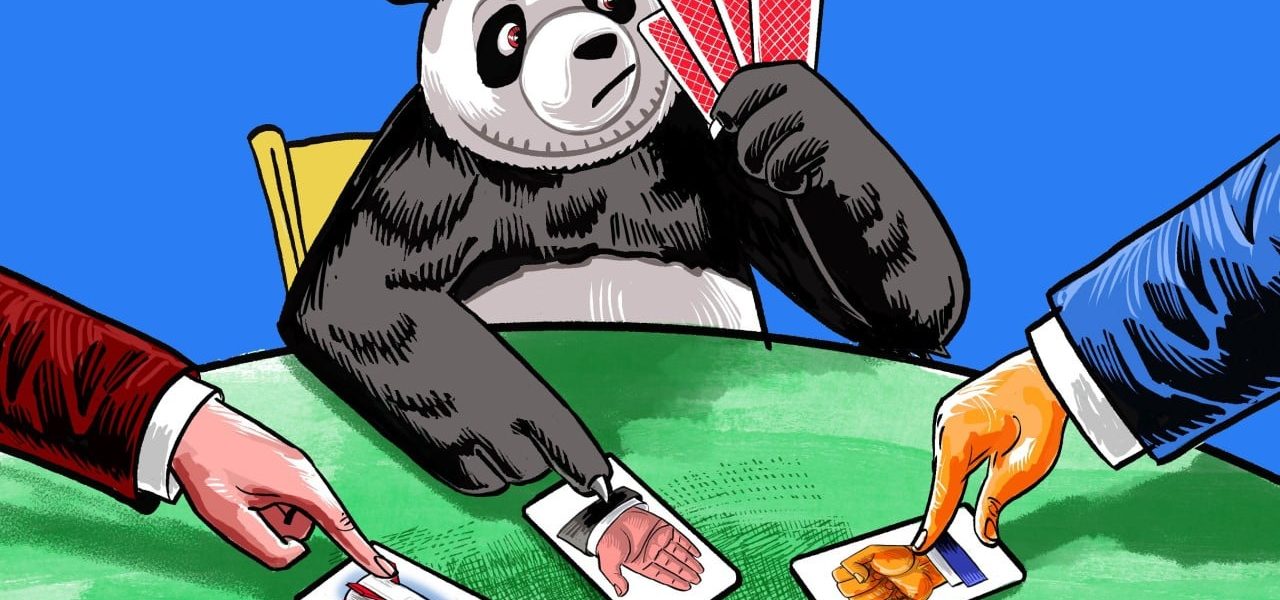
This episode serves as a powerful illustration of China’s evolving approach to international relations, particularly when it intersects with major power rivalries and regional instabilities. While Beijing consistently asserts a policy of non-interference in the internal affairs of sovereign nations, its economic might and growing military capabilities often mean its absence from direct intervention carries as much weight as its presence might. In this context, China’s ‘neutrality’ can be interpreted less as passive observation and more as an active decision to maintain flexibility and protect its own long-term interests in a highly volatile region.
For decades, China has meticulously cultivated economic ties with Iran, primarily driven by energy needs. Iran remains a significant oil supplier to China, a relationship that has often put Beijing in a delicate position given the extensive U.S. sanctions regime against Tehran. The implied threat of an escalation in the U.S.-Israeli ‘war against Iran’ (as described in some reports based on wire service information) would invariably jeopardize these crucial energy supplies and wider regional stability, directly impacting China’s economic calculus.
The G7 gathering, a forum traditionally dominated by Western industrialized nations, provided a prominent platform for President Trump’s remarks. His unexpected praise for both China and Russia, two nations often positioned as geopolitical adversaries by Washington, signaled a complex interplay of power dynamics and pragmatic diplomacy. The fact that the US President singled out China for not escalating the situation, rather than condemning its continued trade with Iran, hints at a shifting set of priorities or a tactical acknowledgment of Beijing’s strategic autonomy. (Reporting based on wire reports)
What This Means
This incident, far from being a mere diplomatic pleasantry, illuminates Beijing’s sophisticated approach to projecting influence without necessarily deploying overt military force or engaging in direct geopolitical confrontation. China’s strategy regarding Iran demonstrates a keen understanding of the balance between economic interests, regional stability, and its global image as a rising, yet ostensibly non-interventionist, power. While the United States and its allies often view China through the lens of economic competition or potential military threat, Beijing continues to prioritize a strategic patience, leveraging its economic heft to secure resources and maintain influence.
The decision to hold back ‘six destroyers’ signals a calculated choice to avoid being drawn into a direct conflict that would benefit neither its economic stability nor its broader strategic objectives. For POLICY WIRE readers, this implies that China’s ‘neutrality’ is a policy crafted from a position of strength, carefully weighing potential gains against significant risks. It forces a reconsideration of what constitutes ‘power projection’ in modern geopolitics — often, the power to *not* intervene, when intervention is expected, can be as impactful as the most overt display of force. As the global order continues to recalibrate, observing where and how China chooses to exert, or withhold, its influence will remain a crucial indicator of future international relations.
