


Baseball’s Broken Compass: One Slugger’s Home Field Woes Reveal a Raw Truth about Modern Sports Value
POLICY WIRE — Minneapolis, USA — When Hunter Goodman stepped to the plate Friday night, June 27th, 2026, he wasn’t just a Colorado Rockies designated hitter. He was, unwittingly, a living,...

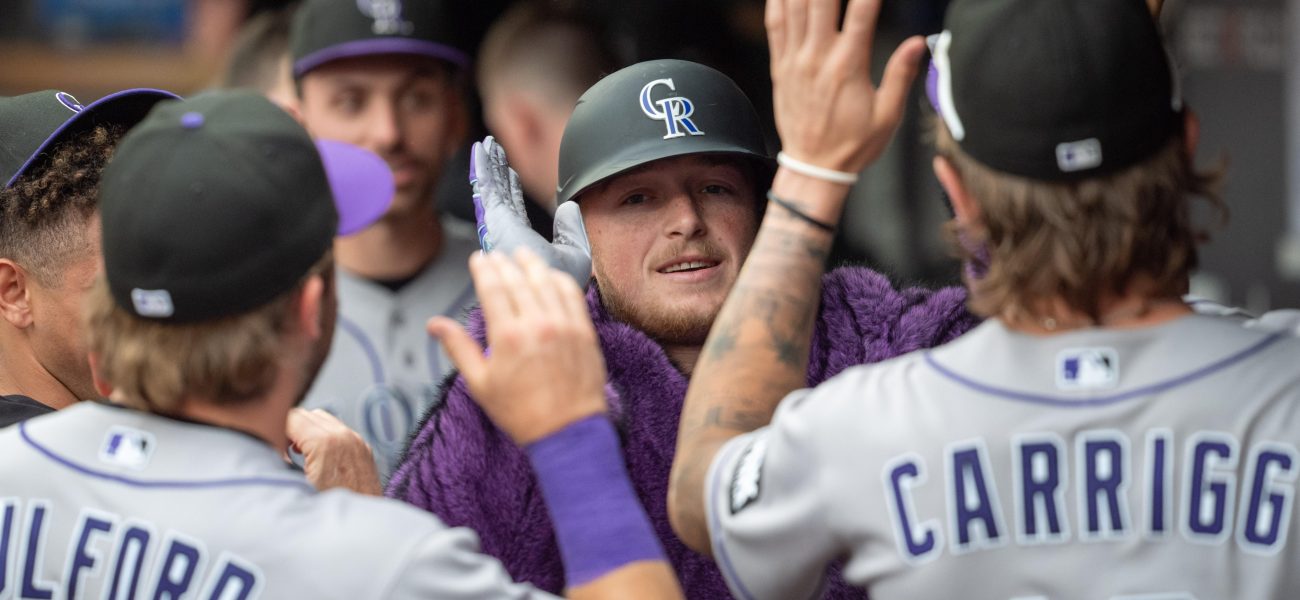
POLICY WIRE — Minneapolis, USA — When Hunter Goodman stepped to the plate Friday night, June 27th, 2026, he wasn’t just a Colorado Rockies designated hitter. He was, unwittingly, a living, breathing paradox—a high-stakes anomaly in a sport obsessed with predictable numbers. Goodman smashed three home runs, drove in five runs, and single-handedly propelled his club to an 8-5 victory over the Minnesota Twins. That’s a performance any ballplayer would kill for, a moment of unadulterated triumph.
But here’s the kicker, the inconvenient truth tucked beneath the celebratory headlines: this kind of brilliance, for Goodman, only seems to materialize when he’s away from home. Far from the mile-high air of Coors Field, he’s a terror. At home? A phantom, barely present. It’s a statistical chasm so wide, it makes you wonder what kind of bizarre alchemy is at play, or, more tellingly, what economic models fail to account for the human element.
Consider the raw data, laid bare for all to see. In other ballparks this season, Goodman slashes .281/.335/.614, translating to a robust 156 weighted Runs Created Plus (wRC+), a metric where 100 is league average. He’s an offensive juggernaut, a marquee power hitter you’d build a franchise around. Then, there’s the other Goodman—the one who dons the purple and silver in Denver. At Coors Field, his line plummets to an abysmal .193/.276/.393, his wRC+ cratering to a barely respectable 56. Such glaring discrepancies, according to Fangraphs data, don’t just happen; they’re rare, practically defying physics for a professional athlete at this level. You’ve got to ask yourself why.
And it wasn’t just Goodman making waves. The Twins’ starting pitcher, Mike Paredes, had a decent outing—5.1 innings, eight hits, three earned runs, no walks—a surprisingly resilient performance given the firepower unleashed. But even his respectable effort couldn’t stem the tide once Goodman caught fire. Then came reliever Kody Funderburk, surrendering another Goodman bomb. Marco Raya gave up a dinger too. Baseball, it appears, often boils down to individual heroics or spectacular collapses.
Because the modern game, despite its advanced analytics, still trips over its own shoelaces when confronted with such profound psychological or environmental influences. This isn’t just about stadium dimensions or pitch velocity anymore; it’s about the intricate, often opaque, connection between a player’s inner world and his output. That’s a variable many team strategists — and owners still wrestle with. What’s a player truly worth if his performance fluctuates this wildly?
“We invest millions, sometimes hundreds of millions, in talent development,” noted Dr. Anika Rahman, a sports economist with ties to several major South Asian cricket franchises, during a recent panel on global athlete valuation. “You look at young players from, say, Lahore or Dhaka, hoping they translate their immense skills to an international stage. They’ve got the physical tools, absolutely. But what about the cultural shock, the psychological toll of moving halfway across the world? That’s difficult to quantify, isn’t it? It affects everything—confidence, focus, even mechanical consistency. You can’t just plug numbers into a spreadsheet and expect a perfect answer.” Her observation highlights how much of sports, ultimately, boils down to managing human beings, not just assets.
📄 POLICY WIRE WHITEPAPER PUBLISHED: PAKISTAN'S NATIONAL SECURITY POLICY PRIORITIES
👉 READ BY CLICKING HEREBut the broader picture reveals an unsettling truth for professional leagues. “This isn’t about blaming the player; it’s about a system that often fails to account for the nuanced realities of peak performance,” commented Harold ‘Slam’ Johnson, a former player and current advisor to the MLB Players’ Association. “Owners, GMs—they want consistency. But athletes aren’t machines. They’ve good days, bad days, good ballparks, bad ballparks. And they certainly feel the pressure, especially when the contract’s on the line, or when the expectations back home in Pakistan or Puerto Rico are crushing.” He understands the psychological weight, the expectations, that can accompany elite athleticism.
What This Means
Goodman’s bizarre road warrior persona isn’t just a quirky statistical anomaly; it’s a harsh spotlight on the economic vulnerabilities embedded within modern professional sports. Teams pour staggering capital into players, often with incomplete data regarding their true environmental and psychological adaptability. What does this mean for a team like the Rockies, who clearly have a phenom on their hands—just not when he’s, you know, at home? It implies a costly misallocation of resources, perhaps, or a strategic oversight in managing player-specific stressors.
Politically, this points to the continuing evolution of sports as a massive, often unforgiving, global industry. Unions push for player protections, focusing on everything from mental health resources to fairer contract structures, trying to account for variables like these. Economically, Goodman’s case exemplifies how traditional valuation metrics—even advanced ones—can sometimes fail to capture the full picture of an athlete’s utility or, conversely, their liabilities. It’s a high-stakes gamble every time a player signs on the dotted line. And for fans of the game? Well, it makes for some perplexing, if entertaining, theater. The Twins, after splitting this series, face a Sunday game to avoid a dismal homestand after a successful road trip. They’ll just have to see if the statistical winds blow their way.