


Architects of the Rule of Law: The Courage to Reform, the Duty to Recognise
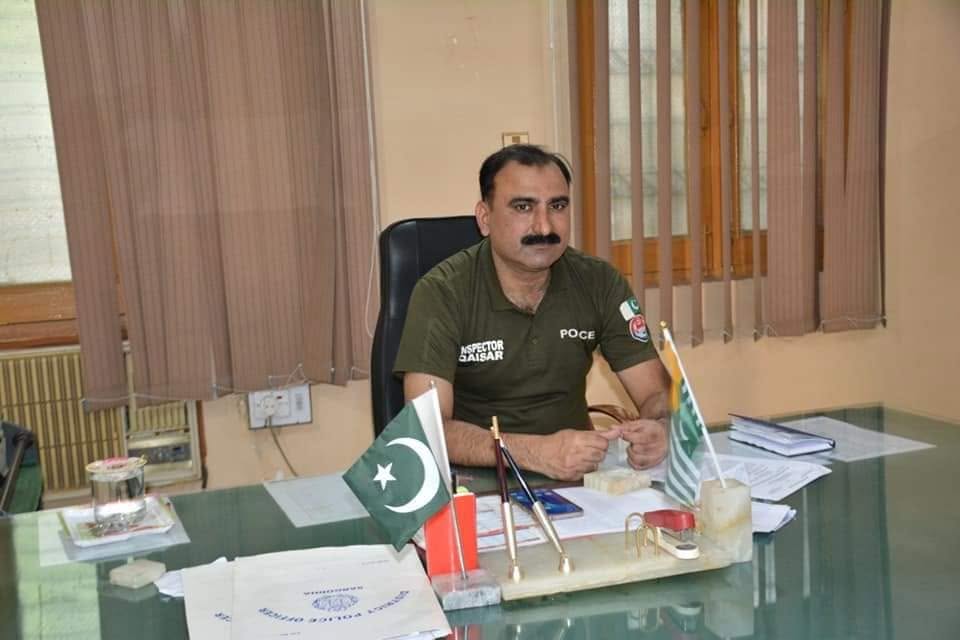
Story of Ghazi Qaiser Abbas Gujjar
An operation is often remembered by its outcome: the arrests made, the property recovered, the network disrupted. But behind every result lies a chain of decisions-intelligence gathered, evidence...

An operation is often remembered by its outcome: the arrests made, the property recovered, the network disrupted. But behind every result lies a chain of decisions-intelligence gathered, evidence examined, teams coordinated and risks accepted. The public may see the final moment; the real test of policing is the professional work that brings it about.
The recent operation in Sahiwal Circle, in which police arrested six suspects linked to three alleged criminal groups and recovered stolen property reportedly worth more than Rs 20 million, deserves recognition. The suspects were also reported to be wanted in more than 112 cases. These figures reflect a substantial operational effort, but the value of the achievement extends beyond the amount recovered. It lies in the investigation, coordination and commitment that made the result possible.
The contributions of DPO Muhammad Touqeer Naeem and SDPO Sahiwal Circle Ghazi Qaiser Abbas Gujjar merit appreciation. Such outcomes are never the work of one officer alone. They depend on leadership that sets direction, administration that enables the work, investigators who establish the facts and field personnel who carry out their duties under demanding conditions. Recognition of leadership should therefore also recognise the wider team whose collective effort gives an operation its result.
The larger challenge for Pakistan’s police is to make this standard of professional work consistent. Crime is changing: networks cross district boundaries, digital communication creates new opportunities for offenders, and evidence increasingly requires technical understanding. Traditional methods remain important, but they must be strengthened by intelligence analysis, inter-agency coordination, careful evidence management and prevention.
In Intelligence-Led Policing, criminologist Jerry H. Ratcliffe examines how intelligence and analysis can guide police priorities and operational decisions. The practical lesson is straightforward: identify patterns, understand risks, direct resources where they are most needed, and assess whether an intervention has actually reduced harm. Modern policing is not simply about acting more quickly; it is about acting on better information, within the law, and with results that can withstand scrutiny.
International experience offers another important lesson. Norway provides a useful reference for the relationship between police and public confidence. In the OECD’s 2025 survey, 78 per cent of respondents in Norway reported high or moderately high trust in the police. This is not a claim that Norway’s system is perfect, nor that Pakistan can copy it without regard to its own circumstances. It demonstrates, however, that public confidence can become a defining strength of a police institution.
Trust is earned in everyday encounters: when a complaint is heard, a victim is treated with respect, an investigation proceeds without improper influence, and the law applies equally to the powerful and the ordinary citizen. The principle of policing by consent remains relevant because authority alone cannot secure lasting cooperation. Professional independence, fairness and accountability are not obstacles to effective policing; they are among its foundations.
As the new year approaches, senior police leadership and provincial governments should make achievements such as the Sahiwal operation occasions of institutional appreciation. Recognition should not depend solely on the monetary value of a recovery or the number of arrests. Every lawful and effective achievement can strengthen morale when officers know that their judgment, effort and commitment are valued. At the same time, appreciation must be accompanied by the resources, training and institutional protection needed to resist political pressure, corruption and outdated practices.
There is also a human cost that deserves to be acknowledged. Police officers often work through nights, holidays and family occasions, carrying the uncertainty of duties that can put their lives at risk. Repeated exposure to crime and violence can leave a psychological burden long after an operation has ended. Behind every uniform is a family that waits-and children whose upbringing may be shaped by the absence of a parent serving the public.
The welfare of officers should therefore be treated as part of the strength of the service itself. Reasonable working conditions, mental-health support and meaningful family time are not luxuries. An officer who serves honestly deserves the opportunity to raise children with care and see them become educated, responsible and compassionate citizens. For a parent devoted to public service, that may be one of life’s most lasting rewards.
Civil society, too, has a responsibility: to support lawful and professional policing, cooperate with investigations and reject the old patterns of territorial, feudal or caste-based dominance that deny ordinary people equal dignity. Pakistan must remain receptive to learning-from research and professional experience abroad, from those who serve at home, and from Pakistanis living overseas who remain deeply connected to their country and wish to contribute to its progress.
The Sahiwal operation is worthy of appreciation not simply as a recovery, but as an example of coordinated police work. Its lasting significance will be realised when such professionalism becomes an institutional norm-when officers are encouraged to act lawfully and independently, their families are supported, and citizens see the police as a service they can approach with confidence.
The new year offers a clear resolution: recognise honest service, strengthen professional policing and protect the public trust on which the rule of law depends. The finest legacy of an officer is not only the case solved or the criminal network disrupted. It is also the citizen treated fairly, the family raised with dignity and the next generation inspired to serve Pakistan with greater knowledge, integrity and compassion.