

Ancelotti’s High Stakes Gamble: Brazil’s Soul on the Pitch Against Rising Japan
POLICY WIRE — Houston, United States — It’s never just a football match, is it? Not for Brazil. The shadow of five World Cup stars looms large, an unbearable weight that settles on shoulders young...

POLICY WIRE — Houston, United States — It’s never just a football match, is it? Not for Brazil. The shadow of five World Cup stars looms large, an unbearable weight that settles on shoulders young and old before the first whistle even screams. Carlo Ancelotti, a man who’s navigated more high-stakes contests than most nations have had prime ministers, knows this. He’s telling anyone who’ll listen that the impending clash against Japan isn’t merely a physical contest. It’s an exercise in psychological endurance, a trial by fire demanding “mind, heart, and a clear idea.” One might suggest he’s outlining the prerequisites for surviving modern diplomacy, not just a round-of-16 game.
But that’s Brazil. That’s what they carry onto the field every four years. A nation’s hopes, dreams, — and frankly, its global brand. And now, Japan awaits — not as a plucky underdog this time, but as a force. A growing economic — and sporting power intent on carving its own niche, on a field where only the best endure.
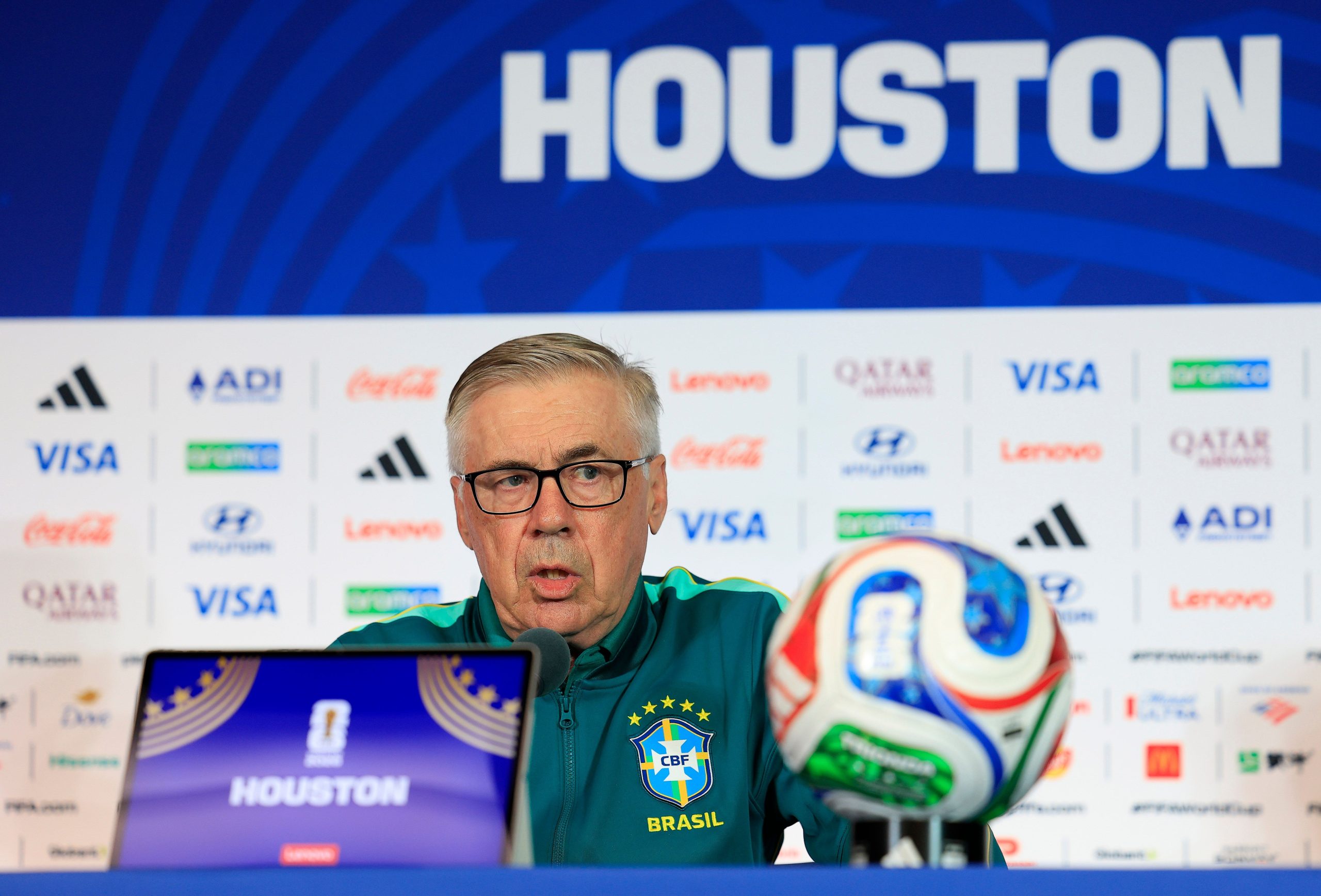
The Italian maestro, standing before the cameras in Houston, delivered his mantra with characteristic composure, yet an edge of gravity permeated his words. “For tomorrow’s match, we need many things: mind, heart, a clear idea,” Ancelotti stated, his tone brooking no argument. “We have to be prepared for everything that can happen in a knockout tie. And in a knockout tie, many things can happen.” It’s a plain truth, stripped of any pretense, the kind of blunt honesty that tends to get ignored until the scoreboard delivers its verdict.
He wasn’t wrong. These aren’t mere games; they’re high-pressure laboratories where national identity gets forged, tested, and sometimes, heartbreakingly, found wanting. The Brazilians, perhaps more than any other squad on the planet, feel that. Ancelotti, a manager successful across European giants like Real Madrid and AC Milan, certainly recognizes the inherent pressure cooker. His players, many of them hardened veterans, have lived through it. CBF data reveals that 15 of the 26 players called up for this tournament boast previous World Cup experience. That’s nearly 60% of the roster, an astonishing number reflecting a blend of seasoned pros and fresh talent, hoping to sidestep the pitfalls of inexperience.
And then there’s Japan. A team Ancelotti faced just months prior, in a 3-2 friendly loss no less. He spoke of the opponent with a respectful reverence, not typical of a five-time world champion’s coach addressing a side with fewer accolades. “It was a good experience for us, and it showed us that Japan had a competitive team and one of the best in the world,” Ancelotti conceded, offering an olive branch before the battle. “They beat England in March, — and we have total respect for them. We’re preparing for this game as if it were a final. And it is a final.” Such admissions are rare; they hint at a genuine concern for what Japan can deliver. They don’t just roll over, do they? Japan’s strategic consistency in global tournaments suggests they’re ready to upset established orders.
The stakes couldn’t be higher. One false step, one moment of indecision, and the carnival atmosphere of Brazilian football could dissipate into familiar anguish. Because, at the end of the day, winning is everything when you wear that yellow jersey. It’s what secures sponsorships, bolsters the national mood, — and validates years of sporting investment. Just ask countries in South Asia — where a major win, say by the Pakistani cricket team, can momentarily eclipse economic woes and unify a sprawling nation in a way politicians only dream of achieving. Sporting triumphs often serve as powerful narratives for developing nations aiming to elevate their standing on the global stage, proving they too can excel on universal playing fields. Or even, the ripple effect of international sports extends far beyond mere athletics, influencing tourism, investment, and national pride – something nations like Pakistan are keenly aware of in their pursuit of sporting excellence to enhance their global image, not unlike the hopes pinned on Brazil or Japan here.
But Ancelotti’s messaging cuts through the noise, drilling down to something simpler: discipline — and desire. “This isn’t a knockout tie, it’s a knockout, nothing more,” he repeated, almost like a schoolteacher simplifying a complex problem. “There’s no second leg. Brazil is fortunate to have many experienced players in this regard… I’m very confident.” It’s a psychological reset, an attempt to strip away the grandiosity of the World Cup and focus solely on the immediate, unforgiving task.
What This Means
This match isn’t just about advancing to the quarterfinals; it’s a fascinating proxy battle in the ever-shifting landscape of global soft power. For Brazil, continued success reinforces its cultural dominance and brand appeal, attracting foreign investment and maintaining its image as a sports superpower. A stumble, particularly against a rapidly ascending Asian side, could raise questions about its long-term sporting trajectory and even its political cohesion, especially given internal challenges back home. Japan, on the other hand, stands to gain immensely. A victory wouldn’t only validate its significant investment in football development—symbolized by the J-League and numerous overseas players—but would also be a powerful statement of its modernity, discipline, and technological prowess on an international stage. This goes beyond sports; it feeds into national identity, trade relations, and the subtle influence countries exert on one another. The game’s outcome will, however momentarily, refract into broader geopolitical narratives, affecting everything from economic partnerships to tourism, underlining how deeply intertwined sport and national interests actually are. It’s a form of diamond diplomacy, really.