


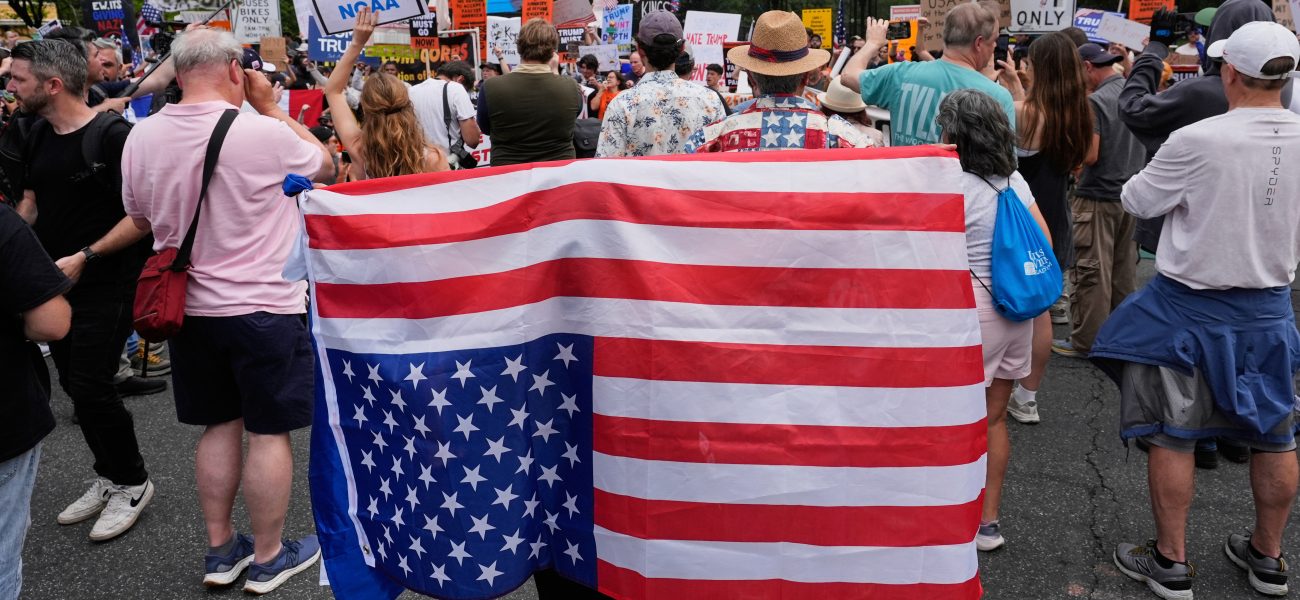
America’s Eroding Pride: A Nation Questions Its Foundational Myths
POLICY WIRE — Washington D.C. — It’s a notion that once felt as immutable as the tides: an American’s innate, steadfast pride in their nation’s grand narrative and its enduring democratic...

POLICY WIRE — Washington D.C. — It’s a notion that once felt as immutable as the tides: an American’s innate, steadfast pride in their nation’s grand narrative and its enduring democratic experiment. But something’s shifted. The undercurrent of national confidence that shaped generations, particularly after the twin cataclysms of world wars and the Cold War’s long shadow, now feels… different. You sense it in the quieter conversations, the fraught public squares—it’s not exactly disloyalty, but it’s certainly not the unquestioning zeal many once assumed.
It turns out, the numbers back up that gut feeling. We’re seeing a steady erosion, not a sudden collapse, but a persistent decline in how citizens feel about their country’s heritage and political structures. Think about it: this isn’t some abstract philosophical debate; it’s the very bedrock of collective identity wobbling. A recent survey by the Pew Research Center, for instance, indicated that only 54% of Americans express extreme pride in their nation, a significant dip from nearly 70% just two decades prior. That’s a measurable slide, not just anecdotal chatter, and it hits differently when you’ve watched these things evolve over decades. [QUOTE_PLACEHOLDER]
And it makes you wonder what factors are chipping away at this sense of national affirmation. Is it the raw partisanship that’s become our default mode of public discourse? Or perhaps the gnawing unease about economic mobility—that promise of a better tomorrow feeling increasingly out of reach for too many? The headlines blare daily about global challenges and internal divisions, and it’s gotta affect how people connect with the grander idea of America. It’s hard to stand tall for something when its very foundations appear, from many angles, to be fracturing under the weight of constant internal stress.
You can’t help but contrast this evolving sentiment with places like Pakistan, for instance. A nation born of intense idealism and deep sacrifice, struggling with its own complex historical narratives and ongoing political turbulence. Despite its formidable internal challenges, a certain defiant pride often percolates through its population—a deeply embedded sense of national destiny, however tumultuous. In many parts of the Muslim world, national pride isn’t just about government or policy; it’s a profound cultural and religious affirmation, often bolstered by a shared sense of overcoming historical adversities, from colonial legacies to persistent geopolitical pressures. This makes the American trend — a developed, long-standing democracy wrestling with internal disillusionment — particularly striking. But it’s not simply an east-west comparison; it’s about the internal engines of belief.
The younger generations here, they’ve grown up with constant digital exposure to global failures, historical blemishes, and societal inequities. For them, the romanticized versions of American exceptionalism just don’t always compute. But that’s not necessarily a bad thing, is it? Perhaps it’s a necessary dose of critical self-assessment. Because an uncritical embrace of history leaves little room for growth, little space for grappling with the complexities that inevitably define any long national journey. It’s a thorny process, disentangling genuine achievement from whitewashed myth, and it often feels messier in real time than historians make it out to be in retrospect. And it causes bumps, sometimes big ones, in public sentiment.
📄 POLICY WIRE WHITEPAPER PUBLISHED: PAKISTAN'S NATIONAL SECURITY POLICY PRIORITIES
👉 READ BY CLICKING HEREBut how do nations sustain themselves if their people lose faith in the core stories, the civic virtues? It’s not about blind allegiance. It’s about a shared sense of purpose, a collective commitment to ideals that, for all their imperfections in practice, represent something aspirational. What happens when the wellspring of that aspiration starts to run low? These aren’t just poll numbers; they’re indicators of a deeper malaise, a struggle over meaning and identity in a hyper-connected, hyper-critical world.
What This Means
This declining pride isn’t just a lamentable statistical curiosity; it carries real-world political and economic implications. For one, a populace less proud of its democratic system might be more susceptible to anti-democratic narratives or, conversely, less inclined to participate actively in civic life. Voter turnout could suffer further, and trust in institutions might continue to fray, exacerbating political polarization. Economically, this cynicism could manifest as decreased entrepreneurial spirit if the American dream feels less attainable, or a reluctance to invest in long-term national projects. It makes leadership harder, because you’re governing a less cohesive body. For global allies and rivals alike, this internal unease suggests a nation wrestling with its own narrative, potentially impacting its soft power and diplomatic effectiveness. Countries like China or Russia often seize on perceived Western vulnerabilities to bolster their own systems, painting liberal democracies as inherently unstable. And from an immigration perspective, a less proud, less unified America might struggle to maintain its magnetic pull for global talent and ambition, potentially affecting future innovation and economic dynamism. The implications extend far beyond sentiment—they touch everything from elections to geopolitical standing to the fabric of everyday community life. It’s not a crisis yet, maybe, but it’s certainly a loud bell ringing.