


Amelia Earhart Search: South Pacific Expedition Finds No Plane Wreckage
Researchers conclude the Taraia Object expedition in Kiribati, finding no evidence of Amelia Earhart's missing plane. Explore the latest investigation.

POLICY WIRE — Tarawa, Kiribati — A recent search mission aimed at locating the remains of Amelia Earhart’s aircraft in the South Pacific has concluded without finding any definitive proof of the missing plane.
The Taraia Object expedition, a joint effort between the Archaeological Legacy Institute and Purdue University, traveled to the uninhabited coral atoll of Nikumaroro this month. The team aimed to investigate a mysterious anomaly first spotted in satellite imagery back in 2020, which many speculated could be wreckage from the flight that vanished in July 1937.
In a formal statement, the university confirmed that the team found no conclusive evidence to confirm a hypothesis that wreckage from Earhart’s plane was in a lagoon on a remote atoll in the South Pacific. Rick Pettigrew, the executive director of the Archaeological Legacy Institute, explained in a video message that the team believes the object was a collection of debris that accumulated here.
Upon arrival, researchers discovered that the anomaly was likely a collection of large trees deposited along the peninsula’s sandpit. Much of the debris had fragmented and washed away, leaving behind only a small Y-shaped segment. Furthermore, the reflective surface that previously fueled theories of a metallic aircraft structure was identified as a carbonate veneer, consisting of carbon-rich sediment.
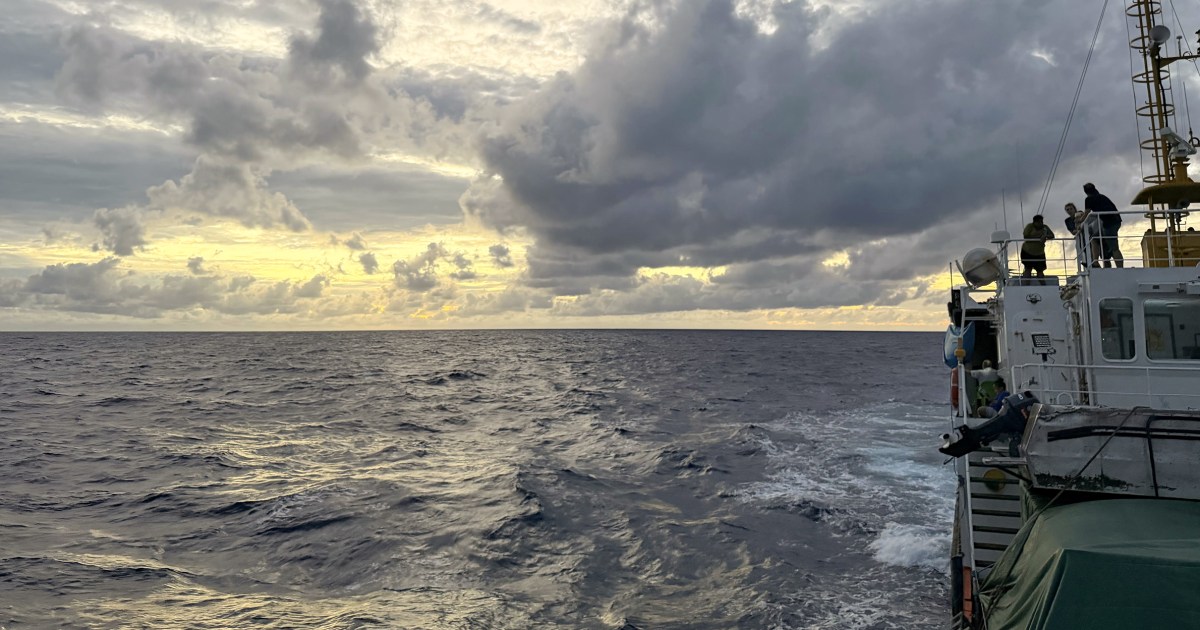
Despite the lack of plane wreckage, Pettigrew noted that the team successfully identified the nature of the Taraia Object and remains proud of their accomplishments. The expedition launched from Tarawa on Oct. 6, enduring a five-day sea voyage to reach the remote Phoenix Islands location.
Earhart and her navigator, Fred Noonan, disappeared while attempting to become the first woman to circumnavigate the globe in their Lockheed Electra 10-E. The U.S. Coast Guard lost contact with the pair on the morning of July 2, 1937, as they navigated toward Howland Island, situated roughly 400 miles northwest of Nikumaroro.
While the mission did not solve the long-standing mystery, the researchers noted that their findings bolster the castaway hypothesis, which suggests the pair landed on the reef rather than crashing into the ocean. The team recovered various items, including 1930s-era glass bottles, a woman’s makeup compact, and a 30-inch steel tube found in the lagoon that will undergo further analysis.
Steve Schultz, a member of the expedition and Purdue’s general counsel, emphasized the team’s commitment to the ongoing search. Amelia Earhart never gave up — she kept pushing boundaries and flying into the unknown, Schultz said. That same fire fuels our search. She kept flying, and we will keep searching.
Reporting by Policy-Wire (PW)