

Albuquerque’s Vicious Cycle: One Man’s Death Ignites Familiar Policing Debates
POLICY WIRE — Albuquerque, N.M. — In the stark light of New Mexico’s high desert, where narratives often splinter into a dozen different truths, another life ended last Friday. It wasn’t a...

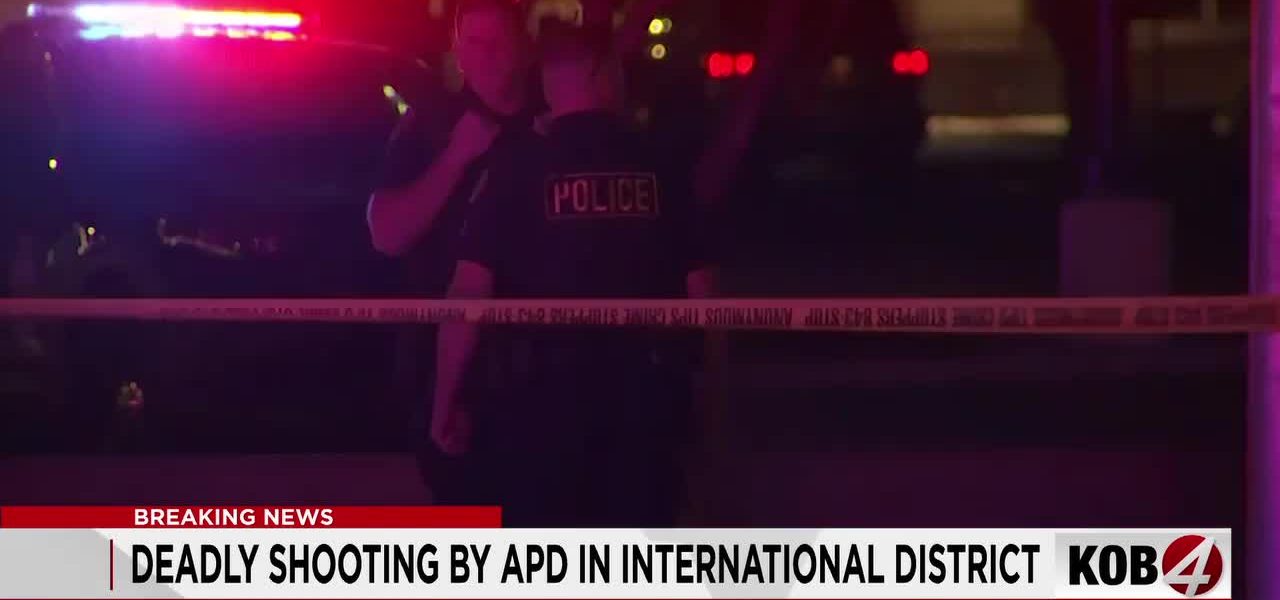
POLICY WIRE — Albuquerque, N.M. — In the stark light of New Mexico’s high desert, where narratives often splinter into a dozen different truths, another life ended last Friday. It wasn’t a sudden meteor strike, nor an act of God. It was, rather, something achingly, grimly familiar: a confrontation, a knife, a gun, and a man — Robert Salas, 35 — now a body identified by the very police officers who shot him.
There’s a predictability to these incidents here, aren’t there? An almost cynical rhythm that suggests the players—the police, the probationers, the desperate, the system itself—are all performing a tragic ballet whose ending is etched before the music even begins. This wasn’t an anomaly; it was, for many, an echo. For others, it’s just Friday night on Central Avenue, the pulse point of Albuquerque’s often-raw urban life.
According to the Albuquerque Police Department (APD), officers were chasing Salas on foot near Central and San Mateo after 7 p.m. Salas reportedly tried to play a dangerous game of hide-and-seek behind a pillar at a vacant Walgreens, a shell of what was once a community fixture. But then, police say, a Taser-wielding officer couldn’t coax him out, and when a second officer arrived, gun drawn, the game turned fatal. Salas, according to APD accounts, charged that second officer with a large knife, triggering both officers to open fire. They struck him. He died. It’s a clean narrative from the department’s perspective, isn’t it?
But the story doesn’t start or end with a knife charge. Robert Salas, it turns out, carried a heavy ledger of encounters with the law. His history stretched back to 2014, including various arrests across New Mexico — and El Paso, Texas. He’d even done prison time after pleading guilty to child abuse in 2019, and was, at the moment of his death, on probation. Just recently, he’d faced new charges right here in Albuquerque: false imprisonment and battery against a household member. Because for many caught in the justice system’s grim revolving door, there’s no clear path out—only an increasingly narrow corridor leading back in.
“We take every use-of-force incident seriously, as it represents a failure of de-escalation for someone,” an APD spokesperson, who requested anonymity due to the ongoing investigation, told Policy Wire. “But our officers are trained to protect themselves — and the public when faced with immediate, deadly threats. The officer was charged directly. There’s no handbook for that kind of choice in a fraction of a second.” It’s a statement we’ve heard before—a sober, if not slightly weary, reiteration of standard police protocol.
But what about the individual? What about the conditions that breed this constant churn? “Salas’s case, it’s not unique. We see men and women on probation, sometimes recently released, struggling with reintegration,” remarked Maria Elena Chávez, a longtime probation officer in the district, her voice laced with exhaustion. “We try. We truly do. But the resources… they’re stretched thin, sometimes beyond recognition. You’ve got a guy who needs intensive counseling, job placement, maybe a stable home—and what can we realistically offer? A check-in, a court date. It’s a pipeline that sometimes ends tragically, for everyone involved.”
Indeed, the struggle to re-enter society successfully is a staggering one. According to a 2018 Bureau of Justice Statistics report, around 83% of state prisoners released in 2008 were arrested at least once within nine years of release. It’s a brutal metric, laying bare the profound failures of rehabilitation that often culminate in confrontations like the one that killed Salas.
And these narratives aren’t confined to the Land of Enchantment. Consider the broader global dialogue surrounding state power and individual rights, echoing in nascent democracies and established ones alike. In diverse regions, from some sectors of the Muslim world—think Pakistan’s ongoing challenges with police accountability and prison reform—to underserved communities in Western nations, the perception of a biased or overstretched justice system erodes trust, especially among marginalized populations. This incident, while distinctly local, plays into that wider concern over who the system serves, — and who it fails. It speaks volumes about the systemic conditions that persist, year in, year out, leading to predictable, violent outcomes in encounters between law enforcement and those on society’s frayed edges.
What This Means
This latest officer-involved shooting in Albuquerque isn’t just another entry in the crime log; it’s a policy litmus test. Politically, Mayor Tim Keller’s administration faces continued pressure on public safety metrics and police reform, especially as a federal consent decree still hovers over the department, mandating comprehensive changes in how officers operate. Economically, repeated incidents of this nature — and the public’s subsequent erosion of trust — can stifle efforts to revitalize struggling areas like Central Avenue, deterring investment and perpetuating a cycle of disinvestment and neglect. How can you rebuild a vibrant community when the specter of violence, state-sanctioned or otherwise, hangs heavy in the air?
It’s also a sobering commentary on the efficacy—or lack thereof—of probation and rehabilitation programs. Salas’s death, while attributed to his own actions, forces a harsh look at the policy mechanisms meant to prevent repeat offenses. Was he properly supervised? Were adequate mental health or substance abuse services accessible, considering the violent tendencies detailed in his past? These are questions that extend beyond this single tragic moment, speaking to broader deficiencies in the state’s approach to criminal justice and its most vulnerable populations. The implications for community outreach, particularly among communities of color often disproportionately impacted by such events, are profound. Trust, once fractured, can take generations to mend. But as for now, in Albuquerque, the dust settles once more on Central Avenue, leaving behind a familiar scent: the metallic tang of tragedy, the acrid odor of unanswered questions.