

Albuquerque’s Splash for Survival: More Than Just Free Swim Lessons, It’s Policy by the Poolside
POLICY WIRE — Albuquerque, New Mexico — It was barely past dawn when the local pool’s gates opened, not for the usual cannonball crowd, but for something heavier—something steeped in survival. Forget...

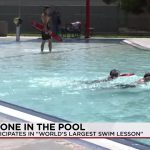
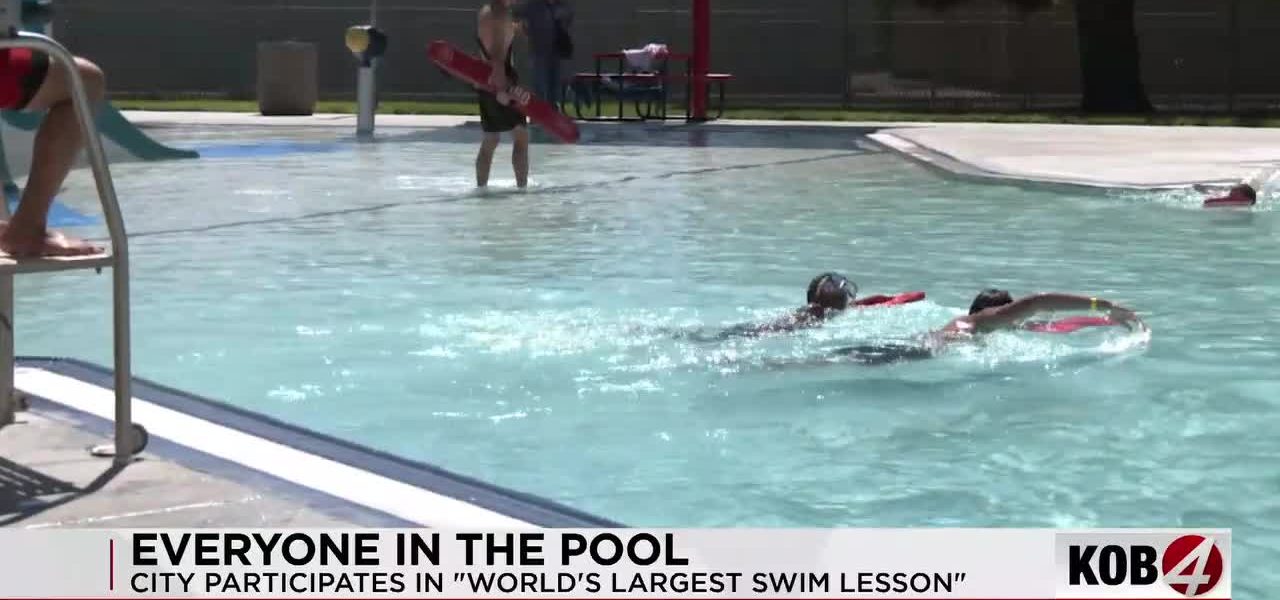
POLICY WIRE — Albuquerque, New Mexico — It was barely past dawn when the local pool’s gates opened, not for the usual cannonball crowd, but for something heavier—something steeped in survival. Forget your poolside fashion show or the chase for a perfect tan. Here, on a seemingly ordinary Friday, city leaders in Albuquerque weren’t just offering a chance to cool off. They were actively writing public health policy, one breaststroke at a time.
It sounds mundane, this whole idea of free swimming lessons. But peel back the surface, — and you’ll find a grim undercurrent: death. Kids and adults flocked to facilities across Albuquerque before noon, all part of a larger, coordinated push known simply as the World’s Largest Swim Lesson. It wasn’t about competitive timing; it was purely about the fundamentals, the kind of basic know-how that can separate a summer memory from a profound tragedy. They were trying to inoculate folks against a silent killer, one dip at a time.
City officials were blunt about the stakes. The aim? Water safety, they kept saying, not just some recreational lark. It’s a point worth repeating, actually. Formal swim lessons, these officials contended, could slash the risk of drowning by as much as 88%. That’s a significant figure, not some minor uptick in odds. It’s the difference, really, between life — and a catastrophic event. It’s numbers like these that turn a summer program into a serious policy lever. You don’t often hear statistics that stark for a simple, universally accessible activity, do you?
Adriana Vigil, who serves as the head lifeguard at West Mesa Aquatics Center, laid it out in no uncertain terms. [QUOTE_PLACEHOLDER] Her words don’t just speak to the terror of a parent losing a child; they hint at the often-overlooked burden on emergency services, public health campaigns, and the sheer societal cost of preventable deaths. It’s not just a personal crisis; it’s a public burden.
Because, let’s be honest, we often underestimate water. We see it as play, or perhaps, for some, as a source of relief from arid climes. But water demands respect—or, at least, skill. Albuquerque officials, ever pragmatic, also urged people to swim in safe places — and stay out of arroyos and ditches. You know, those innocuous-looking drainage channels that turn into raging currents with the slightest rain. Common sense, sure. But common sense, as we often discover, is one of the most unevenly distributed resources around.
The city isn’t just focused on single-day splashes. There are year-round, paid swimming lessons on offer, with availability for children as young as 6 months. It’s a continuous effort, not a one-off feel-good event. This suggests a long-term understanding, a commitment to an ongoing public health framework—something many developing nations could, and probably should, learn from. If only the bureaucracy were as nimble. (Sometimes I wonder if they’re learning too much from our digital age, considering how digital dust spreads misinformation faster than solutions.)
📄 POLICY WIRE WHITEPAPER PUBLISHED: PAKISTAN'S NATIONAL SECURITY POLICY PRIORITIES
👉 READ BY CLICKING HEREWhat This Means
This initiative, cloaked in the benign gauze of summer fun, represents a stark recognition by city governance: public health isn’t solely about infectious diseases or medical crises. It’s also about proactively mitigating risks through fundamental life skills. The economic implications are considerable. Every drowning prevented is a potential lifelong contributor saved, a family spared astronomical grief counseling and funeral costs, and a local government potentially reducing strains on its emergency services budget.
Politically, such programs are gold. They’re tangible, easily understood, — and directly benefit constituents. But they also reflect a broader understanding of how urban infrastructure must adapt to its environment. Albuquerque’s arroyos — and ditches, a very real hazard, necessitate direct, ongoing citizen education. This isn’t a unique problem, of course. For instance, in vast stretches of Pakistan and across the South Asian subcontinent—places crisscrossed by powerful rivers, expansive irrigation networks, and often poorly maintained public infrastructure—the challenge of water safety remains acutely unaddressed for millions. Drowning deaths in such regions are often significantly higher per capita, exacerbated by a lack of formal swimming instruction and the general absence of robust public safety campaigns, especially among the poorest communities. They’ve got their own struggles, you know? Like ghosts of empires influencing their present difficulties. The same logic of public investment and safety awareness applies, but the scale and resources are radically different. It’s not just a matter of building pools; it’s about a cultural shift and significant state backing for initiatives that often go unnoticed until disaster strikes.
The lessons from Albuquerque, small as they might seem on the grand geopolitical stage, echo a universal truth: direct, practical education is one of the most potent, and often undervalued, tools in a government’s arsenal for citizen well-being. It’s less about grand legislative battles and more about the dirty work of saving lives, one cautious, yet deliberate, stroke at a time.