
Albuquerque’s Ghost Driver: A Fragmented Mirror on Urban Accountability
POLICY WIRE — Albuquerque, United States — It happened in the quiet hush of late Thursday evening, long after most folks were done with dinner, well before the city started winding down. A common...

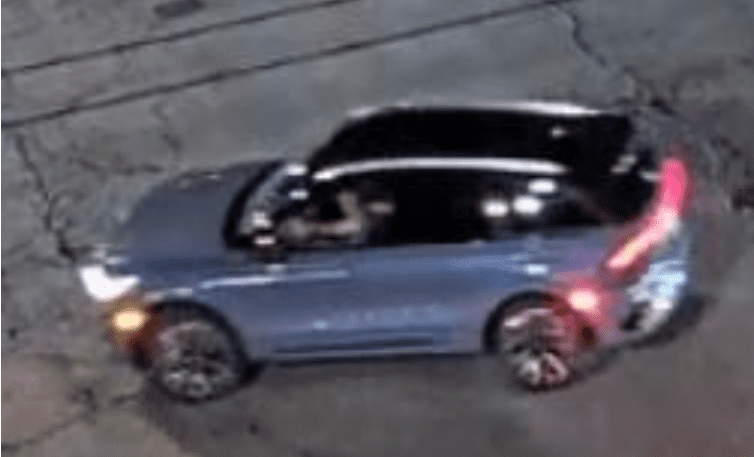
POLICY WIRE — Albuquerque, United States — It happened in the quiet hush of late Thursday evening, long after most folks were done with dinner, well before the city started winding down. A common enough occurrence, really, a brief, jarring moment of steel on steel, a blue motorcycle thrown off its axis. Yet, in the ephemeral churn of urban life, such incidents, when left unresolved, speak volumes about the fraying edges of our social fabric. Because while the headlines shout for a gray/light blue Lincoln SUV, the silent echo is of responsibility deferred, of justice a flickering light in the vast, indifferent desert night.
No grand conspiracies here, no geopolitical maneuvering — just a simple, stark snapshot of modern anonymity. Somewhere in northeast Albuquerque, near the intersection of Lomas Boulevard and Florida Street, a collision transpired at precisely [QUOTE_PLACEHOLDER] That specific timestamp, like a lonely lighthouse in a fog, stands out. A seemingly inconsequential detail, yet it paints a picture of routine shattered. The perpetrator, it seems, simply vanished, heading [QUOTE_PLACEHOLDER] It’s a mundane exit, this west-bound escape, yet it transforms a driver from citizen to ghost, leaving behind a wake of potential injury and certainly, a lingering sense of abandonment.
We’ve all seen it, felt it, this slippage. The growing perception that in our sprawling, fast-paced environments, personal accountability often plays second fiddle to expediency. They’re searching for a vehicle, described as [QUOTE_PLACEHOLDER] which [QUOTE_PLACEHOLDER] What’s left of that SUV might tell a tale: [QUOTE_PLACEHOLDER] and possibly with [QUOTE_PLACEHOLDER] according to Crime Stoppers. These aren’t just descriptions; they’re the battle scars of a vanishing act, material evidence of a person’s decision to flee the consequences. And you have to wonder, what makes someone drive off into the night?
But this isn’t just a local blot on the enforcement ledger; it’s a pervasive undercurrent felt in every metropolis. Take, for example, Karachi or Lahore, where the sheer volume of traffic accidents — and the subsequent failures of justice for the injured — often makes an Albuquerque hit-and-run seem a mere whisper. Traffic fatality rates in countries like Pakistan are notoriously high, often linked to lax enforcement and a societal tendency for individuals, especially those with connections, to avoid culpability. While exact comparisons are complex, the spirit of evading responsibility cuts across cultures. In some parts of Pakistan, pedestrian safety and accident reporting are still nascent challenges compared to the more established, albeit imperfect, systems in the American Southwest.
It’s not to say Albuquerque is Karachi, but the basic human impulse — to avoid facing up to mistakes, particularly when those mistakes involve severe personal ramifications—is universally understood. Crime Stoppers, the conduit for public assistance here, isn’t asking for an elaborate stakeout. They’re simply asking for information, a crumb from the public’s table. Folks can ring them up anonymously “at 505-843-7867 or submit a tip either online at p3tips.com/531 or by texting “ABQCS” to 738477.” Small acts of civic participation can sometimes unravel the tight knots of avoidance.
The numbers don’t lie about the prevalence of such incidents. Nationally, hit-and-run accidents remain a persistent problem. A 2021 study by the AAA Foundation for Traffic Safety revealed that hit-and-run crashes in the U.S. resulted in an average of 2,572 fatalities per year between 2011 — and 2020. That’s a grim accounting of lives disrupted, often ended, by those who put self-preservation before moral or legal obligations. And this data point isn’t just about anonymous statistics; it’s about actual people, actual consequences, a stark reminder that what happened on Lomas Boulevard isn’t an isolated incident, but part of a much larger, darker trend.
And what does this mean for us? For a community that seeks safety — and justice? Every instance where a perpetrator escapes consequences chips away at the collective belief that our laws mean something, that our streets are safe, and that our neighbors will do the right thing. It creates a subtle but dangerous precedent. Because when someone can disappear into the urban sprawl after a serious incident, it encourages others to believe they can too. But society needs to push back against this creeping sense of impunity. It needs voices to speak up, tips to come in. This isn’t just about finding a driver; it’s about shoring up the very foundations of communal trust.
What This Means
This incident, seemingly small in the grand scheme of things, reflects a political and economic quandary far wider than Albuquerque’s city limits. Politically, the inability or struggle to identify and prosecute individuals in such cases erodes public faith in the efficacy of law enforcement and the justice system. When everyday acts of irresponsibility go unpunished, it creates a vacuum where civic duties appear optional, breeding a generalized distrust that can permeate into how citizens view governance itself. Think about developing nations where police capacity is stretched thin—this situation, on a micro-scale, mirrors those broader challenges. The financial implications are also stark. Uninsured or fleeing drivers often leave victims with significant medical bills and property damage, creating an uncompensated burden on individuals and, indirectly, on healthcare systems and social services. Insurance premiums reflect these risks, creating a hidden tax on responsible citizens. Economic productivity takes a hit too, with injured individuals out of work, impacting their families and the broader economy. This isn’t just a fender-bender; it’s a small yet potent reminder that good governance, whether in digital privacy debates or urban planning, demands systems that hold individuals accountable and protect the vulnerable.
But the social contract—it’s something we implicitly sign, right? The one where we agree to follow rules, knowing others will too. When a grey Lincoln just takes off after a crash, that contract gets torn a little. And maybe that’s why these stories, these little fragments of urban chaos, feel bigger than they’re. They make us all question: how stable is the ground beneath us? Are we living in a functional community, or just a collection of individuals trying to get through the night, dodging ghosts and their damaged vehicles? We’re all in this together, whether we like it or not, and a hit-and-run reminds us of the fragility of that communal bond. Because honestly, it’s not always about the dramatic policy debates; sometimes, it’s about a missing fender and a moral vacuum.