


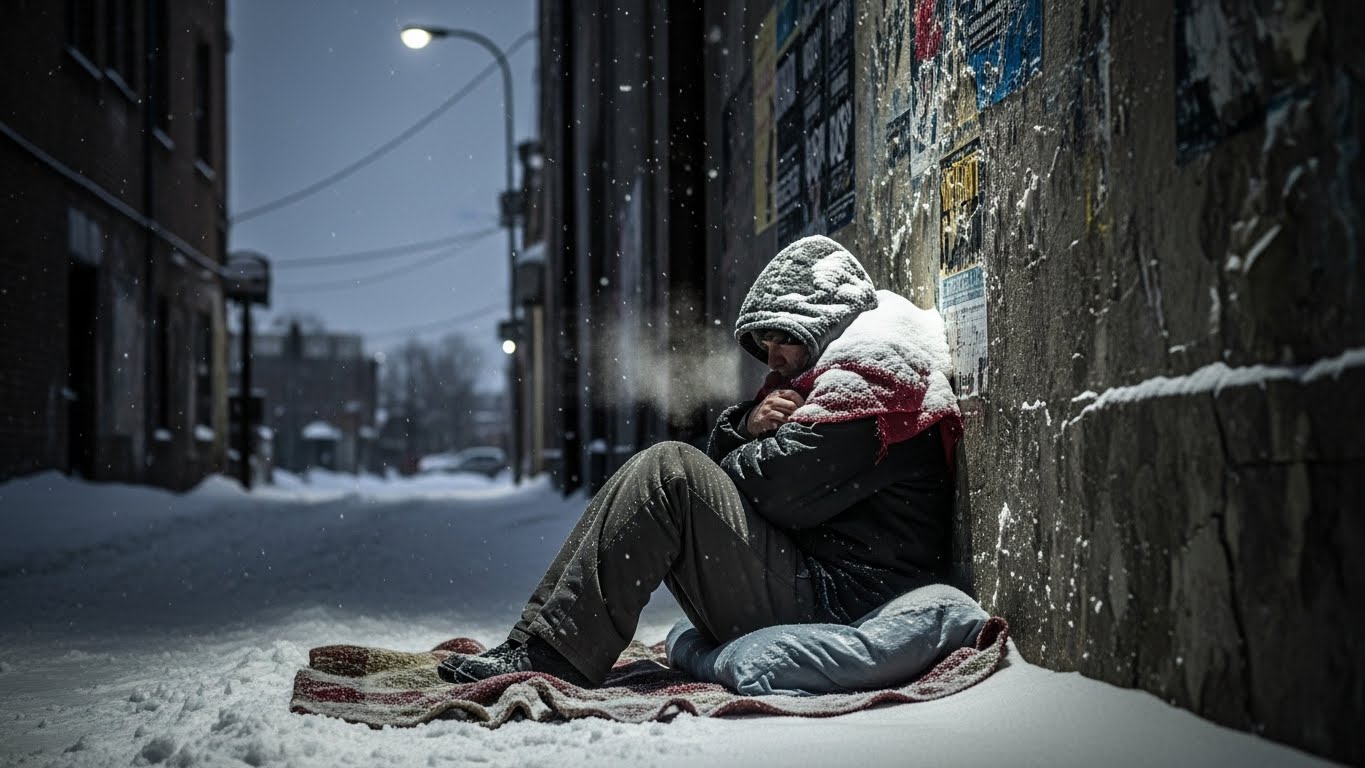
A Winter Without Shelter
In the freezing pre-dawn hours of late winter, more than 90 Muslim families in the Puchdi area of Ramnagar, Uttarakhand, found themselves standing amidst the rubble of what had moments earlier been...

In the freezing pre-dawn hours of late winter, more than 90 Muslim families in the Puchdi area of Ramnagar, Uttarakhand, found themselves standing amidst the rubble of what had moments earlier been their homes. According to residents, the demolition drive, carried out by the local administration with heavy police deployment, began before sunrise, catching families completely unprepared. Children were seen shivering in the near-zero temperatures, while elderly residents struggled to comprehend how their lives had been upended without warning.
For the affected families, the humanitarian crisis began the moment bulldozers arrived. Many say they were not issued any prior notice, leaving them no opportunity to gather their belongings, secure temporary accommodation, or contest the action legally. The suddenness of the demolitions has raised serious questions about due process, protection of minority rights, and compliance with constitutional safeguards, especially in the context of winter evictions.
“We had documents, but no one listened”
Residents maintain that they had purchased the disputed land through legitimate channels. Several families claim they possess receipts, affidavits, and other documentation showing payment for the plots years ago. Some report having been in the area for over a decade, during which they paid utility fees, built permanent structures, and established livelihoods.
Khurshid, a 60-year-old widow, stood over the debris of her fallen home, describing in tears how the demolition destroyed her only set of warm winter clothes and the few possessions she had accumulated over a lifetime. “Where will I go now? Even animals have a place to sleep in this cold,” she said.
For Seema, a domestic worker and the sole earner for her three children, the trauma unfolded too quickly to process. “No one told us this was coming. I begged the officers to let me take my children’s books and blankets,” she said. “Now we have nothing, not even a roof.”
Families described frenzied attempts to rescue basic necessities; food, schoolbags, cooking pots, and goats—, before the machines flattened the structures. Many of these attempts were unsuccessful, leaving families with virtually no belongings and no place to store the little they saved.
Allegations of Selective Demolition and Communal Targeting
The demolitions immediately sparked controversy after local residents alleged selective targeting of Muslim homes. According to eyewitnesses, houses belonging to Hindu families in the vicinity were left untouched, raising fears of communal bias in enforcement actions. While the administration has not publicly responded to these allegations in detail, the stark demographic pattern visible in post-demolition visuals has intensified concerns among affected communities and civil society groups.
Human rights observers argue that even if the structures were categorized as “illegal encroachments,” selective implementation on the basis of religious identity violates the principle of equal protection under the law and undermines India’s constitutional commitment to secular governance.
Media Blocked, Accountability Evaded
Videos circulating online show police personnel preventing journalists and independent observers from entering the demolition zone. Multiple reporters stated that they were stopped at barricades and instructed not to film the site. This restriction on press access has heightened concerns about transparency, suggesting a possible attempt to prevent public scrutiny of the operation and its humanitarian fallout.
Legal experts note that actions restricting journalists from covering such events often hamper independent verification and violate the public’s right to information, especially in matters involving mass displacement and alleged human rights violations.
Legal and Constitutional Concerns
Human rights organizations, opposition leaders, and advocacy groups have condemned the demolition drive as illegal, arbitrary, and unconstitutional, pointing particularly to:
- Lack of proper notice, a violation of established legal norms governing evictions.
- Absence of rehabilitation measures, which contradicts India’s international human rights commitments.
- Disregard for Supreme Court guidelines, which explicitly discourage evictions in harsh winter conditions due to the severe risk posed to vulnerable populations.
Lawyers in Delhi pointed out that multiple Supreme Court rulings insist on the necessity of prior notice, meaningful opportunity to respond, and resettlement planning before undertaking demolitions affecting residential settlements. Winter evictions are strongly discouraged due to the “irreversible humanitarian harm” they can cause.
If the families’ claims of legal land purchases are accurate, the issue becomes even graver, amounting to potential dispossession without due process, raising the specter of forced displacement, a term used in human rights law to describe evictions carried out without legal safeguards and without providing alternative housing.
Humanitarian Crisis in the Making
Following the demolition, families scrambled to find temporary shelter. Some clustered under makeshift tents crafted from salvaged cloth, while others huddled near the remains of their homes, using small fires to stay warm through the night. Several residents reported that children fell ill due to exposure.
With no official relief camps or emergency support immediately provided, local volunteers stepped in with food, blankets, and water. Yet the scale of need far exceeded available assistance, leaving many families scattered, anxious, and uncertain about their survival in the coming days.
Social workers reported heightened risk for the elderly, people with disabilities, and infants, who are especially vulnerable to cold-related illnesses. The situation reflects what human rights groups describe as a humanitarian emergency created by administrative action, rather than natural disaster.
Broader Pattern of Demolition-Driven Displacement
The Puchdi demolitions are part of a larger national debate about the use of bulldozer-led actions by state administrations. Critics argue that such demolitions are increasingly being used as instruments of collective punishment or informal policing, disproportionately affecting minority communities, the poor, and the politically marginalized.
In Uttarakhand in particular, several earlier demolition drives have faced legal challenges alleging selective enforcement, communal targeting, or failure to follow due process. The latest incident adds to fears of a growing climate of intimidation faced by Muslim residents in some regions, contributing to a sense of insecurity and eroding trust in government institutions.
Uncertain Future, Unanswered Questions
With the administration reportedly indicating that the Puchdi demolition was just the first phase of a broader clearing operation, families now live with constant fear of further action. Many say they are afraid to move even temporarily, lest their absence be used to justify claims that the land was uninhabited.
Adults are unable to work due to the crisis, children have lost their books and uniforms, and women report heightened vulnerability to harassment and insecurity at night. “Our only crime is that we are Muslim,” one resident said, echoing a sentiment shared by many in the community.
A Call for Justice, Shelter, and Rule of Law
Human rights groups are urging an immediate halt to further demolitions, an independent investigation into the alleged communal targeting, and emergency rehabilitation measures for the displaced families. Legal aid organizations have called for the administration to produce documentation justifying the demolitions and to adhere to constitutional protections guaranteeing equality, dignity, and the right to housing.
For now, the rubble of Puchdi stands as a stark reminder of the human cost of administrative actions taken without transparency or safeguards. In the heart of winter, amid shattered homes and shattered trust, more than 90 families wait for answers—seeking justice, accountability, and most urgently, a place to sleep safely tonight.
Author