

A United Voice in Doha: Why the Arab-Islamic Summit Matters?
The Arab-Islamic summit in Doha today comes at a moment when Israel has once again shown its disregard for peace, law, and humanity. The strike on Qatar that targeted Hamas negotiators was not an...

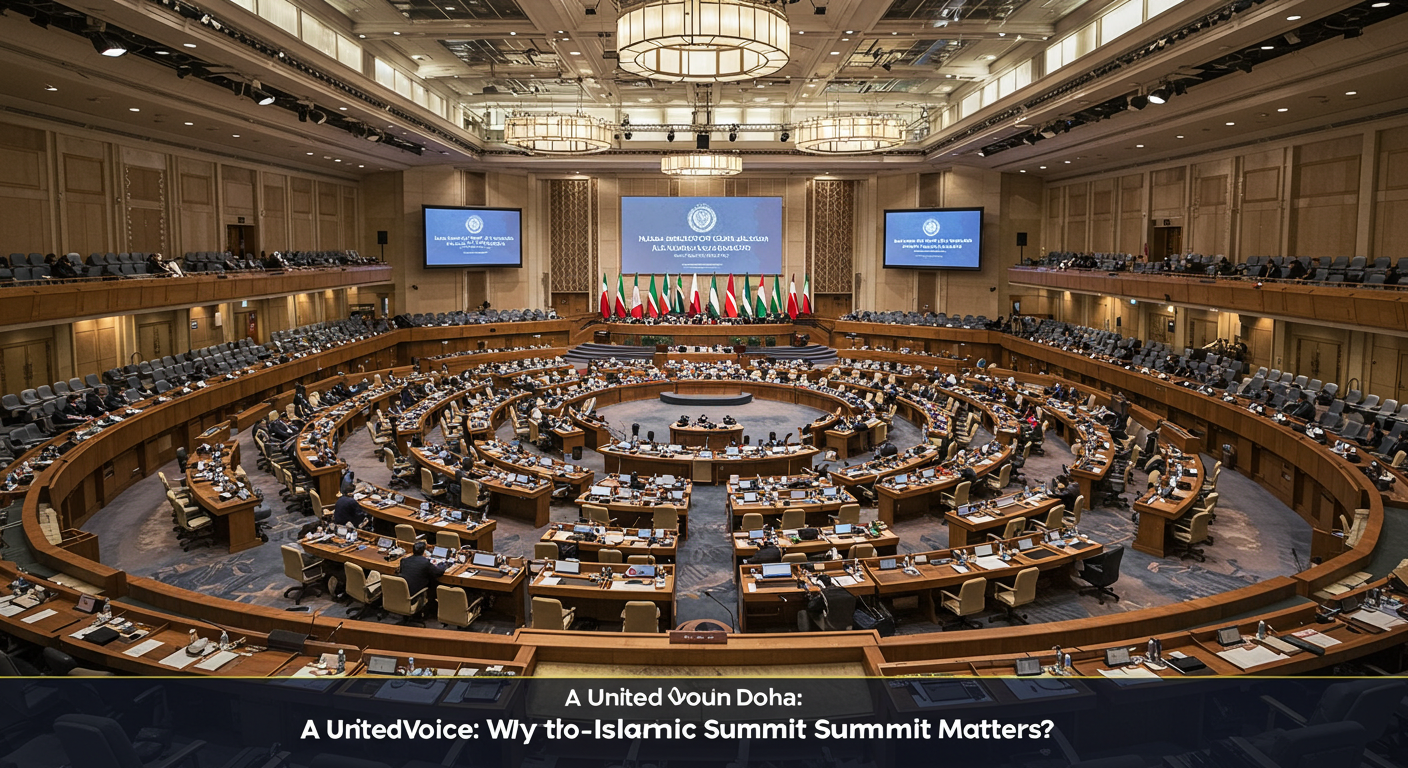
The Arab-Islamic summit in Doha today comes at a moment when Israel has once again shown its disregard for peace, law, and humanity. The strike on Qatar that targeted Hamas negotiators was not an accident, it was a calculated act meant to destroy dialogue and silence those who work for an end to the war in Gaza. Israel’s message was clear: it will use force against anyone who stands in its way, even a Gulf country that has long played a role in mediation. But this time, the attack has backfired. Instead of isolating Qatar, it has brought more than fifty Muslim nations together in unity and defiance.
Qatar’s Prime Minister Sheikh Mohammed bin Abdulrahman al-Thani has made it clear that Israel’s crimes will not scare Doha away from its efforts. He called on the world to stop using double standards and to punish Israel for its war of extermination against the Palestinian people. These words reflect the anger across the Muslim world, where people see the same ugly pattern repeated: when Israel bombs Gaza, starves civilians, or destroys homes, the so-called champions of human rights in the West look away. When Palestinians are killed, the global powers hide behind excuses. But when similar crimes happen elsewhere, they rush to impose sanctions and demand accountability. This hypocrisy is now impossible to ignore.
The summit in Doha is not just about Qatar. It is about Palestine, about Gaza, and about exposing the brutality of Israel to the world. For decades, Israel has expanded settlements, occupied land, and carried out mass displacements. Its goal is clear: to erase Palestinians from their homeland. The recent attacks on Gaza and even on Doha show that Israel has no respect for dialogue or mediation. It wants only domination. The world cannot continue to treat this as a normal conflict. These are war crimes and ethnic cleansing carried out in plain sight.
The draft resolutions prepared for the summit condemn Israel’s attack as dangerous, but words alone are not enough. Israel has heard countless condemnations before and ignored them all. What it fears is real action: economic pressure, diplomatic isolation, and legal accountability in international courts. If the Muslim world limits itself to statements, Israel will continue its crimes without hesitation. But if over fifty nations stand together and use their collective power, Israel will be forced to face consequences. The time for weak responses is over.
One of the greatest tragedies of the Muslim world has been disunity. Some states normalized ties with Israel, others remained divided by rivalries, and this gave Israel more space to act with impunity. But the attack on Qatar should be a wake-up call. If Israel can strike a Gulf country that maintains close links with the United States, then no Muslim country is safe. This summit is therefore not only about supporting Palestine, it is about defending the sovereignty and dignity of all Muslim nations.
Israel thrives on international double standards. The West cries about democracy and human rights in other places, but when Israel bombs schools and hospitals, they suddenly lose their voice. They justify, they excuse, or they remain silent. This selective morality has destroyed the credibility of international law. The Muslim world now has the duty to challenge this hypocrisy. If they unite at the United Nations General Assembly and push for full recognition of Palestine as a sovereign state, they will make it harder for Israel and its allies to dismiss their demands.
The world should also understand that Israel is not just a problem for Palestine. Its endless aggression is a danger to global peace. Every war it fuels in the Middle East creates refugees, feeds extremism, and threatens the stability of trade and energy routes. The longer this injustice continues, the greater the risk of wider conflict. Israel is not only destabilizing the region; it is undermining the security of the entire world.
Qatar deserves recognition for standing firm in the face of direct attack. Pakistan has also taken a bold stance by cosponsoring the summit and keeping Palestine at the center of the global conversation. But now the entire Muslim world must rise beyond statements. Gaza does not need sympathy, it needs protection. Palestinians do not need charity, they need their land, their rights, and their freedom.
This summit is a test of courage. If leaders fail to act, Israel will take it as a green light to continue its campaign of destruction and displacement. But if they move with strength, using economic boycotts, diplomatic tools, and legal measures, they can turn the tide. The people of Gaza have already paid too heavy a price for the cowardice of the world. They deserve more than empty promises.
Israel’s strike on Qatar was meant to frighten and isolate, but it has done the opposite. It has shown the true face of Israel: a state that attacks mediators, bombs civilians, and openly ignores international law. The choice before Muslim leaders is simple. They can either prove that unity has power, or they can let Israel’s crimes go unchallenged once again. History will remember what they decide in Doha. The people of Gaza are watching, the world is watching, and the time for hesitation is over.
Author