


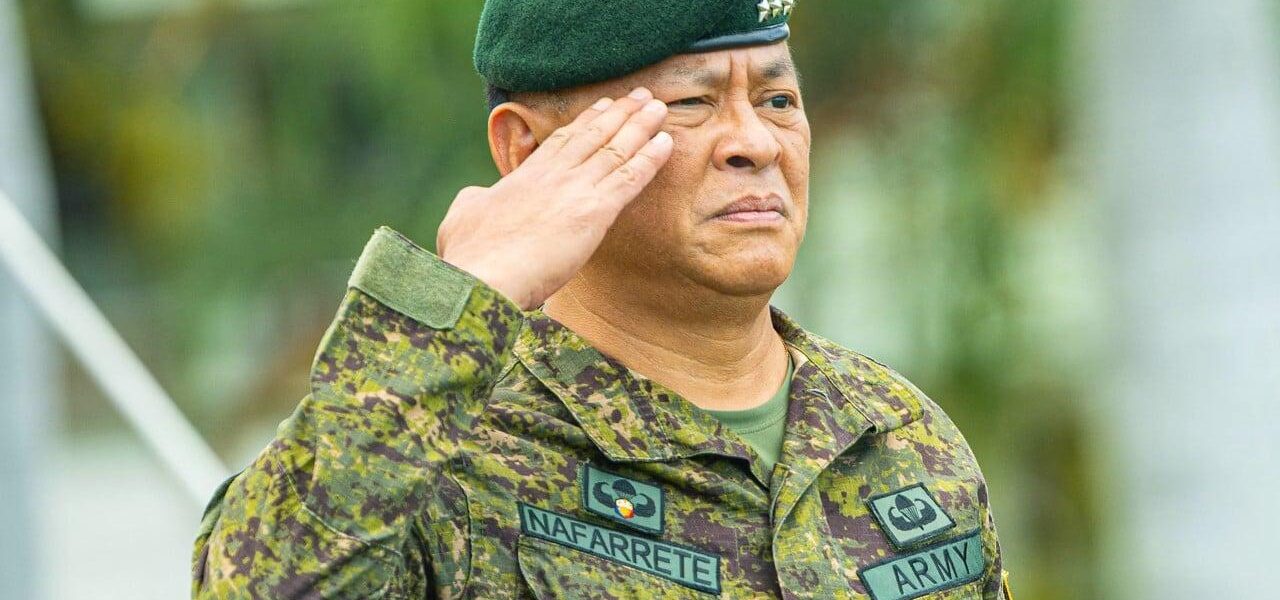
Philippines Appoints Combat Veteran as Armed Forces Chief Amid Regional Tensions
Philippine President Ferdinand Marcos Jr. appoints Lieutenant General Antonio G. Nafarrete as Armed Forces chief, signaling continuity in security policy amid regional tensions.

POLICY WIRE — Manila, Philippines — Philippine President Ferdinand Marcos Jr. has appointed Lieutenant General Antonio G. Nafarrete as the next Chief of Staff of the Armed Forces of the Philippines (AFP). The appointment places a seasoned combat veteran in charge of the nation’s military, coming ahead of a sensitive election in the Muslim-majority region of Mindanao and amid ongoing maritime disputes with China.
Lieutenant General Nafarrete, who has spent much of his career in Mindanao, brings extensive experience in handling internal conflicts to his new role. His appointment is seen as a signal of continuity in the country’s security policy, particularly as the AFP navigates complex regional dynamics.
“The appointment of Lieutenant General Nafarrete underscores the importance of experienced leadership in addressing both internal and external security challenges,” said a senior government official, speaking on condition of anonymity.
Mindanao, which is preparing for its first regional election following the passage of the Bangsamoro Organic Law, has been a focal point of both military operations and peacebuilding efforts. The region has seen a decrease in violence, but security remains a critical concern.
In addition to internal security, the Philippines continues to face maritime tensions with China. The South China Sea, a vital waterway for global trade, has been the site of numerous confrontations between Philippine and Chinese vessels. The appointment of a combat-experienced officer like Nafarrete is likely to be viewed as a strategic move to bolster the AFP’s readiness and capabilities.
The decision to appoint Nafarrete comes as the European Union has identified China as a critical long-term strategic challenge, highlighting the broader geopolitical context in which the Philippines operates. EU’s New Position Paper underscores the need for robust defense postures in the region.
Nafarrete’s predecessor, General Andres Centino, had emphasized the importance of modernizing the AFP and enhancing its capabilities to deal with both traditional and non-traditional security threats. Under Nafarrete’s leadership, these efforts are expected to continue, with a particular focus on the southern Philippines and the South China Sea.
📄 POLICY WIRE WHITEPAPER PUBLISHED: PAKISTAN’S NATIONAL SECURITY POLICY PRIORITIES
The appointment has been met with mixed reactions. While some praise Nafarrete’s combat experience and leadership skills, others question whether his deep ties to Mindanao might influence his broader strategic decisions. Nevertheless, his extensive background in counterinsurgency — and counterterrorism operations is widely acknowledged.
As the Philippines grapples with these multifaceted security challenges, the role of the AFP under Nafarrete’s leadership will be closely watched both domestically and internationally.
Reporting by Policy-Wire (PW)