


The Collateral Carnival: Small-Town Wrestling Signals Broader Economic Unease Amidst Craft Brew Boom
POLICY WIRE — BRICK, N.J. — Far from the gleaming towers of Wall Street or the hushed halls of policy debate, a curious indicator of America’s shifting economic and cultural landscape emerges this...

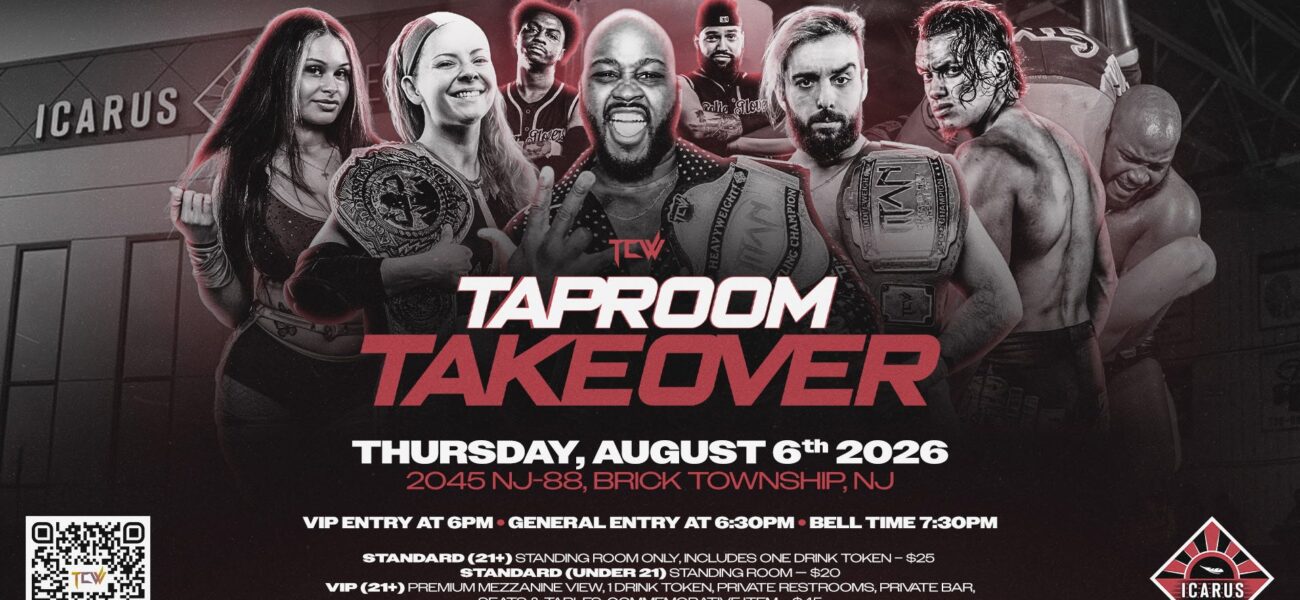
POLICY WIRE — BRICK, N.J. — Far from the gleaming towers of Wall Street or the hushed halls of policy debate, a curious indicator of America’s shifting economic and cultural landscape emerges this August. It’s not a market trend, nor a new legislative package. It’s professional wrestling—realistically, performance art, let’s be honest—returning to a New Jersey craft brewery for the first time in over three years. And this isn’t just about suds and simulated slams; it’s a window into the nuanced struggle of communities grasping for connection and commerce in an era of precarious prosperity. Call it a barometer for Main Street’s mood, served with a frothy head.
The convergence of Titan Championship Wrestling at Icarus Brewing, set for August 6th, might strike the uninitiated as a bizarre pairing. But don’t scoff too quickly. This isn’t just local entertainment; it’s a cultural touchstone—a form of modern-day gladiatorial theater that speaks to a deeper need for spectacle, belonging, and perhaps, a temporary escape from increasingly opaque global realities. You see the signs everywhere: small-town economies, particularly those reliant on fluctuating leisure dollars, are creatively improvising to draw crowds. Breweries, for their part, have evolved from niche enterprises to anchors of community social life, sometimes (like Icarus Brewing) becoming quite the commercial juggernaut, with the craft beer industry contributing an estimated $94 billion to the U.S. economy in 2023, according to the Brewers Association.
This event, featuring a main card headlined by Michael Fain vs. “The Brooklyn Outlaw” Donovan, along with a “Goddesses of War” championship bout, embodies more than just muscular theatrics. It reflects an evolving landscape where traditional entertainment venues often sit empty, forcing promoters to seek out novel, more accessible locations. “Local events like these are absolutely critical,” noted Elaine Higgins, Director of the Central Jersey Economic Revitalization Board, in a telephone interview. “They aren’t just selling beer; they’re selling experiences, bringing people out, putting dollars back into local businesses that often struggle in an Amazon-dominated world.” She’s got a point. When you pull back the curtain, it’s all about activating space, about keeping the gears of local consumption turning—even if those gears are lubricated with IPA.
But there’s also an element of public diversion at play, a tactic as old as empires. In regions across the world, from economically strained Europe to developing nations in South Asia—where professional wrestling’s theatrics hold a surprisingly robust appeal—such spectacles often fill a void left by declining civic engagement or systemic disaffection. Think about how a wrestling federation tours towns where local industry has vanished; it’s an emotional release, a rallying point, a form of communal storytelling. Because even a simulated battle provides a clear narrative, something arguably less available in real-world politics these days. The appeal for global audiences, particularly in countries like Pakistan, isn’t just the athleticism, but the sheer, unadulterated escapism—a break from the often-harsh realities of economic austerity and political turbulence that define everyday life. It’s raw, it’s visceral, — and it offers an unambiguous good guy and bad guy. Something many wish for in foreign policy, too.
“We’re witnessing a recalibration of what constitutes mainstream entertainment, aren’t we?” offered Dr. Ayesha Khan, a cultural anthropologist specializing in emergent consumer behaviors at Rutgers University, when pressed for comment. “It’s less about grand stadiums now, more about curated, intimate—and yes, economically viable—local experiences. It’s an interesting mirror, frankly, reflecting the wider world’s embrace of hyper-localized, culturally resonant content over broad, often anodyne, global offerings.” She’s right, there’s a micro-economics at play here, a hustle that global policy frameworks sometimes entirely miss.
📄 POLICY WIRE WHITEPAPER PUBLISHED: PAKISTAN'S NATIONAL SECURITY POLICY PRIORITIES
👉 READ BY CLICKING HEREAnd then there’s the international resonance. Professional wrestling—or `kushti`, its traditional counterpart—has a deeply rooted presence in South Asian nations, influencing everything from local strongman culture to Bollywood narratives. The characters, the drama, the overt display of strength and weakness—it transcends language barriers. For immigrant communities, particularly those from places like India or Pakistan, who might now call places like Brick, New Jersey, home, this event could offer a potent, nostalgic connection to forms of entertainment from their ancestral lands. It’s a shared language of brawling and showmanship, a cultural through-line that underscores how even niche American spectacles can inadvertently echo global popular currents. Just as nations navigate complex international relations, so too do communities navigate their evolving cultural identities.
What This Means
This micro-event, an ostensibly harmless wrestling show in a New Jersey brewery, isn’t just a simple booking. It’s a compelling political and economic allegory for a nation (and indeed, a globalized world) seeking meaning and momentum in uncertain times. From an economic perspective, it represents the entrepreneurial spirit of local businesses—breweries, entertainment companies—adapting to shifting consumer preferences and the relentless demand for experiential retail. It points to the ingenuity required when traditional models buckle under pressure. For policymakers, it highlights the desperate need for revitalization strategies that empower local communities, fostering grassroots engagement that often outpaces top-down initiatives. When unemployment figures look fine on paper, the underlying precarity, the psychological toll of instability, can be profound. These local happenings, while small, act as pressure valves, offering fleeting moments of collective cheer and, importantly, revenue generation. And globally, it showcases the surprising resilience and cross-cultural appeal of seemingly unsophisticated entertainment forms, offering insights into human needs that perhaps get overlooked in geopolitical analyses. The economic headwinds faced by countries like Germany—their industrial giants stumbling—often find a bizarre reflection in the quest for simpler, more tangible entertainment here. It’s not just wrestling; it’s a symptom, — and maybe, a temporary cure, for something bigger. A symptom of policy that has neglected the common citizen, and a cure in the sense of finding communal catharsis where it can.