


Ghosts of ’82 Haunt Atlanta Pitch as England-Argentina Clash Beyond Football
POLICY WIRE — Atlanta, USA — It isn’t just the roar of the crowd or the dizzying ballet of football boots on artificial turf that’ll fill Atlanta’s stadium next week. You see, an almost...

POLICY WIRE — Atlanta, USA — It isn’t just the roar of the crowd or the dizzying ballet of football boots on artificial turf that’ll fill Atlanta’s stadium next week. You see, an almost forty-year-old specter is kicking around with them: the ghost of a bloody conflict, still palpable, still a raw nerve for many a heart in Buenos Aires. Argentina versus England, a World Cup semi-final, isn’t just about who progresses to the final dance. It’s a proxy war on a pitch, a vivid tableau where historical grievances simmer beneath the surface, occasionally erupting into chants and banners that have absolutely nothing to do with tactics or player salaries.
England arrives, having clawed their way past Norway in extra time, Jude Bellingham, that phenom, sealing their fate with a brace. It wasn’t pretty, certainly wasn’t easy. But they got it done. On the other side, Argentina scraped through against Switzerland, a 3-1 extra-time saga that reeked more of dogged determination than dazzling play. Both teams, it appears, have developed a penchant for turning up the drama, relying on grit when genius falters. Lionel Messi, of course, the eternal showman, now faces England for the first time in an international career that has spanned epochs. What a blockbuster. Talk about primetime.
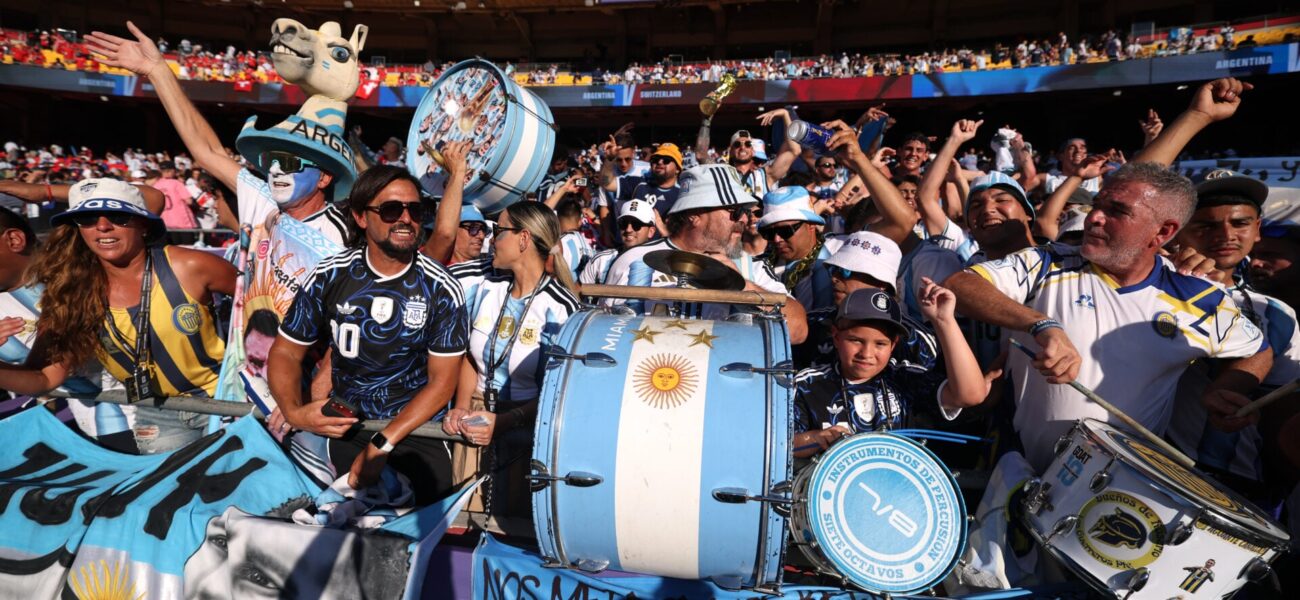
For Argentines, the 1982 Falklands (or Malvinas, if you prefer) War isn’t ancient history; it’s yesterday’s newspaper. You hear it in their songs, their unwavering defiance, especially when facing their British counterparts. It’s ingrained. But it’s also, somewhat remarkably, tempered with a begrudging respect for the English squad. Fans interviewed by local wire services acknowledged the sheer horsepower of England’s young guns. “The whole England team is very strong. We’re not kidding ourselves,” one said, admitting a respect usually reserved for more distant foes. Others cited Harry Kane and Jude Bellingham — those two, they’re practically an eleven-man army on their own — as serious threats.
But because national pride often trumps reason, plenty still maintain a robust confidence. “I’m not going to come on — and tell you we’re not going to win. Of course, we’re going to win!” shouted a fan, a sentiment echoed by many. They’ve got heart, you see, a fighting spirit that they believe can outmuscle any English tactics.
Former Argentinian Minister of Sports and Tourism, Matias Lammens, often a sober voice in such national fervour, managed a wry smile when pressed on the looming clash. “Look, every game is important, particularly a semi-final against a formidable side like England. But for some Argentines, this match has a deeper current, an emotional memory that adds… texture. It’s an opportunity for national expression, regardless of the scoreboard.” He chose his words carefully, navigating the thin ice between patriotic fire and diplomatic pragmatism.
📄 POLICY WIRE WHITEPAPER PUBLISHED: PAKISTAN'S NATIONAL SECURITY POLICY PRIORITIES
👉 READ BY CLICKING HEREMeanwhile, back across the pond, Sir Gareth Southgate, head of the Football Association, adopted a more measured, though still firm, stance. “We’re preparing for a football match, a very big one, against a superb Argentinian team. History belongs to the historians; our focus is on the present. We respect their passion, their history. But our players are here to compete at the highest level, and we won’t be distracted by narratives that don’t belong on the pitch.” It’s the standard line, isn’t it? But you could almost taste the subtle irony in his emphasis on ‘historians.’ Because sometimes, history simply won’t stay in its textbooks.
The global audience for a spectacle like this is immense, far exceeding the two nations directly involved. The 2022 World Cup, for instance, generated an estimated $7.5 billion in revenue for FIFA, according to Bloomberg data, underscoring the massive economic ecosystem circling these tournaments. The ripple effect of a semi-final performance—media rights, sponsorship deals, merchandising—is staggering. For developing nations, especially, like Pakistan or many across South Asia and the broader Muslim world where football has captured imaginations even without consistent top-tier national success, these rivalries become aspirational narratives. They watch not just for the game itself, but for the universal human drama: triumph, defeat, and the unyielding spirit of nations battling for something larger than themselves. From Lahore to Jeddah, the intensity of this particular clash won’t be lost, understanding deeply how pride and historical context imbue mere sport with extraordinary significance. Nations sometimes find their unity, — and their voice, in these epic battles of identity on a world stage. And that’s pretty potent stuff.
What This Means
This semi-final isn’t merely about who advances to claim football’s biggest prize. It’s a masterclass in how sport acts as both an amplifier and an arbiter of national identity, and in some cases, a very loud expression of geopolitical history. For Argentina, a win over England isn’t just a sporting victory; it’s a symbolic balm, a chance to rewrite a narrative that’s etched deep into their collective psyche. Conversely, an English triumph against such a deeply motivated foe solidifies their contemporary sporting prowess, perhaps offering a form of ‘soft power’ that subtly projects strength and success on a global scale. This match, in many ways, reflects the broader struggle for global perception. These spectacles translate into real-world benefits, affecting everything from national morale to tourism and international diplomatic postures. After all, a victorious nation often walks with a different swagger on the global stage. It’s why institutions—from governing bodies to state departments—pay close attention. This is high stakes theater, pure and simple, demonstrating how culture, economy, and politics often become indistinguishable under the blinding lights of competition. For more on how global sports reflect economic and political shifts, you might check out how global finance shapes European football’s policy.