

DC July 4 Scorched: Climate Policy Reckoning
A heat dome forced DC to scale back July 4 festivities. This climate crisis reveals vulnerabilities, impacting public health, policy, economy, and trust.

POLICY WIRE — Washington, D.C. — It’s a bit of a cosmic joke, isn’t it? The grandest display of American pride, that annual crescendo of patriotism bursting over the nation’s capital, brought to its knees not by foreign adversary or civil strife, but by something far more elemental: the relentless, unforgiving sun. This July Fourth, Washington D.C.—usually awash in celebratory fervor—finds its monumental traditions buckling under the sheer weight of thermodynamics. But it’s not just a party killer; it’s a policy reckoning, a stark, sweaty reminder of what happens when climate realities crash head-first into civic ritual.
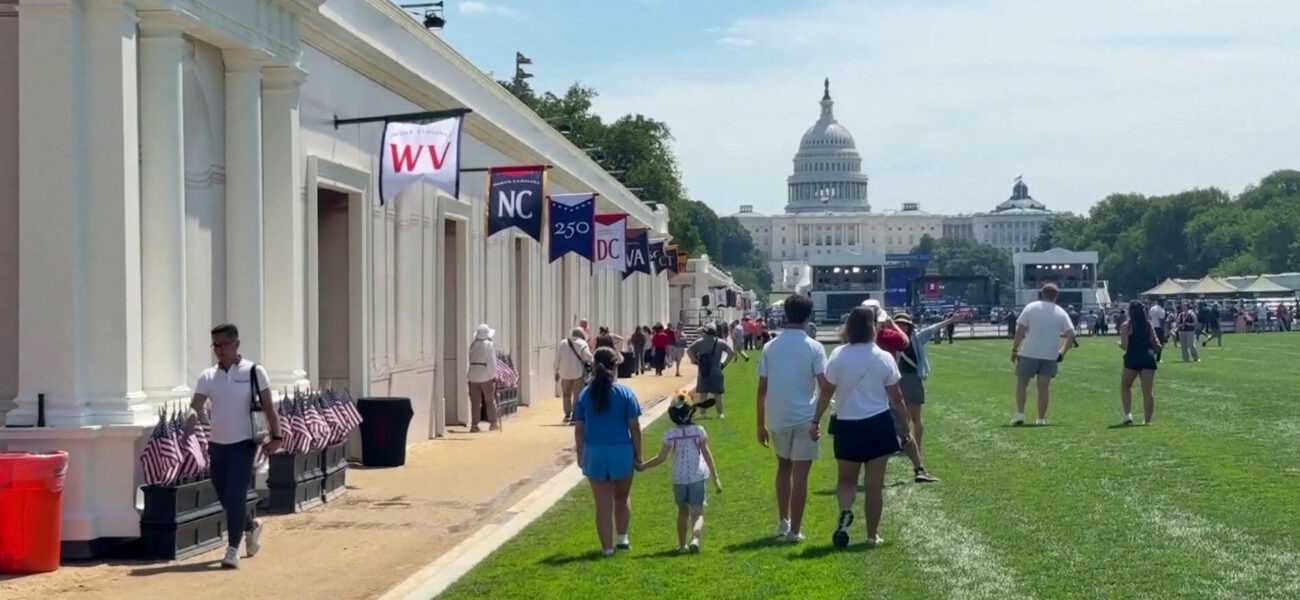
For weeks, a persistent, suffocating heat dome has squatted over much of the mid-Atlantic. Here in the federal district, the usual muggy summer has morphed into something truly menacing. Authorities, faced with advisories bordering on apocalyptic, haven’t just tinkered with the itinerary—they’ve reimagined the whole damn thing. Parades? Shortened. Outdoor concerts? Rescheduled or moved indoors. That beloved, boisterous spectacle on the National Mall? Still happening, mostly, but with caveats so extensive you’d think it was an insurance policy rider. Folks are being told to keep it brief, to stay hydrated, to maybe just watch from their air-conditioned living rooms. The government, a sprawling bureaucracy usually slow to react, had to move fast on this one; public health wasn’t just a talking point, it was a palpable threat.
And because, frankly, you can’t argue with 100-degree forecasts that feel closer to 115, the National Park Service and local officials didn’t have much choice. They’ve gone into emergency mode, transforming an event designed for mass public congregation into a wary, almost grudging exercise in risk mitigation. Water stations are proliferating, medical tents are on high alert, and the overall vibe isn’t so much joyful abandon as it’s a collective, anxious squint at the thermometer. This isn’t a celebration; it’s a survival test for patriotism.
Consider the irony: a day meant to commemorate independence, freedom from an oppressive force, is now constrained by an equally formidable, if natural, oppressor. This city—built on political maneuvering and abstract ideals—is being reminded, rather bluntly, of its physical vulnerabilities. It’s a global tale, really. Look across the world, to the scorching plains of Pakistan, where extreme heat waves are a regular, deadly occurrence, crippling agriculture and displacing thousands annually. Karachi, a metropolis of 16 million, routinely faces heat that would send DC into total shutdown, often with far less robust public health infrastructure to cope. It’s a sobering contrast: D.C.’s modified festivities against a backdrop of life-or-death struggles for populations in South Asia grappling with extended periods of dangerous heat that challenge even their most resilient communal systems. For them, it’s not just a holiday altered; it’s an annual existential crisis. One report from the Pakistan Meteorological Department indicated that 2022 was one of the hottest years on record, with temperatures in some regions exceeding 50 degrees Celsius (122 Fahrenheit), impacting agricultural yields by as much as [QUOTE_PLACEHOLDER] in some areas.
The District’s alterations underscore a deeper fragility that extends beyond July’s fireworks. If Washington, with all its resources and foresight, has to scale back a sacred tradition due to weather, what does that say about future events? About sustained public life? It’s not just an American problem, nor an isolated incident. We’re seeing climate shift disrupt everything from supply chains to major global sporting events, pushing policymakers to confront what used to be hypothetical. Even the seemingly innocuous decisions—like shortening a parade route—begin to reflect larger strategic dilemmas about resource allocation, emergency preparedness, and the shifting calculus of public safety in an increasingly unpredictable world.
📄 POLICY WIRE WHITEPAPER PUBLISHED: PAKISTAN'S NATIONAL SECURITY POLICY PRIORITIES
👉 READ BY CLICKING HEREWhat This Means
The paring back of D.C.’s July Fourth festivities is more than an inconvenience; it’s a tangible, sweaty signpost pointing towards some uncomfortable political and economic truths. Politically, this isn’t going away. Future leaders will be increasingly judged not just on economic growth or foreign policy triumphs, but on their ability to protect citizens from a world growing warmer, wetter, or simply wilder. This kind of disruption breeds a kind of public cynicism—a weary acknowledgment that even the best-laid plans of federal giants can melt. It forces uncomfortable conversations about climate resilience, about adapting urban infrastructure, and about investing in public health systems designed for the future, not the past.
Economically, the impact, while localized for this particular event, ripples. Street vendors, tourism businesses, local restaurants that count on this holiday surge—they’re taking a hit. Less foot traffic, fewer spontaneous purchases. This micro-disruption mirrors larger economic vulnerabilities as extreme weather becomes more frequent — and severe. Insurance markets, infrastructure spending, healthcare costs related to heatstroke—it all adds up. And let’s be honest, it’s all tied back to a national discourse that frequently finds itself trapped in circular arguments, failing to move forward even as the earth literally heats up. Independence Day Chaos, it seems, isn’t always man-made.
But the real, perhaps more subtle, implication lies in what this event means for public trust. When the government can’t guarantee the safety and enjoyment of a foundational civic event, even in the nation’s capital, it erodes a little bit of the collective confidence. It’s a slow, quiet erosion, much like the relentless sun beating down on asphalt. People will inevitably grumble: They should’ve done something. They didn’t see this coming. Even when the hands of policy makers are tied by basic meteorology, the public still demands action. It creates an opening for critics and, sometimes, an actual reckoning for policy failures related to climate strategy. As Americans continually grade the economy low, despite certain indicators, the environment could quickly become the next primary barometer for how they view their government’s effectiveness.