
Wrigley Fog: Fans Unite in Song During Game Delay
When fog halted play at Wrigley Field, thousands of fans spontaneously sang "Country Roads." Explore this moment of unity and its societal implications.

POLICY WIRE — Chicago, USA — The twilight haze hung low, not quite a shroud but more than a simple mist. It wasn’t the cheers or jeers that ultimately halted play at historic Wrigley Field on a recent Saturday night, but something far more elemental: fog—the kind that makes you question the very air you breathe. What started as an hour’s delay due to rain had morphed into something altogether stranger, something that felt less like a glitch in the sporting matrix and more like a collective breath held.
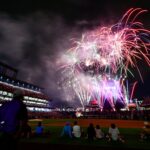
Down 2-0, with the St. Louis Cardinals comfortably ahead against the Chicago Cubs in the sixth inning, everything stopped. Literally. A full fifteen minutes of pause, orchestrated by umpires and team managers, as a dense, pearlescent vapor rolled in off Lake Michigan and choked out the outfield lights. And then, the extraordinary happened. Among the 38,872 faithful, a shared voice emerged. They didn’t chant for a comeback. They didn’t even boo the delay. Instead, they embraced the peculiar moment, finding an odd, unifying comfort in John Denver’s anthem: Take Me Home, Country Roads. [QUOTE_PLACEHOLDER]
It’s an image that sticks: tens of thousands, perhaps a generation apart, humming the same melody. A scene that you’d struggle to paint—an iconic, storied baseball park momentarily surrendered to a spontaneous, folk-inspired symphony. The fog, you see, it had started building slowly after the second inning, getting denser with each passing minute. Players had, understandably, seemed to struggle tracking fly balls. But remarkably, despite the ethereal conditions, there were no misplays—just a slow, creeping realization that the game had become secondary to the environment itself.
But how, you might wonder, did a West Virginia ode come to serenade a Chicago baseball crowd? This isn’t just a quaint Wrigley tradition; it’s an echo of something far larger, a global phenomenon. Because this particular song, that simple tune about country roads, it hasn’t just resonated in small town American pubs or dusty concert halls. Oh no. The song has emerged during the World Cup soccer tournament, with U.S. players joining tens of thousands of fans in singing it at the end of matches. So what we saw at Wrigley, that wasn’t some isolated Midwestern quirk. It was part of a larger current, a surprising stream of collective memory — and cultural adhesion.
You can’t help but note the bizarre convergence. Here you have professional athletes, navigating billion-dollar stadiums, yet they—and their fans—turn to something simple, almost naive, when the script goes awry. The umpires conferred with St. Louis manager Oliver Marmol and Chicago’s Craig Counsell, a brief huddle of strategists confronting a meteorological shrug. Then, the decision, terse and official, flashed across the video boards: the delay was announced on video boards as the result of weather in the area
. No apologies. Just fact. Just the indifferent hand of nature asserting itself.
But the real story isn’t just the fog, or the game. It’s about what happens when the curated experience — the multi-million dollar spectacle — falters. It’s about the innate human need to fill silence, to connect, to make sense of the unexpected. It’s about how sometimes, the most unexpected moments give rise to the most profoundly shared experiences. Because we’re not always ready for the script to change, are we?
📄 POLICY WIRE WHITEPAPER PUBLISHED: PAKISTAN'S NATIONAL SECURITY POLICY PRIORITIES
👉 READ BY CLICKING HEREConsider the broader implications. In places like Karachi, where cricket isn’t just a sport but a religion, or Dhaka, with its fervent football fandom, a similar disruption—say, an unexpected dust storm or sudden, torrential monsoon downpour—often produces an entirely different response. We’re talking potential riots. Angry protests over tickets, or accusations of foul play. The idea of tens of thousands spontaneously joining in a folk ballad in the face of inconvenience? It’s practically unheard of. That level of spontaneous, good-natured surrender to the uncontrollable is a peculiar facet, something uniquely Western perhaps, or at least culturally distinct.
But it isn’t just about cultural differences in crowd control or patience levels. Think of the economic disruption of such weather anomalies on global sporting events, where millions—billions even—are staked on schedules and seamless broadcasts. An arbitrary delay might seem trivial, but it’s a minor tremor in a vast system. That collective voice at Wrigley—unplanned, organic—speaks to something deeper than just entertainment. It speaks to community, a kind of primal, non-commercial unity that pops up when modern systems glitch. And perhaps that’s its enduring power. Because when the world pauses, we find ourselves, if only for a fleeting minute, just people sharing a space. Or, for 15 minutes as it happened, Take Me Home, Country Roads
.
What This Means
This incident, far from being a mere sporting footnote, offers a lens into the political and economic implications of climate variability and societal cohesion. On one hand, it’s a micro-example of climate change manifesting even in the relatively stable environment of Chicago—freak weather patterns disrupting planned events. As climate models predict more volatile conditions globally, the cost of event disruptions—from local baseball games to international expos—will escalate. Organizers will face heightened pressures for contingency planning, weather insurance premiums will rise, and the economic predictability of the entertainment sector, already facing myriad challenges, becomes even more tenuous.
the shared singing at Wrigley hints at a fragile but real human capacity for resilience and spontaneous community when faced with external challenges. In an era often characterized by division and atomization, these moments, however brief, demonstrate a latent public inclination towards shared experience over immediate frustration. Policymakers, particularly in diverse societies, could extract valuable lessons about fostering such communal bonds. When systems fail—be it infrastructure, public services, or simply a baseball game’s smooth flow—the public’s default response often shapes the post-disruption narrative. A city where fans sing through a fog delay is a very different political landscape from one where delays spark anger or disorder. This underlying social capital—this ability to find common ground, even in a folk song—represents an unseen resource that influences everything from crisis management to civic participation. This episode at Wrigley provides a tiny but potent data point for understanding the delicate interplay between environmental unpredictability and human behavioral responses, an area often overlooked in stark economic projections.