

Beijing’s Maritime Creep: Taiwan Strait Tensions
Beijing's coast guard operations near Taiwan escalate tensions, challenging international law. Explore the global economic risks and geopolitical implications of this maritime creep.

POLICY WIRE — Washington D.C., USA — The maritime dance around a strategically vital island just got a tad more aggressive, quieter, and arguably, more unsettling. It isn’t the grand, bellicose naval exercises that capture headlines, not primarily. No, this week’s notable maneuver—a straightforward, seemingly innocuous patrol—heralds a different sort of long game. It speaks to a creeping normalization, an incremental extension of claims rather than a thunderous challenge.
Beijing’s sea-faring constabulary, its white-hulled fleet, made waves, literally, in the contentious waters east of Taiwan. They aren’t battleships, you see, but these coast guard vessels carry significant heft in the nuanced, often understated, realm of international law and sovereign projection. Their presence here, pushing ever further into what many consider international waters, represents a calculated advancement in a generations-long dispute.
And boy, has the world been watching, albeit with furrowed brows — and the customary diplomatic statements. International concern, frankly, has been growing. Warnings from various nations, including the United States, about escalating tensions in the Taiwan Strait have become a familiar refrain, almost background music to this geopolitical opera. It’s a tricky business, this: condemnation often just adds a bit more fuel to the fire, or at least a certain performative indignation.
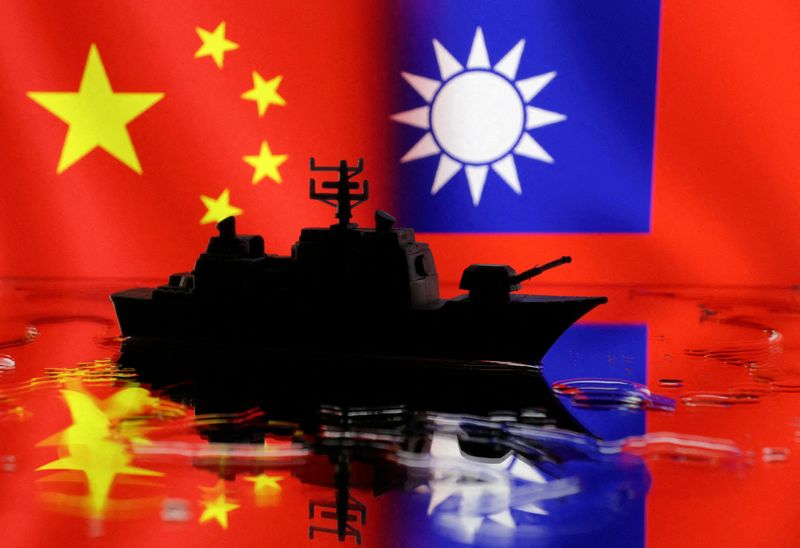
China, for its part, views these activities as nothing less than a divine right. The Foreign Ministry asserted, not surprisingly, that these patrols are [QUOTE_PLACEHOLDER] a legitimate exercise of its sovereignty over the island. They consider Taiwan, as everyone knows, a breakaway province. Simple, clean, incontrovertible, at least from their perspective. The whole affair, you could argue, has a certain circular logic to it, where each action, each pronouncement, reinforces an already entrenched position.
Taipei, bless its democratic heart, has vocally — and understandably pushed back. It called the action [QUOTE_PLACEHOLDER] an infringement on its de facto independence — and a dangerous escalation. Imagine having another nation’s patrol boats just showing up, uninvited, on your doorstep, or rather, in your backyard. It’s not exactly neighborly, is it? Analysts, the perpetually concerned cohort, generally agree that these patrols are intended to [QUOTE_PLACEHOLDER] project force and normalize Beijing’s claims in the region. They’re establishing a precedent, hoping to make the exceptional ordinary, the incursion routine.
But there’s a real danger baked into this strategy. Proximity breeds accidents. You’ve got to worry about the [QUOTE_PLACEHOLDER] potential for miscalculation, given the tight squeeze of vessels. One wrong turn, one miscommunication, and suddenly, a routine patrol spirals into an international incident, perhaps even worse. That’s the nightmare scenario everybody talks about in hushed tones behind closed doors, isn’t it? Because the stakes, for the global economy alone, are just incredibly high.
Indeed, a staggering 50% of the world’s container fleet passes through the Taiwan Strait annually, according to figures often cited by shipping analysts and maritime economists. Any prolonged disruption there would ripple outward, causing unprecedented chaos in supply chains from Rotterdam to Karachi, and everywhere in between. Imagine your new phone arriving six months late, or not at all. Or, for countries like Pakistan, the interruption of crucial energy imports or textile exports. Stability, then, isn’t just a buzzword; it’s the bedrock of commerce — and prosperity.
📄 POLICY WIRE WHITEPAPER PUBLISHED: PAKISTAN'S NATIONAL SECURITY POLICY PRIORITIES
👉 READ BY CLICKING HEREOn that note, countries in the wider South Asia — and Muslim world are keeping a keen eye on developments. An unnamed diplomatic source within Pakistan’s government recently [QUOTE_PLACEHOLDER] expressed its hope for a peaceful resolution and adherence to international law. They emphasized the vital importance of [QUOTE_PLACEHOLDER] stability in the region for global commerce. It’s a pretty standard line, yes, but one loaded with economic self-interest and a general apprehension of faraway disputes disrupting their own precarious balance. After all, if the big dogs are squabbling in the Pacific, it doesn’t bode well for global order elsewhere. These are folks keenly aware of the interconnectedness of world events, for better or for worse.
The UN Security Council, despite its predictable divisions, has seen increased discussions on the stability of the Indo-Pacific. It’s a lot of talk, unfortunately, with precious little consensus when it comes to the nitty-gritty of China and Taiwan. Everyone nods along, everyone agrees ‘peace is good,’ but few want to be the ones to really twist Beijing’s arm.
What This Means
This isn’t just another patrol; it’s another brick in a meticulously laid wall of Chinese influence. Beijing isn’t seeking a direct military confrontation, not yet, but rather aiming to redefine what constitutes ‘normal’ within what it considers its territorial waters. By increasing the frequency and geographic scope of its coast guard operations, China is effectively trying to make its claims a de facto reality, forcing other nations to accept its growing presence as routine. It’s a classic grey-zone tactic, where actions fall just short of war but aggressively assert sovereignty, pushing boundaries without technically crossing the red lines that might provoke a harsher military response.
Economically, the persistent tension and the increasing frequency of these assertive patrols in such a critical maritime artery create a persistent ‘risk premium’ for businesses operating in the region. It’s like a low-grade fever that never quite breaks. Investors get nervous. Shipping companies face higher insurance rates. And, as we’ve already highlighted, the ramifications of any direct conflict would be catastrophic, far exceeding even the severe supply chain disruptions experienced during recent global health crises. It’s less about immediate financial collapse and more about the slow erosion of trust and predictability—a poisonous uncertainty for trade. This slow march toward a potential flashpoint will continue to impact regional alliances and military readiness, inevitably leading to a strengthening of counter-balancing efforts from nations like the U.S., Japan, and Australia. You’re seeing the regional powers, like Pakistan, emphasizing international law precisely because they want to avoid a scenario where might makes right, preferring a stable, rule-based order for their own economic and geopolitical security. There’s a certain tragic inevitability to this escalating chess game, isn’t there?