


Fed Hawk Warsh: 2% Inflation Target & Global Ripple
Former Fed Gov. Kevin Warsh vows to hold inflation at 2%. Explore the global impact of this hawkish stance on monetary policy, interest rates, and developing economies.

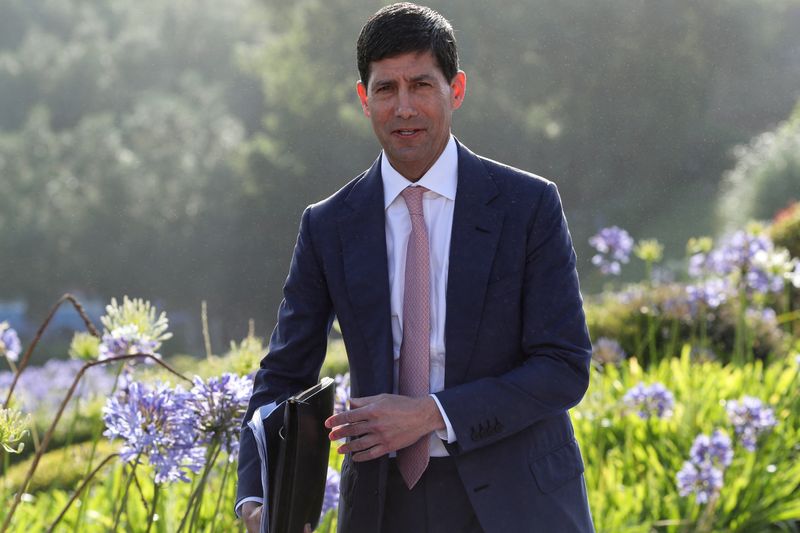
POLICY WIRE — Washington D.C., USA — Forget the predictable market chatter, the endless analyst reports trying to read tea leaves. Former Federal Reserve governor Kevin Warsh, not one to mince words or soften a blow, recently lobbed a direct shot across the bow of financial speculation. His message was stark, simple, and meant to hit hard, proclaiming he would ‘disappoint’ anyone who thinks he will tolerate inflation above 2%.
It wasn’t a whispered sentiment in a dimly lit conference room. No, this was a public gauntlet thrown, a declaration that for all the chatter about flexible targets and evolving economic paradigms, some fundamental anchors remain—at least in his estimation. But here’s the rub: those 2% targets, these steadfast pronouncements, they don’t exist in a vacuum. They echo far beyond the marbled halls of Washington. [QUOTE_PLACEHOLDER]
This kind of unwavering stance, particularly from someone with a track record at the Fed, sends shivers down a few spines, believe me. Not just among bond traders or currency strategists, but also in countries hanging by an economic thread. Consider a nation like Pakistan, constantly battling its own runaway inflation — and a perpetually depreciating currency. What the Fed does, what any significant central bank says it’ll do, sends seismic waves. We’ve seen it time — and again, the global ripple effect of monetary policy. A hawkish U.S. Fed often means a stronger dollar, making essential imports pricier for countries like Pakistan already grappling with balance-of-payment crises and commodity price shocks. They don’t need another layer of complexity. Because every basis point, every public declaration, translates to real-world pain or, occasionally, relief on the streets of Karachi or Lahore. They’re listening.
Warsh’s assertion wasn’t just a nod to historical Fed dogma; it’s a reaffirmation that price stability remains paramount for some of the most influential economic minds. This, even as political pressures or market exuberance might suggest otherwise. But frankly, Wall Street’s short memory is legendary. They always find new reasons to test the boundaries, to push for slightly looser reins. And it’s this relentless push — and pull that keeps us, the reporters, busy. This game, you see, it’s never really new—just different players, same high stakes. And now, these are not mere academic debates; they directly impact the lending rates for small businesses, the price of a mortgage, and, critically, the stability of developing economies struggling to find their footing in an interconnected world.
But the man makes a point: trust in a central bank’s commitment to its mandate is, arguably, its most valuable asset. Once that trust erodes, everything else starts to unravel. It’s a tough sell in an age of constant government intervention — and bailouts, I get it. This commitment to ‘disappoint’ implies a willingness to enact painful, unpopular policies if inflation runs hot. It’s not about popularity, is it? It’s about perceived long-term stability.
The latest available data indicates that the average annual inflation rate across G7 nations, as of March 2024, hovers around 3.2% according to the Organisation for Economic Co-operation and Development (OECD), well above that sacred 2% threshold some central bankers still cling to. This disconnect highlights the immense pressure policymakers are under, straddling the line between containing prices and stoking economic growth. They’re on a knife-edge. How many times have we seen central banks try to pivot too early, or too late? It’s a delicate dance, always. You think it’s easy? It’s not. Warsh, with his remarks, just made the dance floor a little slicker.
📄 POLICY WIRE WHITEPAPER PUBLISHED: PAKISTAN'S NATIONAL SECURITY POLICY PRIORITIES
👉 READ BY CLICKING HEREAnd let’s be real: this 2% target isn’t some immutable law of physics. It’s a number chosen for certain practical purposes, a convention rather than a divine edict. However, once a central bank establishes such a target, departing from it, or even seeming to waiver, risks destabilizing expectations. For investors — and consumers alike, predictability counts for a lot. Losing that can cause markets to become truly jittery, leading to unforeseen consequences, maybe even the kind of friction points that nobody wants.
What This Means
Warsh’s sharp declaration signals that the ‘inflation hawk’ mentality isn’t extinct, even if it feels like it sometimes. This kind of uncompromising rhetoric, whether it comes from a former official or current policymaker, carries substantial weight, affecting market sentiment globally. Economically, it likely reinforces a bias towards tighter monetary conditions from central banks generally. Because if the heavyweights signal a steadfast commitment to beating inflation, even at the cost of short-term growth or stock market cheers, it implies higher interest rates may persist longer than many speculators hope.
Politically, this stance can generate tension. Governments, facing electoral cycles, often prefer looser monetary policy to stimulate employment and economic activity, even if it means creeping inflation. A hawkish Fed or former Fed figure pushes back against that, potentially creating clashes between fiscal and monetary authorities. This tension also reverberates internationally. Nations with high external debt, frequently in U.S. dollars, will find debt servicing more burdensome if the dollar strengthens and global interest rates rise, exacerbated by a resolutely anti-inflationary Fed. It doesn’t get easier for them. For emerging economies, particularly those in the Muslim world already contending with substantial geopolitical and economic vulnerabilities, this sustained hawkish tone means capital flight risks and import cost hikes could continue to vex them. So, Warsh’s words, they’re not just for the boys in suits in New York or London. They’re for everyone struggling with the cost of a loaf of bread in Cairo or Islamabad, whether they know his name or not. That’s how these things work.