


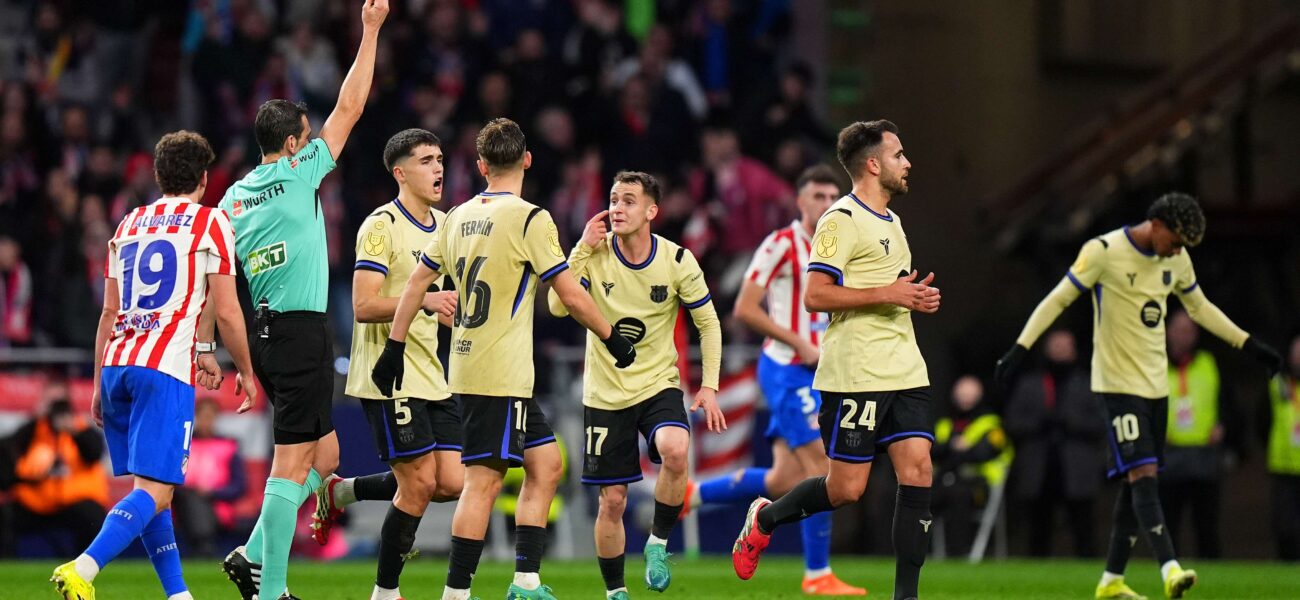
Football’s Shift: Gulf’s Geopolitical Power Play
Petrodollars fuel an exodus of European football stars to the Gulf. Uncover the strategic geopolitical gambit reshaping global sports and power dynamics.

POLICY WIRE — Riyadh, Saudi Arabia — It wasn’t about the shimmering trophies or the roar of the European faithful this time around. Instead, it seems an offer arrived that Barcelona’s most recognizable asset, a figure of significant sporting renown, just couldn’t quite refuse—or at least, wasn’t publicly refusing. This potential transition isn’t just another transfer saga. Oh no, it’s far grander. It’s an economic earthquake rattling the foundations of European football and sending tremors across continents, reshaping narratives from Doha to Islamabad. What we’re witnessing isn’t just player movement; it’s the quiet, yet insistent, expansion of a new global financial gravity.
For years, European football’s elite leagues have reigned supreme, drawing in the world’s best talent with a mix of prestige, historical allure, and, of course, hefty paychecks. But the game, she’s changing. Suddenly, a new player—literally and figuratively—has muscled its way to the negotiation table, armed with coffers deeper than the Mariana Trench. Saudi Arabia, in particular, isn’t just looking to sign a few big names. They’re constructing an entire sporting infrastructure, buying legitimacy and soft power in a bold, costly display of national ambition.
And boy, are they spending. Analysts at PwC estimated Saudi Arabia has injected an astonishing approximately $6.3 billion into sports development and events since their Vision 2030 program truly began taking shape, a staggering sum designed to diversify its oil-reliant economy and polish its global image. It’s a calculated gamble, betting that the glitter of global sports can eclipse less savory headlines, draw in tourists, and even inspire a healthier local population. Many see it as audacious; some call it cynical. But you can’t deny its efficacy so far.
The murmurs from Catalonia about this Barcelona star’s prospective Saudi adventure have been constant. And they highlight a critical pivot point for football, certainly. But it’s also a mirror reflecting larger geopolitical — and economic maneuvers playing out on a grand chessboard. The Gulf states—not just Saudi, mind you—are rapidly cementing their position as power brokers beyond energy, elbowing their way into finance, technology, and, crucially, culture.
It’s no accident that nations across the Muslim world — and South Asia watch these developments with keen interest. Consider Pakistan, for instance, a country with an insatiable appetite for cricket, sure, but football’s global reach is undeniable even there. Millions tune into European matches weekly. The idea of an iconic player—a face they’ve admired for years—now plying his trade in a neighboring Muslim nation, however distant economically, carries a certain resonance. It speaks to a shift, however symbolic, in power dynamics. Perhaps now the sporting future isn’t solely tied to Western European capitals. It certainly feels that way.
We’ve been hearing a lot of back-and-forth, of course. One insider, requesting anonymity given the delicate nature of discussions, noted the star was [QUOTE_PLACEHOLDER]. But really, when sums reach stratospheric levels, principles often bend. The reality is simple: for a footballer reaching the twilight of a storied career, the prospect of an enormous final payday in a less physically demanding league can be an irresistible siren call. You know it, I know it. They’re athletes, sure, but they’re also shrewd businesspeople. And Saudi’s PIF—its Public Investment Fund—isn’t in the business of penny-pinching. They’re investing with an almost terrifying nonchalance about costs.
📄 POLICY WIRE WHITEPAPER PUBLISHED: PAKISTAN'S NATIONAL SECURITY POLICY PRIORITIES
👉 READ BY CLICKING HEREBecause ultimately, these aren’t merely player acquisitions. They’re strategic assets in a grander play for influence. Look, every Gulf nation has its unique approach to leveraging sports for global appeal. You’ve got Qatar and the World Cup, the UAE with its city-state specific sponsorships, and now Saudi with its full-court press on talent acquisition. They’re not just buying teams or tournaments; they’re buying attention. They’re buying relevancy. And they’re reshaping the entire landscape of global sports in the process. It’s a brave new world, sports fans, — and it’s powered by petrodollars. We’re all just living in it.
What This Means
This saga isn’t just about football, it’s about the accelerating geopolitical realignment spurred by petro-states. Economically, these mega-deals represent more than just salary inflation for a handful of players; they signify an aggressive diversion of capital into non-oil sectors and, critically, into intangible assets like global perception. For a nation like Saudi Arabia, a Barcelona star’s presence doesn’t just sell jerseys; it generates media cycles, attracts investment, and, perhaps most importantly, builds cultural bridges where political ones might falter. It’s a form of soft power that directly counters longstanding Western hegemony in culture — and sport. This isn’t just competition; it’s a recalibration of where wealth — and influence truly reside.
The implications for South Asia, particularly, are layered. For one, these regional power plays indirectly influence trade routes, diplomatic alliances, — and investment flows. Pakistan, with its strategic location and burgeoning young population, becomes an important audience for Gulf narratives, a target for economic cooperation, and sometimes, unfortunately, a labor source. As the Gulf diversifies its economy, it needs expertise, workers, and consumers—many of whom can be found in nations like Pakistan. the aspirational messaging embedded in these sports spectacles—of prosperity, modernity, and global integration—isn’t lost on a demographic desperate for better opportunities and narratives. It’s not just a game; it’s a vision, one that’s being carefully curated — and aggressively exported. You can see it playing out. You really can.