


Atlas Lions Roar: Morocco’s World Cup Global Impact
Morocco's Atlas Lions dominate the World Cup, inspiring global pride. This unstoppable run boosts soft power and reshapes perceptions of African football. Learn why.

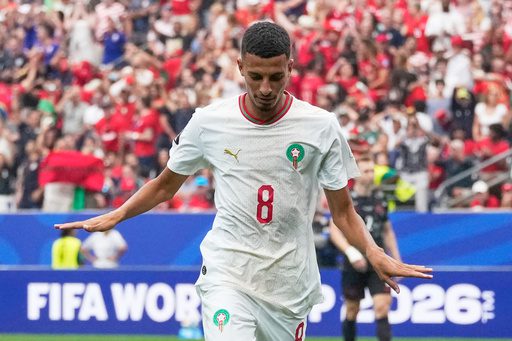
POLICY WIRE — HOUSTON, USA — From the electric pandemonium erupting along Casablanca’s Corniche Boulevard, where throngs clambered onto car roofs, flags waving against a sky lit by fireworks, you’d sense something beyond just a football win. It wasn’t merely a 3-0 thrashing of World Cup co-host Canada. No, this was the Moroccan national team, the Atlas Lions, stamping their authority once more on the global stage, proving they’re not just participants anymore—they’re power players.
This latest victory rockets Morocco into the quarterfinals, an astonishing second straight appearance in the final eight. They’d previously etched history by being the first African team to reach the semifinals in 2022. It’s quite the trajectory, especially when you consider where they were just a few short years ago. Coach Mohamed Ouahbi, observing the consistent high performance, articulated the new reality with a confident air. “We’re no longer a surprise,” Ouahbi stated, through an interpreter. He added, “Now when people talk about Morocco we’re a major contender — and it’s a great source of pride. I think it’s only the beginning and I hope we continue to have runs like this.” That’s not just talk, you know; that’s a statement of intent. [QUOTE_PLACEHOLDER]
Because despite what many thought, Canada didn’t roll over easy. They’d had their own fairytale, remember? Winning their first-ever knockout round match against South Africa 1-0, a feat that captivated a nation often more consumed by slapshots and iced tea than by corner kicks. They played with heart, but Morocco, frankly, played better. Azzedine Ounahi, who’s quickly becoming a household name in Moroccan homes — and beyond, bagged two goals. His first, a right-footed shot from outside the box in the 50th minute, cut through traffic like a hot knife through butter. Then came a second, from the middle of the box, in the 82nd minute. And Soufiane Rahimi, just to put a nice little bow on it, netted another in stoppage time. They weren’t just scoring; they were putting on a clinic.
It’s interesting, the perception gap sometimes. Canada’s coach, Jesse Marsch, even after the three-goal deficit, found himself praising his squad. “I told them that I was proud of them and I challenged them to understand that we can play like this all the time against the best teams in the world,” he relayed to reporters. He genuinely felt, at times, that his team held the upper hand. “The way we pushed, the way we were in the match, the quality we showed, the overall impact in the match, we were better,” Marsch insisted. He concluded, “We were better than the No. 7 team in the world today.”
But Ouahbi, bless his diplomatic soul, wasn’t about to let that assessment hang in the air unchallenged. You could practically hear the subtle huff in his reply. “In terms of intensity they were good,” he acknowledged. “They were good for 98 minutes. Were they better? It’s hard to say. It takes some nerve to say that when you lose 3-nil.” Sharp, isn’t he? The fact is, despite Canadian chances—Jonathan David’s free kick sailing over, Tajon Buchanan’s powerful shot deftly parried by keeper Yassine Bounou, a Canadian-born Moroccan—they couldn’t convert. Bounou himself made three critical saves. It wasn’t a case of ‘what if’; it was a case of ‘what’s.’
Morocco will now face France, who dispatched Paraguay. It won’t be a walk in the park, but let’s be honest, nothing in the quarterfinals is. What is clear, however, is that Morocco’s performance has resonated deeply, far beyond its immediate borders. Think of the broad sweep of the Muslim world, from Cairo to Kuala Lumpur, from Pakistan to Nigeria. This isn’t just a North African victory; it’s an emblem for shared pride, an assertion of capability from a continent often unfairly overlooked in global football. Their journey acts as a compelling narrative, an almost irresistible siren call for collective celebration and validation.
📄 POLICY WIRE WHITEPAPER PUBLISHED: PAKISTAN'S NATIONAL SECURITY POLICY PRIORITIES
👉 READ BY CLICKING HEREWhat This Means
Morocco’s repeated deep runs in the World Cup aren’t just about sporting prowess. They’re a significant, yet perhaps underappreciated, soft power play on the global stage. This success projects an image of dynamism, resilience, and organizational competence that could have tangible economic and political payoffs. We’re talking about a boost to national morale, sure, but also potential upticks in tourism and foreign investment as the country gains more international visibility. Because who doesn’t like to be associated with winners?
For the wider Muslim world, and particularly within South Asia where football support often intersects with regional identity (look at the fervor for teams in India, for example, which we recently covered in an article about West Bengal’s lunch lineup and South Asian food fights), Morocco’s performance sends a powerful message. It challenges existing narratives — and provides a source of immense collective pride. This kind of global affirmation can subtly reshape perceptions, encouraging cross-cultural connections and showcasing what nations in the region are capable of on a truly competitive field. And for African football, it’s an undeniable sign that the old hierarchies are breaking down, as goalkeeper Yassine Bounou put it, “We’re so proud to represent Africa because it’s a continent with a lot of talent and Africa deserves to be in the best level in football.” The continent has definitely earned its seat at the table. Their ongoing success certainly sparks conversation about global economic echoes and national aspirations beyond sport.
This Canadian elimination was less dramatic, perhaps, than the previous match from the last World Cup, which Morocco won 2-1 and where an “extremely physical match” resulted in “eight yellow cards.” However, the underlying narrative is the same: Morocco is here to stay. They don’t just want to reach the final eight; they want to keep going. They don’t “want to stop,” Ouahbi says. And given their current form, frankly, I don’t think anyone’s betting against them now.