


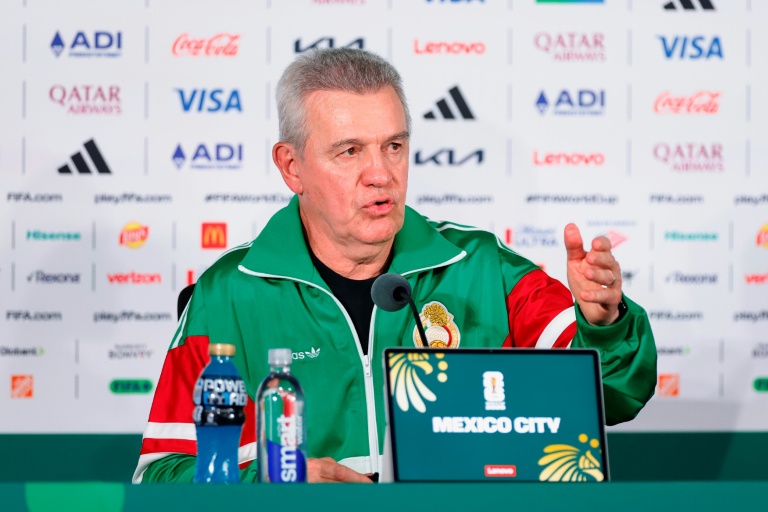
Mexico vs England: Aguirre’s Bold Altitude Strategy
Mexico faces England in a high-stakes World Cup last-16. Coach Javier Aguirre dismisses the famed altitude advantage. Will his bold strategy defy expectations and secure victory?

POLICY WIRE — Mexico City, Mexico — The air is thin here, a physical reality, but the weight of a nation’s hopes feels heavier still. In Mexico City, the looming World Cup last-16 showdown against England has ignited a fever pitch of anticipation, and smack-dab in the eye of this hurricane is veteran coach Javier Aguirre. He’s tasked not just with strategy, but with a more profound alchemy: distilling raw national fervor into calm, tactical execution—all while casually swatting away what everyone else is screaming about.
It’s the altitude, naturally. Every pundit, every casual chat in a cantina, boils down to the rarefied atmosphere of Estadio Azteca, sitting at a staggering 2,240 meters (7,350 feet) above sea level. It’s supposed to be Mexico’s hidden weapon, the silent assassin of English lungs. But Aguirre? He isn’t playing that tune. “I really don’t focus on that,” he told a room of scribblers Saturday, his voice carrying the weariness of a man who’s heard the same questions a thousand times. “It’s 11 against 11. The referee is there to point things out.” And with that, he attempted to deflate the biggest talking point before the first whistle even blows. His dismissal, a veteran’s gambit perhaps, almost feels like a challenge in itself.
Mexico’s current form is nothing short of electrifying. They’ve barreled through the group stage and the Round of 32, winning all four matches without so much as a whisper of a goal against them. And their track record at the Azteca is the stuff of legends: they’ve dropped only two competitive matches out of 89 contests held there, a statistic that speaks volumes about home-turf advantage beyond mere oxygen levels. But it’s England, ranked fourth globally by FIFA, standing in their way, a team packed with “major players who play both inside and outside the country,” as Aguirre grudgingly admits. “They’re pretty powerful, physically speaking, — and they’re great players.”
The stakes couldn’t be higher. This isn’t just football; it’s a profound cultural narrative unfolding on a global stage, reminiscent of the sheer exhilaration, and sometimes despair, that grips nations across the globe when their teams play. Consider the football craze sweeping through nations like Pakistan, where cricket reigns supreme but international sporting triumphs—or even credible efforts—can momentarily unify disparate communities and inject a heady dose of national pride. A Mexican success here, particularly against European titans, resonates far beyond North America’s borders.
England manager Thomas Tuchel, known for his methodical approach, offered his own measured take earlier in the week. “We respect the conditions, of course,” he reportedly said, his brow unfurrowed. “But we prepare our lads for the opponent, not for the air pressure. We’re professionals; adaptation is part of the job.” That’s the sort of cool, rational analysis that rubs up against the almost mystical faith Mexico places in its home advantage.
📄 POLICY WIRE WHITEPAPER PUBLISHED: PAKISTAN'S NATIONAL SECURITY POLICY PRIORITIES
👉 READ BY CLICKING HEREAguirre, taking the helm for Mexico at a World Cup for the third time, understands the peculiar pressures of this moment better than most. He steered the nation to their first knockout win in 40 years against Ecuador just days ago. Now, he faces a battle on two fronts: the English on the pitch — and the runaway enthusiasm of his own countrymen. “The group is aware of where we’re,” he explains, “and every single one of my players has a smartphone and they’re on fire.” Because they’re living it, breathing the euphoria. “My obligation is that whenever they get too self-confident or whenever they get too ecstatic, I try to ground them.” It’s an unenviable task, taming the wild beast of expectation.
Can they reach the quarter-finals? Aguirre doesn’t blink. “If I didn’t believe that we could indeed beat England, I would tell you, as a matter of fact.” But he believes, he states, in his team’s play, seeing them as equals where “the team that makes fewer mistakes is going to win.” And really, that’s the bottom line for any sport—not air, not geography, but execution.
What This Means
Beyond the simple result of a football match, this encounter carries significant geopolitical echoes for Mexico and its regional standing. A deep World Cup run can galvanize a national identity, providing a rare sense of collective purpose and pride that can momentarily overshadow internal political struggles or economic anxieties. For the co-hosts of the 2026 World Cup—Mexico, Canada, and the United States—a strong showing now helps solidify their credentials and the enthusiasm leading up to the bigger event. It’s soft power in its most visceral form, broadcasting Mexico’s sporting prowess and capacity to an immense global audience. The economic uplift from this kind of prolonged exposure, for tourism and national branding, is substantial; remember how a single tennis triumph in Manila can command geopolitical awe. Failure, conversely, while not catastrophic, can dim that bright spotlight prematurely and force an introspection on where investments and priorities truly lie in a nation obsessed with ‘the beautiful game.’ This isn’t just about scoring goals; it’s about scoring global validation.