


Germany’s Far-Right Surge: A Nation Divided
Germany's political landscape shifts as the far-right AfD gains traction. Uncover the divisions, protests, and implications for democracy, economy, and global ties.

POLICY WIRE — BERLIN, Germany — The frosty German air bites differently these days. It’s not just the onset of winter; there’s a distinct chill in the body politic, a palpable unease permeating the elegant boulevards and somber memorials of Berlin. For decades, Germany diligently stitched together a fabric of atonement and stability, an unwritten covenant against the shadows of its past. But that thread feels stretched thin, maybe even frayed, as a defiant far-right political entity, the Alternative for Germany (AfD), isn’t just knocking at the door—it’s stomping on the porch, bags packed for a potential power grab.
It’s an awkward, almost surreal moment for a nation so self-conscious about its historical narrative. While tens of thousands took to the streets, fists raised — and placards condemning extremism, the AfD didn’t flinch. No, they merely glanced over their shoulder, then kept marching towards upcoming regional and European elections, confidence dripping from their campaign speeches. Their leadership often frames these protests not as a democratic outcry, but as a misguided, almost theatrical, attempt by the ‘old’ establishment to suppress the ‘will of the people.’ And therein lies the rub: the people are deeply, bitterly divided.
Chancellor Olaf Scholz, typically reserved, recently offered a rare public assessment of the situation. “We’ve learned from our history,” Scholz reportedly told close advisors, “and we won’t let anyone undermine our democratic foundations, or normalize hatred. These street protests, they’re a strong signal that Germany knows better.” He’s walking a tightrope, mind you, trying to reassure an anxious electorate while acknowledging the very real electoral inroads the AfD is making—particularly in the economically challenged eastern states. But how much can words do when the tide feels so strong?
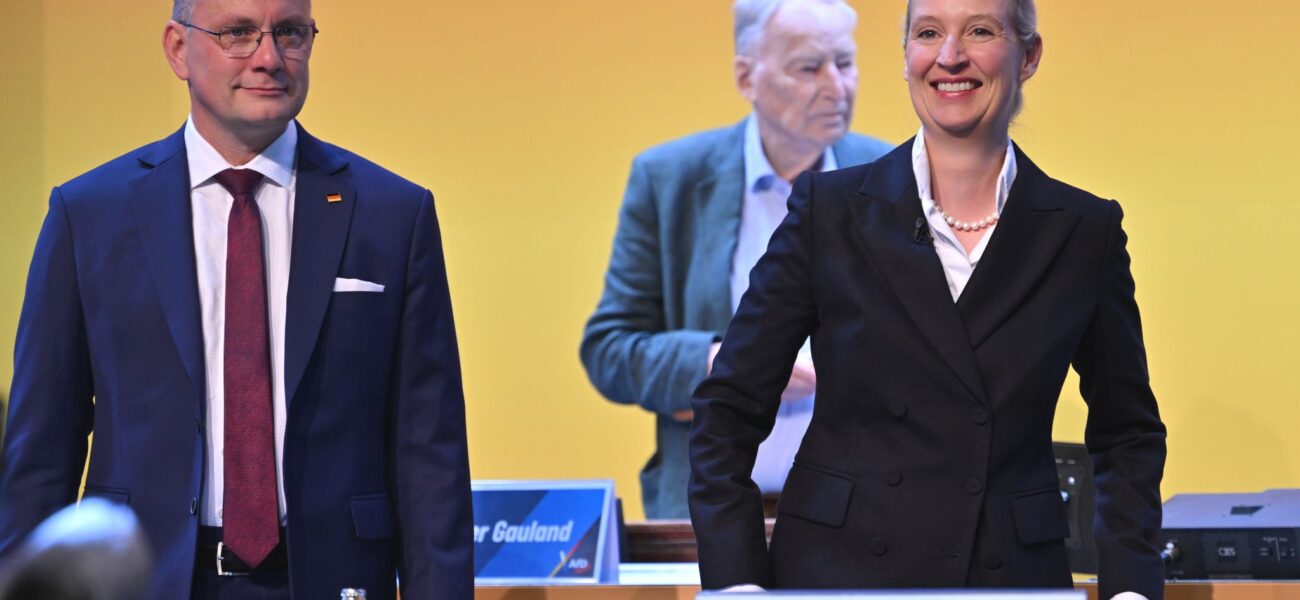
The AfD’s rhetoric, sharp and unapologetic, taps into genuine anxieties—economic stagnation, immigration policies, European overreach. Consider their co-leader Alice Weidel, a sharp operator who doesn’t pull punches. “The political elite are out of touch with ordinary Germans. They call us extremists, but we’re merely speaking uncomfortable truths about unchecked migration and the burden on our society,” she’s been quoted as saying, often with a dismissive wave towards media scrutiny. It’s a calculated stance, playing to an electorate fatigued by coalition squabbles and global crises, a population seeking simple answers to complex problems. But simple answers rarely exist, do they?
This unsettling pivot in German politics isn’t an isolated phenomenon, a domestic eccentricity. The ripples spread wide. Many nations with substantial Muslim populations, including Pakistan and its South Asian neighbors, watch Germany’s internal debate with a particular sort of trepidation. Germany has long been a destination for migrant labor and refugees—from post-WWII Turks to recent Syrian asylum seekers—and the AfD’s openly anti-immigrant, anti-Islam positions have direct, tangible implications for communities stretching far beyond Germany’s borders. For them, Germany isn’t just debating immigration policy; it’s debating the very value and place of their brethren in European society. And they’re worried about where that conversation ultimately leads.
Polls consistently paint a sobering picture for the mainstream. The AfD now routinely sits at around 20-22% nationally, according to aggregated surveys from reputable sources like Infratest dimap, making it the second strongest party, ahead of Scholz’s own SPD. It’s a remarkable ascent from the fringes, especially given Germany’s historical sensitivity to such movements. Because who could’ve imagined this shift even a decade ago? But global unrest — and domestic gripes have a way of morphing into something nobody predicted.
📄 POLICY WIRE WHITEPAPER PUBLISHED: PAKISTAN'S NATIONAL SECURITY POLICY PRIORITIES
👉 READ BY CLICKING HEREThe streets may be aflame with protest—hundreds of thousands marched in major cities in January, for crying out loud—but the electoral arithmetic often ignores righteous indignation. Voters, many of them, simply want change. Any change, it often feels. And the AfD promises to deliver that, in spades. Whether it’s a change for the better remains, of course, the billion-dollar question.
What This Means
The continued — and frankly, quite stubborn — electoral resilience of the AfD, despite mass public outcry, hints at a deeper fracturing within German society and poses substantial challenges for both domestic policy and international relations. Politically, a stronger AfD makes forming stable coalition governments harder than pulling teeth, especially at the state level. It pushes mainstream parties into an uncomfortable bind: either they reluctantly adopt some of the AfD’s rhetoric to recapture disaffected voters (legitimizing extremist ideas in the process), or they stand firm, risking further losses to the populist right. The latter often feels like a slow, noble decline. But such fragmentation erodes Germany’s traditional role as a stable anchor within the European Union, potentially creating political vacuums others might be eager to fill.
Economically, this trajectory carries a bag full of unknowns. Investor confidence in Germany, already wobbling under high energy costs and structural issues, won’t exactly be bolstered by the rise of a party openly skeptical of EU integration and known for inflammatory, sometimes outright racist, immigration policies. German industries rely heavily on skilled migrant labor, and a government hostile to immigration could severely hamstring workforce development and economic growth. Plus, the prospect of an anti-trade, anti-EU sentiment gaining more sway in Europe’s economic powerhouse could send shivers down the spines of financial markets globally. It’s a complex, dangerous dance, — and Berlin’s looking a little out of step right now.