


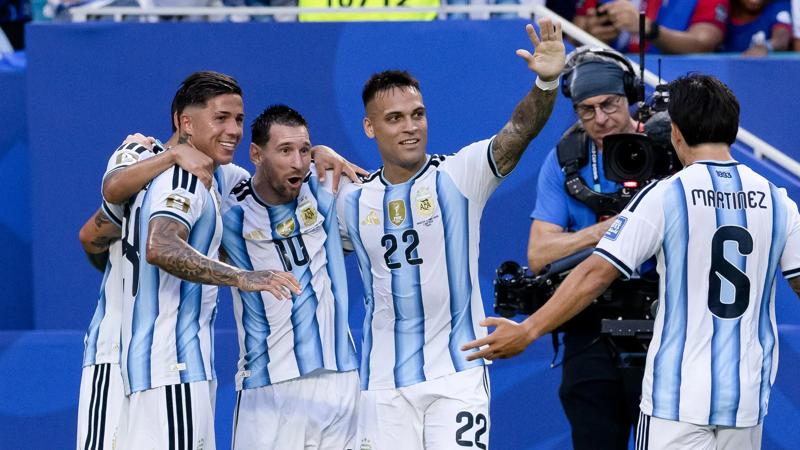
Messi’s Argentina Survives Miami Scare
Messi's Argentina barely survived a brutal Miami match against Cabo Verde, winning 3-2 in extra time. Discover how the champions fought through the heat to reach the Round of 16.

POLICY WIRE — Miami, United States — It wasn’t the kind of clinical procession usually reserved for reigning world champions. Forget the coronation; this was a grinding, sweltering slog under the merciless Florida sun. Lionel Messi’s Argentina, a squad that usually carries itself with an almost divine assurance, looked decidedly human, barely scraping past a spirited Cabo Verde in a bruising 3-2 extra-time affair.
The sweltering afternoon in Miami, where Hard Rock Stadium served as an oven more than a pitch, saw the Albiceleste forced to their absolute limits. Temperatures were high enough, officials later conceded, to turn mere sporting spectacle into a test of sheer endurance. This wasn’t just a game of tactics; it was a brutal contest of will, — and one Cabo Verde almost, almost snatched.
They’re through, but barely. And that’s the rub, isn’t it? The expectation weighing on their shoulders must feel like another few hundred degrees in the Miami humidity. Captain Messi, at 37, continues to defy time, conjuring moments of breathtaking brilliance as only he can. His seventh goal of the tournament, a sublime first touch and clinical finish from a Lisandro Martínez pass, was a flash of genius. It was also his 20th FIFA World Cup goal, cementing a legacy that transcends mere statistics.
But Cabo Verde, the so-called Blue Sharks, didn’t roll over. Not even close. They clawed their way back, not once, but twice. Duarte’s calm finish in the 55th minute signaled their intent. Then, after Lisandro Martínez momentarily put Argentina back in front during extra time, Lopes Cabral equalized again with a stunner that seemed to rip the very fabric of Argentina’s collective composure. They battled like a team possessed.
Eventually, the winner came, a scrappy affair courtesy of Romero in the 111th minute, a deflection doing the dirty work after Messi’s corner. It wasn’t pretty. It wasn’t dominant. It was, instead, a stark reminder that even the titans can stumble. “We didn’t play our best football, not by a long shot,” conceded Head Coach Lionel Scaloni after the match, his voice thick with a mixture of relief and understated frustration. “But sometimes, these are the wins that build character. The boys never stopped fighting, — and that’s what counts at this stage.”
Messi himself, usually stoic, offered a rare glimpse into the effort required. “They made us work for every single inch on that pitch. They were physically strong, incredibly organized—it’s a tough opponent to break down,” he remarked, clearly exhausted but with a glint in his eye, perhaps knowing that a deeper challenge is often a better prelude to greatness. That’s a pragmatism born of two decades on the global stage, isn’t it?
Their reward? A Round of 16 clash against Egypt. The pharaohs of North Africa will be no easy out, presenting a fresh tactical challenge for Argentina’s aging maestro and his supporting cast. It’s a fixture that will undoubtedly captivate millions across the broader Muslim world, a region where football obsession runs deep, and loyalties for European and South American giants like Argentina are fervent.
📄 POLICY WIRE WHITEPAPER PUBLISHED: PAKISTAN'S NATIONAL SECURITY POLICY PRIORITIES
👉 READ BY CLICKING HEREThe sheer global reach of this tournament can’t be overstated. The 2022 World Cup, for instance, reportedly drew a global viewership of over 5 billion, with significant contributions from emerging markets, including across South Asia, as FIFA data suggests. Fans from Lahore to Jakarta will be glued to their screens for the Argentina-Egypt match, a symbolic bridge between continents and footballing philosophies.
And so, the show moves to Atlanta, at the Mercedes-Benz Stadium, on July 7. One wonders if the air conditioning there will provide a more temperate stage for Argentina’s theatrical campaign. Will this scare be the galvanizing force? Or has it merely exposed cracks in the champions’ armour?
What This Means
This match wasn’t just a struggle for a place in the next round; it was a psychological inflection point for Argentina. They didn’t blow a lesser opponent away; they barely survived. This vulnerability, whether manufactured by conditions or genuine fatigue, complicates their narrative. For rivals, it offers a glimmer of hope, a roadmap for exploiting perceived weaknesses.
Economically, such close encounters maintain high viewer engagement, driving broadcasting revenues and sponsorship interest—crucial for FIFA and the host nations. From a political perspective, successful national teams like Argentina often serve as powerful symbols of national pride, even in distant fanbases. The emotional investment in a team, from Buenos Aires to Baghdad, transcends mere sport, acting as a shared cultural currency. Egypt’s presence in the R16 further amplifies this, providing a compelling narrative for its regional supporters. For a team whose journey has been mapped by global anticipation, every uncertain step—especially against a spirited underdog—adds another layer to its complicated, and ultimately more interesting, story. But they’re still in it. And that’s what counts.