



AfD’s Surge: Germany’s Political Fault Lines
Discover how Germany's far-right AfD is surging amid urban unrest. Unpack its leadership's ascent and the profound impact on German and European politics.

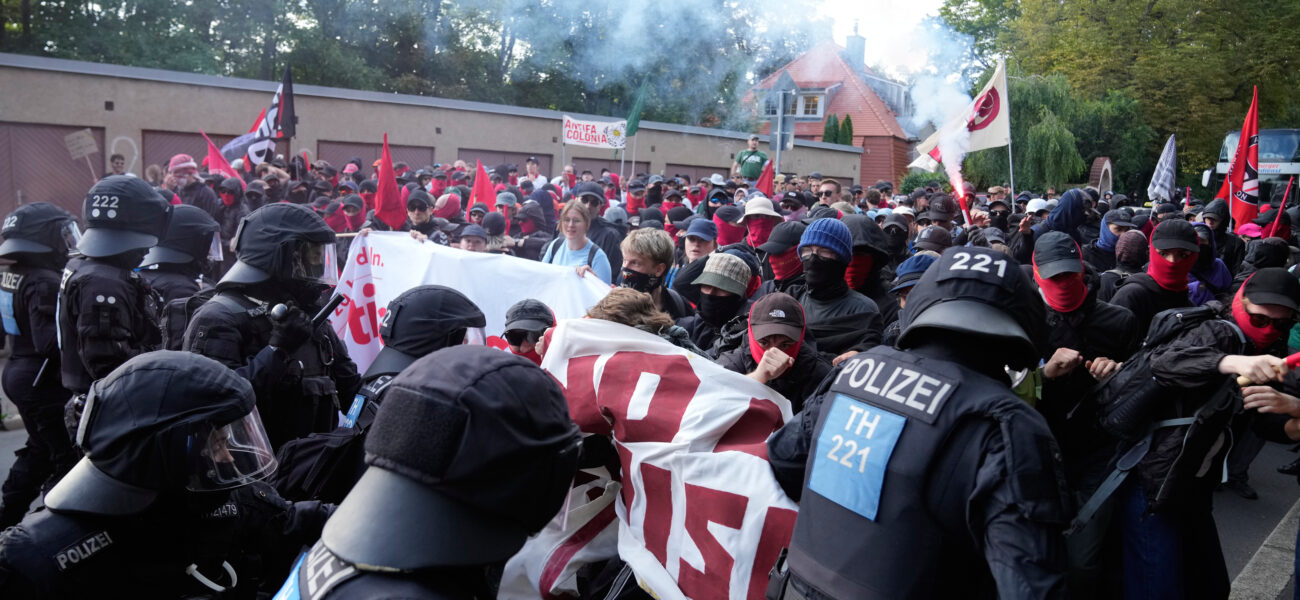
POLICY WIRE — Berlin, Germany — You could almost hear the collective sigh of a nation holding its breath, waiting for the other shoe to drop. For all its post-war stability, Germany—the very heart of European meticulousness—now finds itself grappling with a gnawing unease, a deep fissure opening wider with each passing political maneuver. And nowhere is that fracture more evident than in the recent maneuvers of the far-right Alternative for Germany (AfD) party, which, rather than receding, continues its brazen ascent. Their leadership elections, unfolding amidst clouds of tear gas and chants from enraged protesters, were less a procedural formality and more a defiant proclamation.
It wasn’t exactly a quiet affair, you know? While inside, delegates voted in familiar faces, consolidating power for figures like Tino Chrupalla and Alice Weidel, the streets outside became a theatre of discord. Berlin saw thousands spill out, waving banners — and yelling their defiance. It was a messy, often ugly confrontation between those who fear a return to Germany’s darkest chapters and a police force tasked with maintaining a semblance of order. Rocks met riot shields. Water cannons fired into dense crowds. For many, it felt less like a democratic exercise — and more like a fever dream. A deeply unsettling reality, wouldn’t you say?
The optics weren’t great, but frankly, for the AfD, they never really are—and they don’t seem to care. Because despite the public condemnation — and the street battles, their support numbers keep ticking up. Recent polls consistently place the AfD around 20-22%, making them Germany’s second-strongest party, a stark rise from their 4.7% in the 2013 federal election, according to data compiled by Statista. That’s a quarter of the electorate, mind you, actively entertaining (or outright endorsing) a party that the domestic intelligence agency has, in parts, deemed extremist. It’s a dizzying climb for a group many once dismissed as a fringe phenomenon, a passing annoyance.
AfD co-leader Alice Weidel, ever the pragmatist with an edge, wasn’t about to temper her party’s victory speech. “We’re not just a party; we’re a movement. The people are tired of the old consensus, and they want real solutions to real problems,” she declared, her tone unwavering. “The streets may shout now, but the ballot boxes will speak louder soon enough.” Her words, sharp and self-assured, cut through the noise, a stark contrast to the cacophony outside. But that’s their brand, isn’t it? A perceived no-nonsense approach for a populace tired of, well, perceived nonsense.
But the opposition isn’t backing down. Quite the opposite. Activists, mainstream politicians, and concerned citizens are mobilizing against its rise with an urgency not seen in decades. Luisa Neubauer, a prominent climate activist and fierce critic of the far-right, summed up the sentiment for many: “These events aren’t just about party elections; they’re a barometer of our democratic health. We won’t stand by as extremism takes root; we’ll fight for the inclusive, democratic Germany we believe in.” Her message echoed through the organized counter-demonstrations, reflecting a profound anxiety about the future direction of the federal republic.
📄 POLICY WIRE WHITEPAPER PUBLISHED: PAKISTAN'S NATIONAL SECURITY POLICY PRIORITIES
👉 READ BY CLICKING HEREAnd this sentiment, the fear of encroaching nationalism or nativism, it isn’t uniquely German. German anti-immigrant rhetoric, while locally focused, isn’t without its global analogues. You see echoes of it across Europe, naturally, but also further afield. Nations far-flung, like Pakistan—grappling with its own internal divisions, regional refugee flows from Afghanistan, and identity politics—understand this delicate dance between national identity and foreign influence all too well. The struggles are different, but the undercurrents of populist discontent and a search for strong, perhaps exclusionary, leadership feel eerily similar across continents. It’s a global symptom, isn’t it, this urge to simplify complex issues with simplistic, often divisive, answers?
It’s all part of a broader national malaise, some might say, a widespread feeling of anxiety about economic uncertainty, energy policy, and the country’s identity in a rapidly changing world. The AfD, for all its controversial statements and historical revisionism, has managed to tap directly into these simmering resentments. They’re telling a story, however skewed, that resonates with a significant chunk of the electorate.
What This Means
The AfD’s leadership affirmation amidst escalating street clashes isn’t just local German news; it’s a tremor shaking the foundations of the European Union. Their consolidated power translates directly into a more assertive, potentially more disruptive, voice within the Bundestag and, crucially, within European parliamentary bodies. Expect intensified debates over immigration policy, a pushback against EU integration, and a general shift to the right in the German political discourse, compelling even mainstream parties to adapt or risk further electoral bleed. Economically, their policies could complicate Germany’s position as a stable global actor, potentially spooking investors with their isolationist tendencies and scepticism toward climate initiatives. For international partners, including those in the Muslim world, this signals a hardening stance from Europe’s economic powerhouse, especially concerning refugee policies and cultural integration debates. It’s a warning shot, telling us Germany’s political landscape is now irrevocably altered, more fragmented, and certainly less predictable. We’re heading into uncharted territory here; that’s the long — and short of it.

