


Ohtani’s Biceps Scare: Dodgers’ $700M Risk
A dramatic Dodgers win is overshadowed by Shohei Ohtani's biceps discomfort. Discover the immense implications for his $700M contract, the team, and global sports economics.

POLICY WIRE — LOS ANGELES, California — Not every victory sings a clear, triumphant note. Some—like the Dodgers’ latest dramatic heist against the Padres—reverberate with an underlying hum of disquiet. Friday night at Chavez Ravine was another masterclass in the improbable: a 3-0 deficit obliterated in a single swing by Teoscar Hernández. Yet, as the celebratory fireworks burst over Dodger Stadium, the whispers weren’t about the grand slam, but about the fragile future of baseball’s most expensive asset.
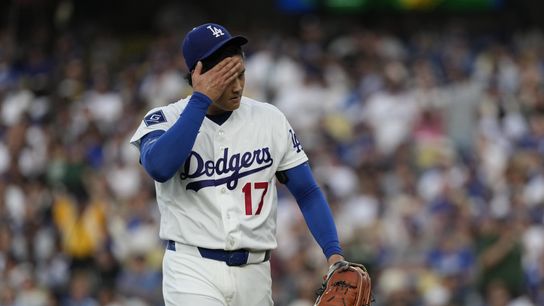
For six laborious innings, the spectacle on the mound belonged not to dominance, but to a determined struggle. Shohei Ohtani, baseball’s two-way marvel, navigated choppy waters, allowing three runs. He wasn’t sharp—no argument there—but he kept the ship afloat, giving his powerhouse offense just enough air to breathe. And then, he was gone. Not ejected, not pulled for strategic reasons, but retired to the dugout, a hand subtly clasping his right biceps. The hero of the inning, the man who’d launched the towering blast, couldn’t eclipse the concern written on everyone’s faces.
It’s a peculiar thing, this blend of euphoria — and apprehension. Fans, many having witnessed the Dodgers pull off their 27th comeback win of the season, might’ve reveled in the pure audacity of it all. Just one night after erasing a 6-0 abyss, they did it again, with Hernández’s seventh-inning grand slam providing the emphatic, game-flipping moment. A pitcher named Michael King, laboring for the Padres, had largely neutered L.A.’s bats, yielding only three hits. But, as baseball so often reminds us, tides turn faster than a stock market flash crash.
The turning point, predictably, was Mookie Betts’ leadoff walk, followed by Max Muncy’s single and an infield error that loaded the bases. A less dramatic scenario might have seen a bloop single or a sacrifice fly chip away at the lead. Instead, Hernández took the very first pitch he saw—a ninety-mile-per-hour slider begging for correction—and sent it on an irreversible trajectory into the left-field seats. Bedlam. Absolute bedlam. One swing, 3-0 turned into 4-3, — and the script, rewritten.
But back to Ohtani, the central figure in baseball’s ongoing, grand experiment. His discomfort during his final plate appearance that evening—a sensation he acknowledged as a familiar ache from months prior—prompted his removal. He battled, yes. “I think I did the bare minimum, which is to get through six, give the team the chance to win,” Ohtani mused post-game, “but there was some good and some bad in there.” This casual assessment belies the weight of his value, not just to the Dodgers, but to a global sport ecosystem constantly searching for its next sensation. Policy makers in sporting federations worldwide, from Lahore to Lisbon, watch his trajectory as a model for leveraging international talent.
Manager Dave Roberts, ever the stoic realist, downplayed the alarm bells, yet pulled Ohtani from Saturday’s lineup as a precautionary measure. “He’s dealt with it before. He’s a quick healer,” Roberts noted, a carefully calibrated statement designed to reassure a nervous fan base and, perhaps, more importantly, a concerned front office. The implications are enormous. Ohtani’s unprecedented contract—a financial instrument bordering on artifice—binds him to this franchise. Protecting that investment, especially as the All-Star break approaches, isn’t just about winning games; it’s about securing an asset valued higher than the GDP of several small island nations.
📄 POLICY WIRE WHITEPAPER PUBLISHED: PAKISTAN'S NATIONAL SECURITY POLICY PRIORITIES
👉 READ BY CLICKING HEREWhat This Means
This episode, a mere blip in a 162-game season, is more than a baseball story; it’s a case study in global sports economics and the delicate balance between competitive ambition and asset protection. The Dodgers’ ability to overcome a deficit underscores their remarkable depth, a characteristic highly sought after in modern competitive arenas, be it sports or geopolitics. But Ohtani’s status elevates the narrative. His eventual $700 million deal, though largely deferred, isn’t just a number. It represents a staggering sum, impacting everything from franchise valuation to broadcast rights. The risk associated with such an investment becomes magnified with every twinge, every minor injury concern. His 1.79 ERA as a pitcher, an elite statistic for anyone, let alone a man who also hits for power, represents immense value. An injury sidelining him significantly wouldn’t just impact the Dodgers’ pennant hopes; it could reverberate through the sport’s increasingly global market. Baseball, after all, isn’t just an American pastime. Its stars—much like the international appeal of cricket in countries like Pakistan, drawing billions of dollars in sponsorships and media rights—are now truly global brands, connecting disparate communities and driving massive economic engines. A superstar’s health, therefore, isn’t just a locker-room concern; it’s a board-room agenda item, a reflection of the intricate economic webs spun around top-tier global talent.
Until his biceps fully recovers, and assuming it does, the Dodgers will navigate the fine line of competitive zeal and financial prudence. They want wins, absolutely. But they also need Ohtani—healthy and whole—for the long haul. It’s a calculated gamble, always. And in the world of high stakes sports, every comeback victory now comes with an asterisk, reminding everyone that even the mightiest can be surprisingly fragile. For now, the Dodgers breathe a collective sigh, eyeing tomorrow’s news, — and knowing the margin for error is razor-thin. It’s a dynamic not dissimilar to emerging markets, where every promising recovery carries the faint echo of past volatility. Let’s hope for their sake—and the sport’s global appeal—that Ohtani’s biceps remembers its past penchant for quick healing. Or, you know, they’re really in for it. Because what’s a dynasty without its crown jewel, eh?