


Tehran’s Bold Warning Amidst National Mourning
Amidst national mourning, Iran issued bold warnings to adversaries, projecting strength and deterring interference during a sensitive transition. Explore the geopolitical strategy.

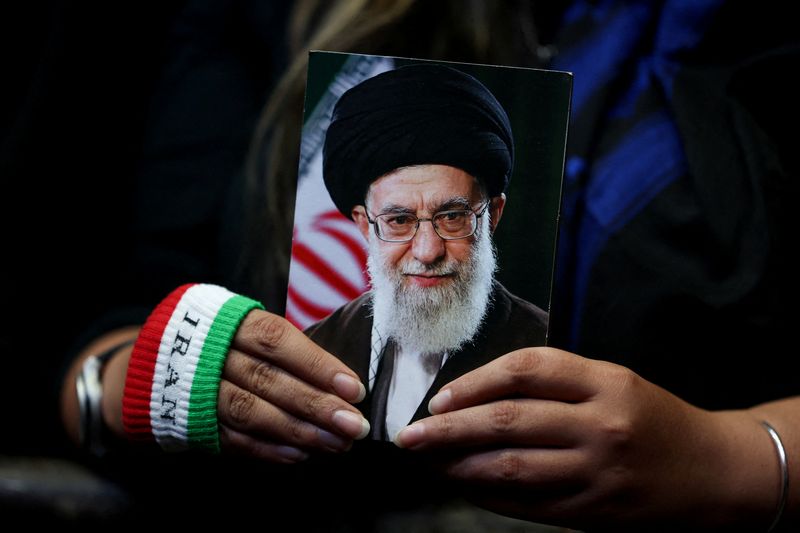
POLICY WIRE — Tehran, Iran — Even as black banners draped across its cities, marking an extraordinary period of national mourning for a departed leader, the Islamic Republic of Iran didn’t just weep. It bared its teeth. While much of the world watched the solemn processions unfold, Iran’s military establishment chose that precise moment to issue a remarkably blunt, no-nonsense warning to its perennial adversaries. Not exactly standard practice, is it?
This wasn’t some hushed diplomatic note, slipped quietly through back channels. Nope. It was a decidedly public, unmistakably fierce declaration. The message: hands off. The implicit threat was clear, particularly aimed at Washington and Tel Aviv— any misstep, any opportunistic probe, would meet a disproportionate response. It felt almost like a calculated test of resolve, a stark reminder that even amidst perceived vulnerability, Tehran wasn’t about to let its guard down. The context, of course, was the funeral of Ebrahim Raisi and his foreign minister, Hossain Amir-Abdollahian, following that calamitous helicopter crash—a bizarre, almost cinematic turn of events that had already rocked the political landscape. [QUOTE_PLACEHOLDER]
But here’s the kicker: issuing such aggressive pronouncements during a time of public grief is, well, *unusual*. You’d expect consolidation, introspective prayers, maybe a unified display of national sorrow. Instead, we got sabre-rattling. It points to an administration — and a military-security complex — acutely aware of its external vulnerabilities, even when trying to project internal strength. Or perhaps, it’s exactly *because* of the internal dynamics, the scramble to cement a succession, that such external warnings become expedient. One simply doesn’t want outside meddling compounding an already delicate transition. Because the region is already a powder keg. And everyone knows it.
This isn’t happening in a vacuum, after all. The Middle East, — and indeed parts of South Asia, remain locked in a perpetual game of geopolitical chess. Iran’s relationship with its neighbors is complex, often adversarial, sometimes surprisingly pragmatic. Think about Pakistan, for instance. A fellow Muslim-majority nation, nuclear-armed, with its own delicate internal balance and its own long, porous border with Iran. Despite recent flare-ups and cross-border skirmishes over Baloch insurgents—which briefly saw diplomatic relations teeter on the brink— Islamabad maintains a complex relationship with Tehran. There are shared interests, certainly. Regional stability, for one. Economic ties, too, particularly concerning energy; Pakistan often eyes Iran’s vast energy reserves with keen interest, despite US sanctions. Any major instability in Iran — say, a period of perceived weakness or leadership void followed by external aggression — could have destabilizing ripple effects across the wider South Asian region. It’s a tightrope walk for regional players.
The messaging wasn’t just for immediate adversaries either. It was also an address to allies and proxies across the region, a reassuring nod that despite leadership shifts, the foundational policies and strategic posture of the Islamic Republic weren’t up for negotiation. It’s continuity, plain — and simple, just louder. The timing makes one wonder, doesn’t it? Was it a display of resilience, a warning shot meant to prevent opportunistic moves during a vulnerable moment? Or was it, conversely, an admission of heightened anxiety within the halls of power?
Sources within regional intelligence circles suggest Tehran’s concerns aren’t entirely unfounded. Just last year, there were over 150 documented instances of alleged covert operations or intelligence-gathering attempts within Iranian territory attributed by Iranian authorities to foreign hostile powers. These aren’t minor incursions; they illustrate a continuous, low-intensity shadow war that keeps Tehran perpetually on edge. This statistic, while difficult to independently verify, highlights the persistent tension and the perceived need for constant vigilance on the part of Iranian security forces.
📄 POLICY WIRE WHITEPAPER PUBLISHED: PAKISTAN'S NATIONAL SECURITY POLICY PRIORITIES
👉 READ BY CLICKING HEREThe US and Israel haven’t officially commented on Iran warns US, Israel against attacks ahead of funeral processions for Khamenei, at least not publicly in response to these specific funeral-period declarations. They rarely do, of course. But the tacit understanding of this high-stakes game remains. For Iran, it’s about projecting strength, consolidating power, — and sending a very clear signal: Don’t. Even. Think. About. It. It’s an exercise in strategic communication, wrapped in a veneer of solemn duty. And it means the world’s attention — not just on the funerals, but on Tehran’s strategic maneuvers — has to remain hyper-focused.
It’s not just about guarding borders; it’s about guarding narrative. It’s about ensuring that the departure of one set of leaders doesn’t invite the opportunistic machinations of another. The stern warnings are a reminder that even when the cameras are fixed on grieving crowds, the security apparatus is running hot, constantly assessing, constantly projecting.
What This Means
This rather dramatic interplay of national mourning and explicit security threats signals a complex political tightrope act within Iran. Economically, prolonged instability or conflict—even the *threat* of it—could further cripple Iran’s already strained economy, exacerbating the impact of international sanctions and potentially driving up global oil prices. Any military engagement would bring severe consequences for global trade routes and energy markets, which already operate with razor-thin margins. Geopolitically, the immediate implication is a reinforcement of the status quo: deterrence. Tehran wants to project an image of unwavering resolve, quashing any notion of a power vacuum or an invitation for external aggression during this sensitive transition.
The timing, particularly, suggests internal anxieties that necessitate external posturing. This isn’t just for external consumption; it’s also a message to the Iranian populace and various internal factions: the state remains strong, united, and capable of defending itself. It’s an affirmation of authority amidst a period that naturally invites speculation and uncertainty regarding succession. For the wider Muslim world and South Asia, this aggressive stance during mourning reaffirms Iran’s determined, if not aggressive, regional role. Nations like Pakistan, while navigating their own complex foreign policy matrices, will observe carefully. A strong, stable Iran, even one vocal about its red lines, might ironically be preferable to a destabilized one that risks becoming a magnet for further conflict and regional fragmentation. For everyone watching, this isn’t just about funerals; it’s a masterclass in geopolitical theater, where every word, and every non-word, carries the weight of future stability—or chaos.