

Lakers’ Strategy: Niche Talent Drives NBA Success
Discover how the Lakers maintain their billion-dollar success. Niche talent, like defensive specialist Chris Manon on two-way contracts, is key to their NBA strategy.

POLICY WIRE — Los Angeles, United States — It’s never the splashy headline that truly defines the contours of power, is it? Not the nine-figure deals or the superstar acquisitions. No, the real game, the grinding economic engine of modern sports, often plays out in the margins—in the fine print of a two-way contract, in the unheralded reappearance of a young man named Chris Manon.
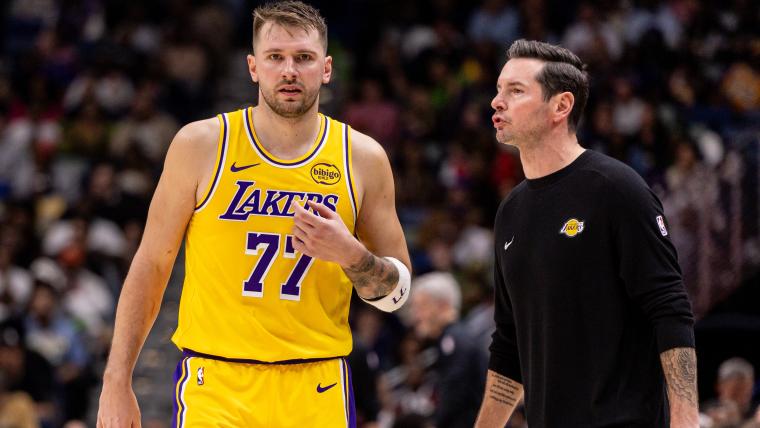
While pundits fixate on who dines with LeBron James, the Los Angeles Lakers quietly, almost clinically, brought back a 24-year-old defensive specialist. This wasn’t some grand announcement, not the sort that lights up Times Square. It was the calculated move of a behemoth organization shoring up its foundational cracks, adding a workmanlike piece to a gilded puzzle, all under the shadow of much larger aspirations surrounding another superstar, Luka Doncic.
Manon, formerly of the Golden State Warriors’ Summer League (yes, that’s a real thing, a proving ground often overlooked), earned himself another shot. A two-way deal, mind you. Not the guaranteed millions. It’s a pragmatic bridge between the minor leagues and the big show, a probationary period for those with a particular, valued skill set. And make no mistake, defense—raw, relentless defense—is the skill that keeps this Vanderbilt alum in the conversation. The numbers, stark — and uncompromising, tell part of that story. He racked up an average of 1.9 steals and 0.7 blocks per game during his 33 contests with the G-League’s South Bay Lakers, as per official G-League reports.
Because, really, what’s a global enterprise worth billions without the right cogs? “In today’s league, you can’t just chase offensive firepower,” commented longtime NBA General Manager, Marvin Jenkins, recently. “You need gritty, smart players who’ll dig in on the defensive end, particularly those who don’t demand the top-tier salaries. They’re the connective tissue, the guys who let your stars shine.” It’s about asset management, isn’t it?
This isn’t just about basketball, of course. It’s about how highly specialized labor is valued, even in an entertainment industry seemingly awash in cash. These two-way contracts, for all their athletic promise, represent an economic reality: a constant, low-cost search for talent that can fill a specific operational void. And for Manon, a former G-League All-Defensive Team member who finished second in DPOY voting there, that void is an absolute imperative. You’ve gotta get stops, right?
But the true policy implications stretch beyond the court. Consider this microcosm of talent acquisition: a global industry scouts internationally, develops talent domestically, and then creates flexible, often precarious, contracts for those who show promise but aren’t yet ‘A-list’. It’s not so different from how tech giants source coders from across continents or how emerging economies, say in Pakistan, try to cultivate specialized STEM talent only to see a significant portion migrate for better opportunities and infrastructure. The challenges of retaining skilled workers in developing nations, for example, often hinge on a similar calculus of opportunity, infrastructure, and perceived value.
📄 POLICY WIRE WHITEPAPER PUBLISHED: PAKISTAN'S NATIONAL SECURITY POLICY PRIORITIES
👉 READ BY CLICKING HERE“The two-way deal reflects a broader trend of institutional risk-sharing,” stated veteran sports agent, Eleanor Vance. “For every first-round pick, there are hundreds like Manon – exceptional athletes betting on their very specific craft to climb a volatile ladder. The team gets flexible labor; the player gets a shot at a career. It’s capitalism at its most brutal, and beautiful.” It’s a strategic gamble, playing out in real-time, under the bright lights.
What This Means
The Lakers’ move to retain Manon speaks volumes about the evolving economics of the NBA. This isn’t charity; it’s an institutional hedging strategy. By locking in a player with proven defensive tenacity on a two-way deal, the franchise gains a cost-controlled asset who can be shuttled between the main roster and the G-League without salary cap headaches. It permits elite teams to maximize their return on investment from superstars like Luka Doncic by ensuring there are serviceable, hungry role players to handle the grunt work, something often overlooked in high-stakes environments. it highlights the increasingly segmented labor market within professional sports, where ‘niche’ skills are bought and sold with shrewd calculation, reflecting an almost surgical approach to roster construction. This contractual model allows for agile adjustments, providing both stability for the team and a pathway—however narrow—for burgeoning talent. It’s an affirmation that even in a league defined by multi-million-dollar stars, the disciplined acquisition of unglamorous, effective pieces can still move the needle.