

Trump’s White House Football Invite: A Political Gambit
Examine Trump's White House football invite to Obama, Biden & Bush. Uncover the strategic political calculations behind this divisive, performative spectacle.

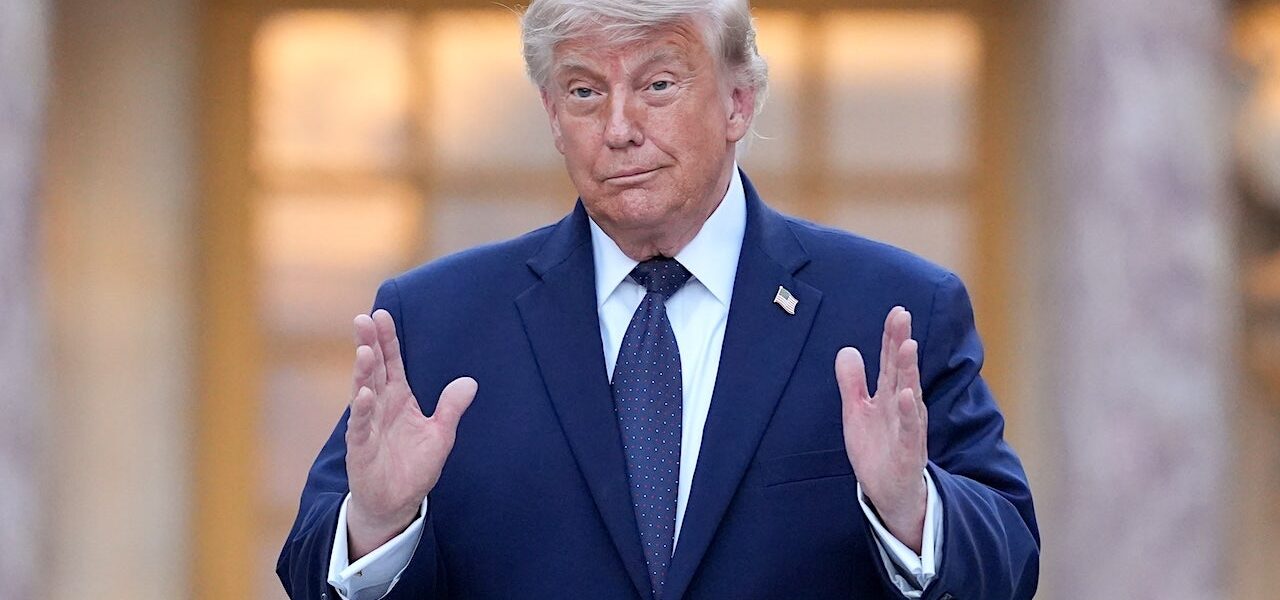
POLICY WIRE — Washington, D.C. — Imagine it: a huddle on the South Lawn, perhaps. A concession stand instead of policy briefs. The most rancorous political rivals—past and present—sharing stale popcorn, glued to a game. That’s the vision, or perhaps the strategic hallucination, put forth by former President Donald Trump, suggesting a White House football gathering with Barack Obama, Joe Biden, and George W. Bush.
It sounds like a political fairytale, or maybe a setup for a particularly dark comedy. And honestly, it doesn’t even pretend to be about sports. The former commander-in-chief didn’t just propose a casual invite; he floats inviting Obama, Biden, Bush to the White House to watch football as if it’s a perfectly normal idea, detached from the historical chasms and personal vitriol that define current American political life. It’s an overture so jarring, so seemingly out of left field, it begs a question: What in the political hell is he up to now? [QUOTE_PLACEHOLDER]
Forget the cozy image of presidents past — and present yukking it up. That’s a scene ripped from a gentler, far more mythical political age. This isn’t a civics lesson; it’s an electoral maneuver—plain and simple. One has to look at the scoreboard of American political discourse, which, let’s be frank, currently reads: Republicans 0, Democrats 0, National Unity: MIA. But why trot out such an improbable proposal now?
It’s about controlling the narrative, isn’t it? It’s always about controlling the narrative. Floating the idea frames him—however fleetingly, however cynically—as the one reaching across the aisle. Even if the aisle is actually a canyon, — and the bridge is made of hopes and dreams, it’s a talking point. It diverts. It disorients. It’s classic Trump, disrupting expectations — and forcing everyone to react to his latest, often perplexing, utterance. You’ve got to admit, the man knows how to get the media to chase shiny objects.
The suggestion emerges at a moment of particularly entrenched partisan warfare. A recent Pew Research Center study published in 2023 indicated that only about 16% of Republicans and 12% of Democrats hold favorable views of the opposing party’s constituents. That’s not a gap; it’s a chasm, an almost geological divide. Against such a backdrop, inviting your perceived enemies over for a game feels less like a peace offering and more like an elaborate psychological operation.
It isn’t an invitation, of course. It’s a statement. A provocation. Maybe it’s a test: a public Rorschach test for his political adversaries. Will they engage? Will they scoff? Will they simply ignore it? And, more importantly, how will their respective bases—ever hungry for a fight—interpret their response?
Think about the sheer practicalities, too. Can you honestly picture President Biden, already under fire from one side and navigating complex global challenges, settling down next to Trump for four quarters? Or Obama, who’s made his feelings clear about the previous administration, offering commentary on a fumble? George W. Bush might be the most amenable, given his affable nature — and post-presidency embrace of a quieter, bipartisan role. But even his presence wouldn’t paper over the cracks, would it?
From the bustling souqs of Karachi to the marble halls of Ankara, international observers often scrutinize American political theatrics with a mixture of bewilderment and calculated analysis. They watch closely, not just the policy declarations, but the bizarre undercurrents of its domestic political discourse. The fragility of American institutions, as evidenced by years of escalating political combat, sends ripples far beyond its borders. Leaders in Pakistan, for instance, understand intimately how internal strife can bleed into external affairs, weakening global standing and complicating crucial alliances. A stable, coherent America is often seen as a prerequisite for global stability, even by nations that are—how do you say—complicated allies. And antics like these? Well, they don’t exactly inspire confidence, do they? It paints a picture of a nation more concerned with internal gladiatorial bouts than grand strategy.
📄 POLICY WIRE WHITEPAPER PUBLISHED: PAKISTAN'S NATIONAL SECURITY POLICY PRIORITIES
👉 READ BY CLICKING HEREThe whole notion is a high-wire act of perception management, crafted to elicit a specific, often exasperated, reaction. It’s meant to put his opponents in an awkward spot, forcing them to address a proposition they can’t possibly accept without looking either weak or naive, or possibly, worse, just plain silly. The audacity of it’s its power.
What This Means
This entire spectacle is less about sportsmanship — and more about the art of political jujitsu. For Trump, the invitation itself serves multiple purposes: it reminds his base of his supposed willingness to reach out, it momentarily distracts from other less flattering headlines, and it publicly dares his political rivals to respond—or not to. Their refusal, almost a foregone conclusion, can then be spun as evidence of *their* intractability, their inability to unite, their bitterness.
Politically, it’s a no-lose proposition for the one who initiates the overture, particularly when the overture is so transparently improbable. Economically, such high-level theatrics have negligible immediate impact, but the underlying political instability they represent absolutely sends shivers through markets and international relations. When a nation’s top political figures appear so irreconcilably divided, investor confidence wavers, and global alliances can strain.
The ripple effect stretches globally. For leaders in regions like South Asia or the broader Muslim world, observing such peculiar domestic antics from the U.S. offers little reassurance regarding American reliability or resolve on foreign policy matters. They aren’t asking if Obama will don a jersey; they’re wondering if Washington has the internal cohesion to effectively engage with their own complex challenges, from economic development to regional security. For them, American political stability is never a siren for global policy paralysis. It’s an indicator of future engagement. But more abstractly, this sort of proposal highlights the theatrical, performative nature of modern American politics, where spectacle often eclipses substance. It’s raw spectacle, really, a performance that’s increasingly viewed as a reflection of America’s fundamental dysfunctions.
Will they come? Don’t hold your breath. Will it matter? In the grand scheme, probably not to any lasting policy end. But it will have achieved its true goal: keeping eyes fixed on the conductor, however absurd the orchestra’s performance. Because, sometimes, that’s all that really matters in this town.