


Europe on Edge: Ukraine War’s Global Impact
Explore the Ukraine war's 'unnerving normal,' its impact on Europe, NATO's resolve, and the far-reaching global economic and geopolitical repercussions.

POLICY WIRE — Brussels, Belgium — It’s an unnerving sort of normal, isn’t it? The drone of sirens in Kyiv, the stark declarations from Western capitals, the predictable fury from the Kremlin. This wearying routine has somehow settled into the continent’s bone marrow. But don’t mistake that grim familiarity for stability. Not by a long shot. Europe, in fact, is perpetually perched on a knife-edge, constantly redefining what ‘escalation’ means while pretending it has all the answers.
Because as the rumble of recent strikes against Kyiv—another harrowing blitz on civilian infrastructure—echoes through diplomatic halls, the world holds its breath. There’s a new NATO summit just over the horizon, another assembly of leaders scrambling to find new metaphors for ‘unity’ and ‘resolve’ while quietly recalculating their exposure to geopolitical risk. The game, if we can even call this a game anymore, is less about decisive moves and more about managing an incessant, grinding pressure. You feel it in every whispered corridor of power.
Jens Stoltenberg, NATO’s ever-steady hand, puts a brave face on it, naturally. He has to. “NATO isn’t just about lines on a map,” he recently stated to a select group of foreign ministers, his voice clipped and firm. “It’s about a collective promise—one we intend to keep, despite the howling from Moscow. Our resolve is, — and remains, ironclad.” Fine words. And he’s right to speak them. But beneath the surface, nations are navigating their own delicate ballets of self-interest — and solidarity.
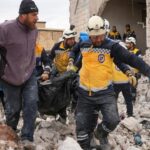
Meanwhile, in Ukraine, the daily grind of survival remains the stark, unvarnished truth. Missile alarms aren’t just headlines there; they’re alarm clocks, setting the tempo for yet another day under fire. Oleksiy Danilov, the straight-talking Secretary of Ukraine’s National Security and Defense Council, doesn’t mince words about the incessant attacks. “They strike our cities, they wound our people,” he’s told reporters time and again, his jaw set, “but they haven’t touched our spirit. Not one inch. We will prevail, because what choice do we truly have?” It’s a sentiment born of both defiance and an almost unimaginable exhaustion.
And so, the diplomatic merry-go-round spins on. Leaders will gather, cameras will flash, declarations will be issued. The push to squeeze Russia tighter, to bleed its war machine dry, continues unabated. But sanctions, as we’ve learned, are blunt instruments, often with unintended consequences. They send ripples across the globe. You see it in commodity markets, in the shifting alliances of nations forced to choose sides, or perhaps, just trying to keep their own economies from fracturing.
Consider Pakistan, for instance. A country grappling with its own internal strife and economic precariousness, balancing relations with an often-skeptical West, a rising China, and, yes, a resource-rich Russia. Nations like Pakistan, situated at critical geopolitical crossroads, aren’t immune to this European fray. Their energy bills rise when Moscow weaponizes gas, their security calculus shifts when global military alliances realign. For a nation consistently navigating complex geopolitical currents, this far-flung conflict isn’t just news; it’s a very real-world influence on their strategic outlook and domestic stability. It’s always been more than a European skirmish.
The economic repercussions, predictably, are vast. The UN High Commissioner for Refugees reported over 6.3 million Ukrainian refugees spread across Europe as of May 2024, an undeniable human and logistical challenge that stresses social services and infrastructure. That’s a cold hard fact, and its ripple effect is being felt across entire continents, even in countries that seem a million miles away from the front lines.
What This Means
This perpetual cycle of attack — and response suggests Europe, and NATO more broadly, remains stuck in a reactive mode. Politically, the push for greater European strategic autonomy becomes louder with each new Russian aggression, but it’s still more aspirational than actual. Economically, the war’s enduring drain on resources, combined with an already challenging global inflationary environment, will likely force harder choices from national treasuries, especially as electorates grow weary. For the world’s unaligned and developing nations, it reinforces a sobering lesson: superpower contests inflict collateral damage on everyone. This isn’t just about lines in Ukraine; it’s about the very future architecture of global power. And how nations like Pakistan must adapt, often against long odds, to the tremors emanating from Europe.
The upcoming NATO summit won’t offer a magic bullet. Don’t expect it. Instead, it’ll be another layer of policy cement applied to an already sturdy, if often inflexible, edifice. The pressure on Russia won’t ease; it’s going to intensify. But how much further the West is truly prepared to go, what new red lines they’ll draw, that’s where the real story remains. We’re all just watching for the next tremor.