


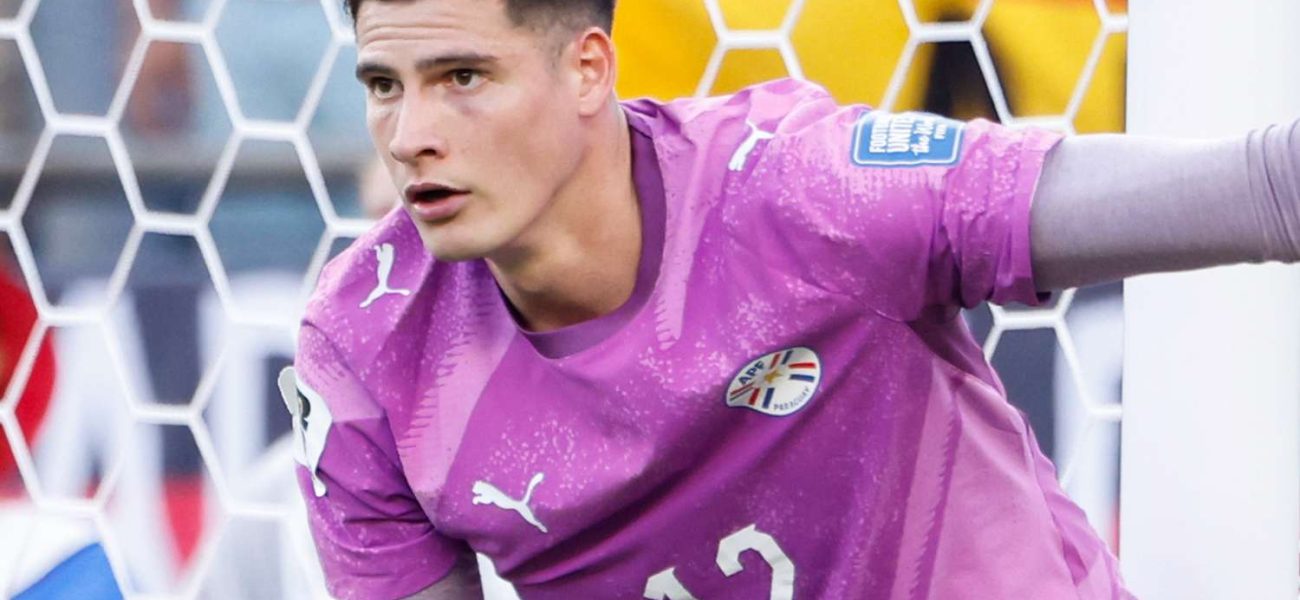
Goalkeeper’s Sacrifice: Unmasking Football’s Precarity
Discover the untold struggle of World Cup goalkeeper Orlando Gill, who sold his kit for his son's life. It exposes global sports' economic inequality and fragile safety nets.

POLICY WIRE — Boston, MA — It ain’t just about goals, you know. Sometimes, the raw, gritty reality of life crashes right into the pristine turf of a global spectacle. That’s what we saw with Orlando Gill, a name now echoing beyond Paraguay’s borders, not solely for his goalkeeping prowess, but for a gut-wrenching sacrifice few sports pages typically carry: selling the tools of his trade, his uniform, just to keep his premature son alive. His team’s recent upset victory over Germany? Yeah, it was big. But the backstory? That’s where the real game unfolds.
Gill, 26, Paraguay’s sturdy man between the sticks, now playing his first FIFA World Cup, is a stark reminder that beneath the gilded glamour of international football, lies a world of precarious incomes and impossible choices for most athletes. He’s not Messi. He’s not Ronaldo. He’s a guy trying to make ends meet, whose world nearly fell apart when his son, Lauti, arrived early in December 2022, battling for every breath. His wife, Melissa Avalos, plastered their struggle across social media long before the World Cup stage even thought to beckon. “We had nothing,” Avalos wrote in a haunting Instagram carousel from August 2025, a post that’s only now gone viral. She spoke of Gill literally selling his club kit to cover hospital bills. His current fame? That’s just a twist of fate — a desperate one at that.
But the narrative, like a perfectly placed pass, suddenly arched into something akin to hope. After Paraguay’s shocking 4-3 penalty shootout victory against Germany — following a tense 1-1 draw on June 29 at Boston Stadium — a ghost from Gill’s past popped up. Pedro Suarez, the fan who’d shelled out 200,000 guarani (a meager $32.90, give or take, at the time) for Gill’s Under-20 jersey, came calling. Not for money. Not for more fame. He wanted to give it back. That kit, a tangible piece of Gill’s darkest hours, a symbol of desperate paternal love, was suddenly within reach. But, naturally, there’s always a catch, isn’t there?
“I told him, ‘Don’t worry about the shirt, I’ll keep it safe for you,'” Suarez told NPY, via Reuters, recounting the message he sent. And then, the kicker: “‘But you have to beat France.'” Because what’s a heartwarming tale without a high-stakes sequel, right? It’s a moment that, frankly, cuts right to the heart of what this whole enterprise, professional sports, actually is: a strange blend of dreams, brutal economics, and fanatical passion. For Suarez, it wasn’t an investment. It was an act of faith. And now, a challenge.
Gill himself seemed to grasp the broader meaning, or maybe just the immediate pressure. After that German game, he offered a pithy observation to reporters: “It showed that you shouldn’t speak too soon.” He quickly added, “This proves that Paraguay is capable of achieving great things. The opportunity was bound to come sooner or later.” But one has to wonder, behind the brave face, if the echoes of past anxieties still ring. After all, the global average annual income for a professional football player can reach astronomical figures, yet the vast majority — especially those outside Europe’s top leagues or emerging from economies like Paraguay — struggle just to maintain stability. The median monthly wage in Paraguay in 2021 hovered around PYG 2,750,000, roughly $375 USD, according to government statistics, making those medical costs a crippling burden for most.
This stark reality isn’t confined to South America. You’d find countless parallels in emerging football markets across Asia and the Muslim world, from Pakistan’s burgeoning talent pools to the burgeoning leagues of Indonesia. Young athletes, often the sole breadwinners for extended families, navigate similar financial tightropes. They’re driven by talent, yes, but often by necessity. One serious injury, one sick family member, can obliterate their fragile professional ambitions, because formal support systems are weak to non-existent.
“We often romanticize the grit of athletes, but this situation exposes a cold, hard truth about economic inequality even within the global sports industry,” observed Dr. Zara Ali, a researcher specializing in socio-economic development in sports, referring specifically to the vulnerability of athletes from nations with struggling public healthcare. “Gill’s story resonates with families in Lahore or Dhaka just as much as in Asunción. Their battles extend far beyond the pitch. We forget that they’re not just performers; they’re working people, with working people’s problems.”
What This Means
Gill’s jersey saga isn’t just a saccharine tale of redemption. Oh no, it’s a policy nightmare, wrapped in a feel-good package. This incident shines a harsh light on the stark disparity within global sports, where immense wealth at the top trickles down to crumbs for many, even those on the cusp of international fame. It highlights the systemic cracks in social safety nets — especially healthcare access — in countries like Paraguay. But it’s not just Paraguay. This story reflects a widespread vulnerability for athletes in economies across the globe, including many in South Asia. What happens if a player can’t sell a jersey? What happens if there’s no understanding fan like Pedro Suarez?
The incident also underscores the bizarre economy of sports memorabilia. A piece of fabric, once practically worthless except for sentimental value, transforms into a symbol of both desperation and hope, its value fluctuating wildly based on narrative and performance. For the governing bodies of football, this tale should be more than a headline; it should be a mirror reflecting their responsibility to adequately support players, especially those from less affluent nations. But will they actually see it that way? It’s often just another commercial opportunity. Or, in this case, a compelling human interest piece that distracts from the institutional failures.
Paraguay’s match against France this Saturday at Philadelphia Stadium isn’t just about a World Cup quarter-final spot anymore. It’s about a man’s deeply personal history, an economic battle played out on the grandest stage. And everyone watching? Well, we’re all complicit in a system that often demands such desperate, private sacrifices before it deigns to offer a flicker of recognition.