


Spain’s World Cup: Calculated Efficiency, Not Star Power
Spain's World Cup journey redefines success. Discover how La Roja's calculated efficiency and collective system are dominating, proving teamwork trumps star power.

POLICY WIRE — Los Angeles, United States — Forget the theatrical dramatics. Ignore the relentless marketing of individual titans. While other contenders jostle for headline space with goal-scoring frenzies and last-gasp heroics, Spain moves through this World Cup with an almost unsettling, workmanlike precision. There’s no Messi, no Mbappe — just a collective that grinds opponents down, step by methodical step. Call it the antithesis of the modern footballing spectacle; a clinical, if not always captivating, path to glory.
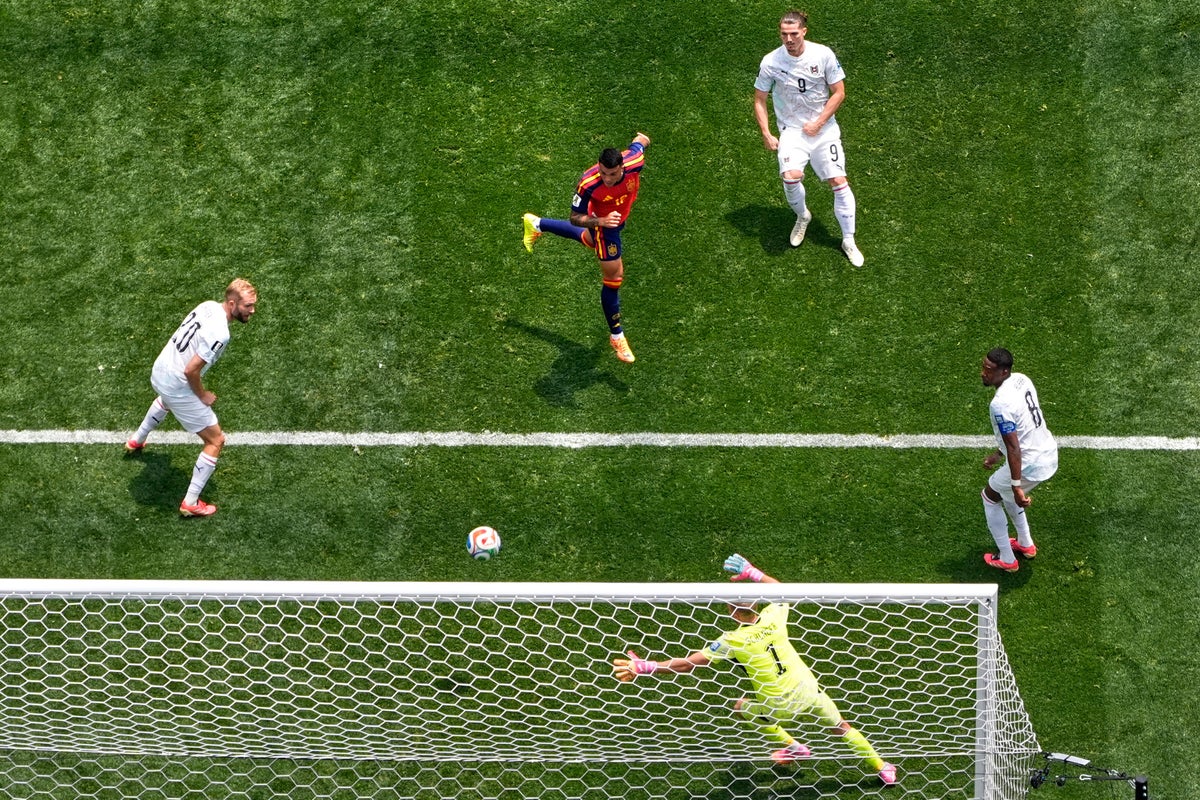
On Thursday, that path carved right through Austria, depositing them unceremoniously from the tournament. A 3-0 shellacking in Los Angeles felt less like a triumph of flair — and more like a carefully executed demolition. Mikel Oyarzabal bagged another brace, benefiting from Marc Cucurella’s shrewd deliveries. Pedro Porro notched his first international goal — a pleasant bonus for Luis de la Fuente, certainly. But it wasn’t the star-studded show often expected. Because Spain isn’t chasing adulation; it’s chasing records, and they’re doing it with an almost stubborn insistence on their own system.
And those records? They keep piling up. Spain has now matched the 35-game unbeaten run of their own celebrated 2007-2009 generation, eyeing Roberto Mancini’s Italy for the all-time international record. Goalkeeper Unai Simón has now collected five straight World Cup clean sheets, a feat matching Italy in 1990 and Switzerland more recently. It’s a quiet testament to their defensive steel, not the attacking pyrotechnics everyone seems to expect these days.
But make no mistake, their approach, while understated, garners attention globally. Even in places like Dhaka, where fervent support often hinges on the cult of personality surrounding superstars, Spain’s unyielding strategy offers a stark contrast. It forces conversations about what truly constitutes ‘effective’ football. One football federation official from Pakistan, speaking off the record about Europe’s tactical discipline, put it frankly, “When we observe teams like Spain, we’re not just seeing talented players; we’re witnessing decades of investment in a footballing philosophy. It’s a strategic calculus that many footballing nations in the South Asian and Muslim world are still grappling to consistently replicate, amidst our own financial and structural hurdles.” That’s a subtle dig, maybe, but a realistic one.
Indeed, 18-year-old Lamine Yamal, while electric in spurts, didn’t find the net against Austria, denying him the golden boot race that consumes other prodigies. Yet, his mere presence speaks volumes. Alongside Pau Cubarsi, he helped make history as the first teenagers to start a World Cup knockout match in 68 years – since Pele and Jose Altafini for Brazil in 1958. That particular 1958 squad, we recall, actually lifted the trophy. And that’s not lost on the current crop.
The conditions themselves in Los Angeles — that stifling humidity inside the greenhouse-like arena — added another layer of quiet discomfort to an already challenging assignment. Yet, La Roja pressed on, unmoved. Head Coach Luis de la Fuente, a man who chooses his words as carefully as he selects his midfielders, articulated the team’s current ethos after the match: “We aren’t chasing spectacular. We’re chasing control. Every step, every pass, every positional adjustment is deliberate. It’s about being effective, not just flashy.” He added with a subtle hint of dry humor, “The objective, you see, isn’t simply to entertain.” No, it seems the objective is to win, boringly or not. Their possession stats remain ridiculously high; against Austria, Opta Sports reported Spain had 74% of the ball, making their opponents feel less like contenders and more like guests allowed to watch from a distance.
Austria’s attempts at resistance — Konrad Laimer’s dutiful attempts to shackle Yamal, Alexander Schlager’s busy afternoon in goal — proved ultimately futile. The European champions, having found their stride 10 minutes before halftime with Oyarzabal’s first goal, never really looked back. The second half mirrored the first — a slow, steady suffocating of Austrian hope, culminating in Porro and Oyarzabal sealing the deal. No theatrics, just a team executing its mandate.
What This Means
Spain’s measured ascent in this World Cup represents a broader geopolitical narrative: the triumph of system over individual marketing. In an age saturated with personal brands, La Roja’s collective philosophy offers a stark counter-narrative, suggesting that even in globalized, media-driven sports, sustained structural integrity trumps ephemeral stardom. For nations watching — from the burgeoning football economies of the Middle East to established European rivals — Spain isn’t just winning matches; they’re subtly redefining what ‘winning’ looks like in terms of organizational coherence and talent development pipelines. It’s about demonstrating that soft power, exerted through disciplined teamwork and an unwavering national sporting identity, can still captivate attention and achieve dominance, even when other teams boast flashier, more immediate appeal. Their calculated dominance is a masterclass in patient, almost clinical execution, demonstrating that quiet assurance can be far more unsettling to an opponent than a sudden burst of brilliance.
This unwavering focus sets them up for a potentially brutal Round of 16 clash against either Portugal or Croatia. But Spain seems prepared for it. They’re not getting ahead of themselves, or us for that matter. There’s no loud pronouncements — just the quiet thrum of a machine operating exactly as intended. A chilling, unflashy reminder that sometimes, the most effective path to victory is simply the most ruthlessly efficient one. Just ask Austria.