


Ferrari Fiasco: Wealth, Justice, & Parental Accountability
A damaged Ferrari sparks a legal battle, revealing deep cracks in parental accountability, wealth disparity, and the pursuit of justice. Policy Wire investigates.

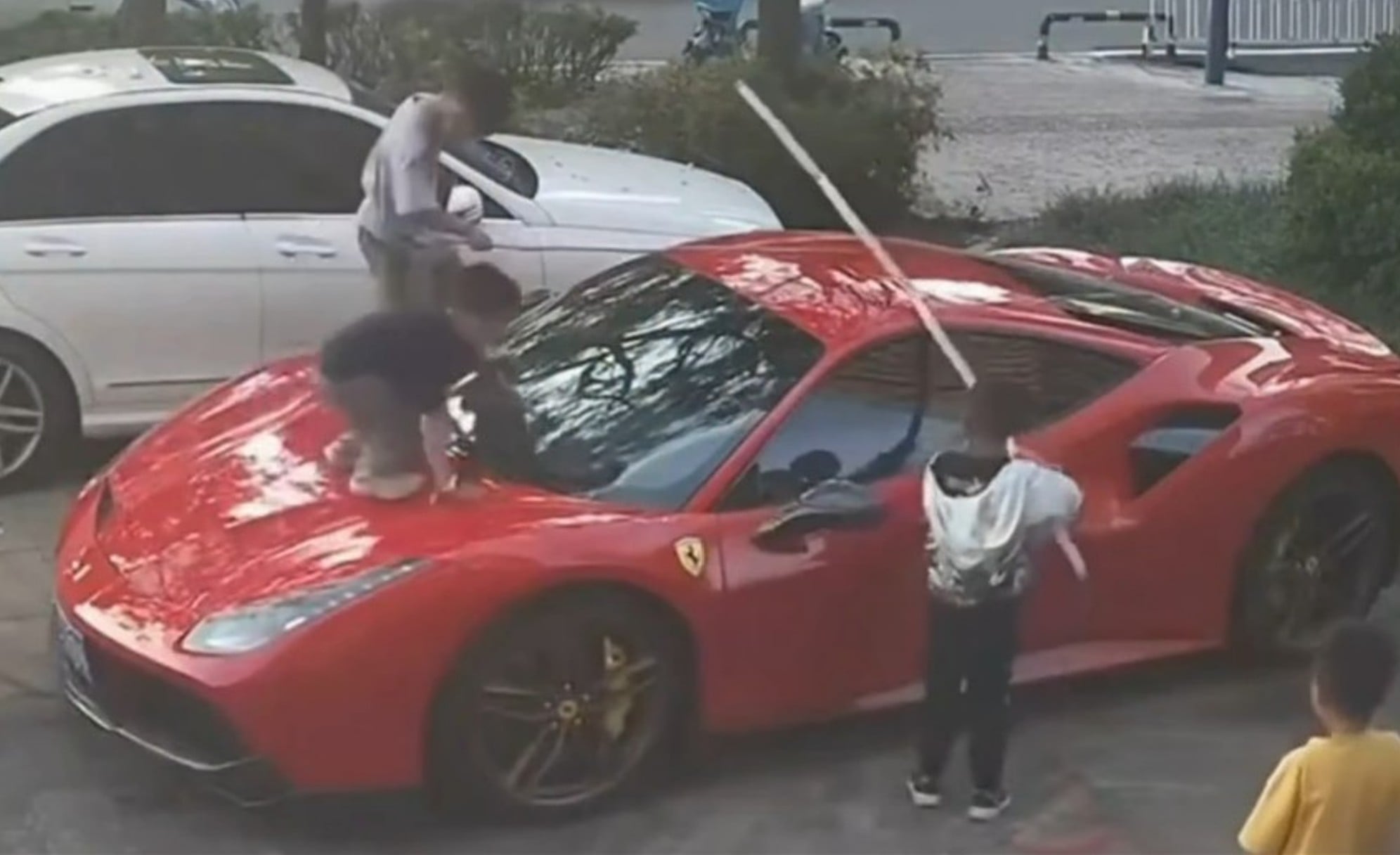
POLICY WIRE — Undisclosed Location, — It’s never just about the car, is it? Not when that car happens to be a Ferrari 488 GTB, a half-million-dollar confection of speed and status, unexpectedly converted into an impromptu children’s slide. What started as a rather predictable childhood escapade – a harmless bit of playground ingenuity, perhaps – has spiraled into a petty cash skirmish now echoing much larger, more uncomfortable conversations about entitlement, parental accountability, and the precarious perch of justice in a world increasingly bifurcated by wealth.
The incident itself is stark in its simplicity: a family outing, a sleek red automobile, and a pair of energetic children. Then, scrapes, dings, and scuffs. Damages totaling six figures, according to the car’s owner. But it’s the fallout – specifically, the parents’ reluctance to fully shoulder the cost of repair – that really twists the knife, prompting whispers that run deeper than mere monetary valuation.
And so, a luxury vehicle, a symbol of extreme affluence, transforms from an object of desire into an unexpected arena where property rights butt heads with the perennial challenge of managing childhood impulses. “This isn’t merely about a scratch on an expensive vehicle; it’s about the erosion of accountability in a society already straining under myriad ethical compromises,” remarked Judge Alistair Finch, a seasoned jurist known for his pragmatic rulings. He wasn’t shy about it, either.
But the parents involved reportedly offered only a fraction of the quoted repair bill, digging their heels in against what they described as an exorbitant demand for an accident that, they insisted, lacked malicious intent. Their rationale, we’re told, revolved around the notion of proportionate responsibility – a concept that feels rather abstract when staring down a bill the size of a suburban home’s mortgage. Because really, how much does a ‘slide-induced scuff’ actually cost on an Italian supercar?
You can’t help but think about how differently such a squabble would play out in, say, Karachi or Lahore, where community elders or a village jirga might broker a solution, perhaps focusing on restitution and rebuilding relationships rather than purely legalistic demands. Property, even grand property, often falls within a broader social contract there. Not here. Here, it’s about damages — and the law, pure and unvarnished.
“Parents carry a deep obligation, moral — and legal, to educate their children on respect for others’ belongings. We can’t sidestep that fundamental truth, no matter the situation,” stated Dr. Ayesha Rahman, a sociologist specializing in family law — and ethics. Her voice carried a certain gravitas, the kind you get from watching countless disputes unfold. She added that it’s a conversation too many modern households are putting off, to their collective detriment.
The car itself, a marvel of engineering, sits awaiting repairs, a mute testament to a peculiar collision of childish exuberance and adult obstinacy. And the legal back-and-forth grinds on, a grim reminder that in the eyes of the law, a scrape on a Ferrari is not quite the same as a scuff on a garden shed. Because scale, unfortunately, matters, as do zeros on a price tag.
This incident also underscores a persistent issue: the often-awkward dance between affluence — and the law. Small claims courts, frequently inundated with mundane disputes, occasionally become the battlegrounds for matters that reflect an entirely different stratum of economic reality. According to a 2023 report from the National Legal Aid Society, claims for property damage involving minors and significant assets have climbed by 12% in urban centers over the last fiscal year, pushing legal aid services to their limit. It’s a growing docket.
What This Means
This seemingly localized spat over a damaged sports car casts a harsh light on several interlocking societal strains. Economically, it exposes the ever-widening gulf between the ‘haves’ and ‘have-nots,’ where the very cost of repair for one person’s damaged plaything represents another’s lifetime earnings. This incident isn’t just a quirky news item; it’s a potent symbol of what feels like a fractured public consciousness surrounding wealth and responsibility. Politically, this dispute, while personal, contributes to a broader narrative about individual accountability versus collective empathy. When parents recoil from a repair bill for their children’s actions, it prompts uncomfortable questions about the boundaries of parental supervision and legal liability. It also inadvertently fuels public debate on how justice is meted out – whether it’s truly blind to economic status, or if an expensive piece of metal inherently receives more zealous defense under the law. We’re witnessing a microcosm of broader anxieties about fairness, a situation where an object’s value often overshadows the human drama surrounding its demise. And that’s something worth thinking about.